
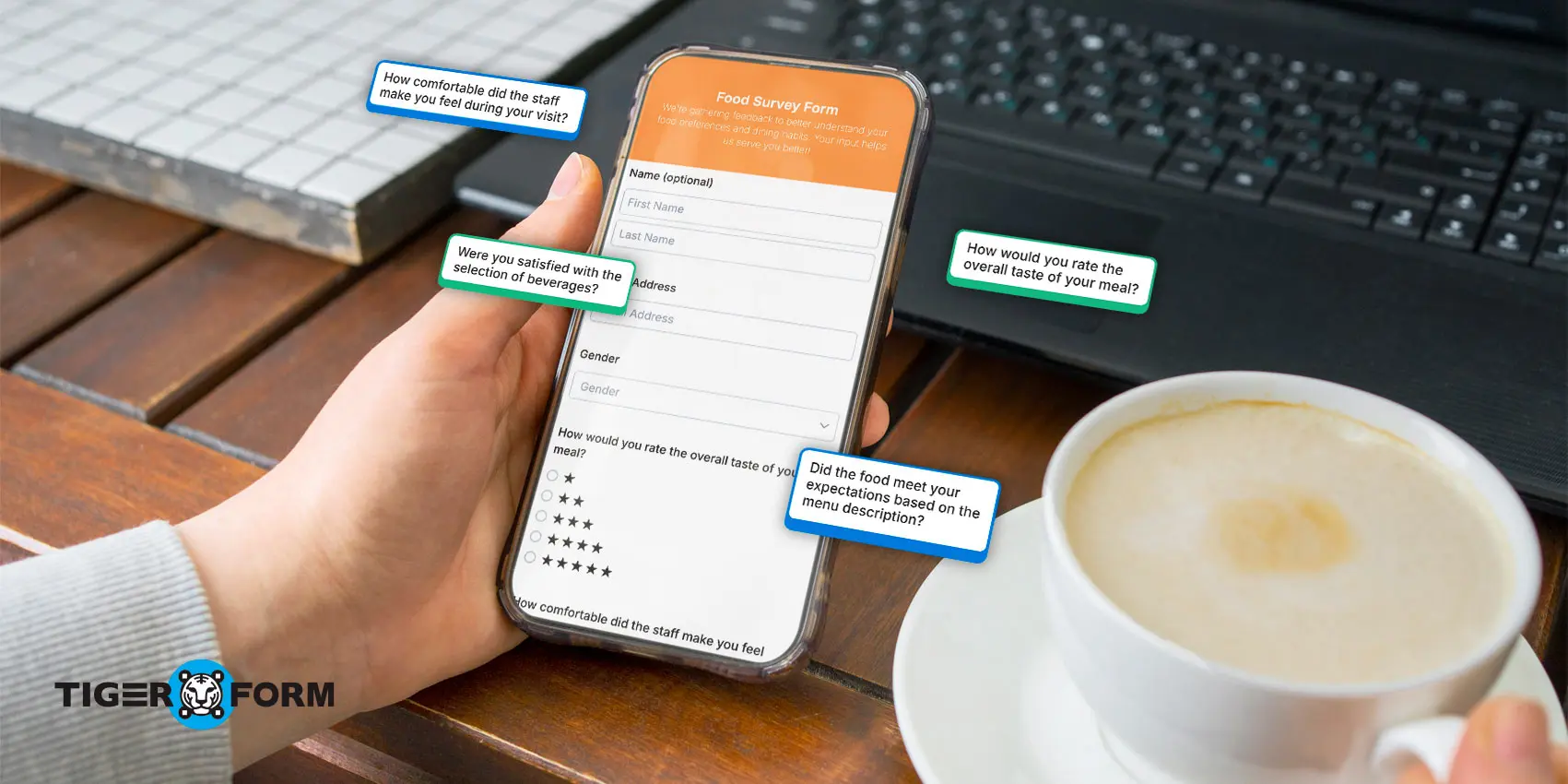
Many restaurants struggle to improve their food or service, not because they lack effort, but because they rely on scattered feedback or guesswork instead of structured tools.
Guesswork may work occasionally, but it’s slow and often misses the mark in an industry that demands precision. Asking customers face-to-face isn’t enough to get the full picture.
But with structured questions and efficient tools, you can avoid these gaps, improving the service and products you offer.
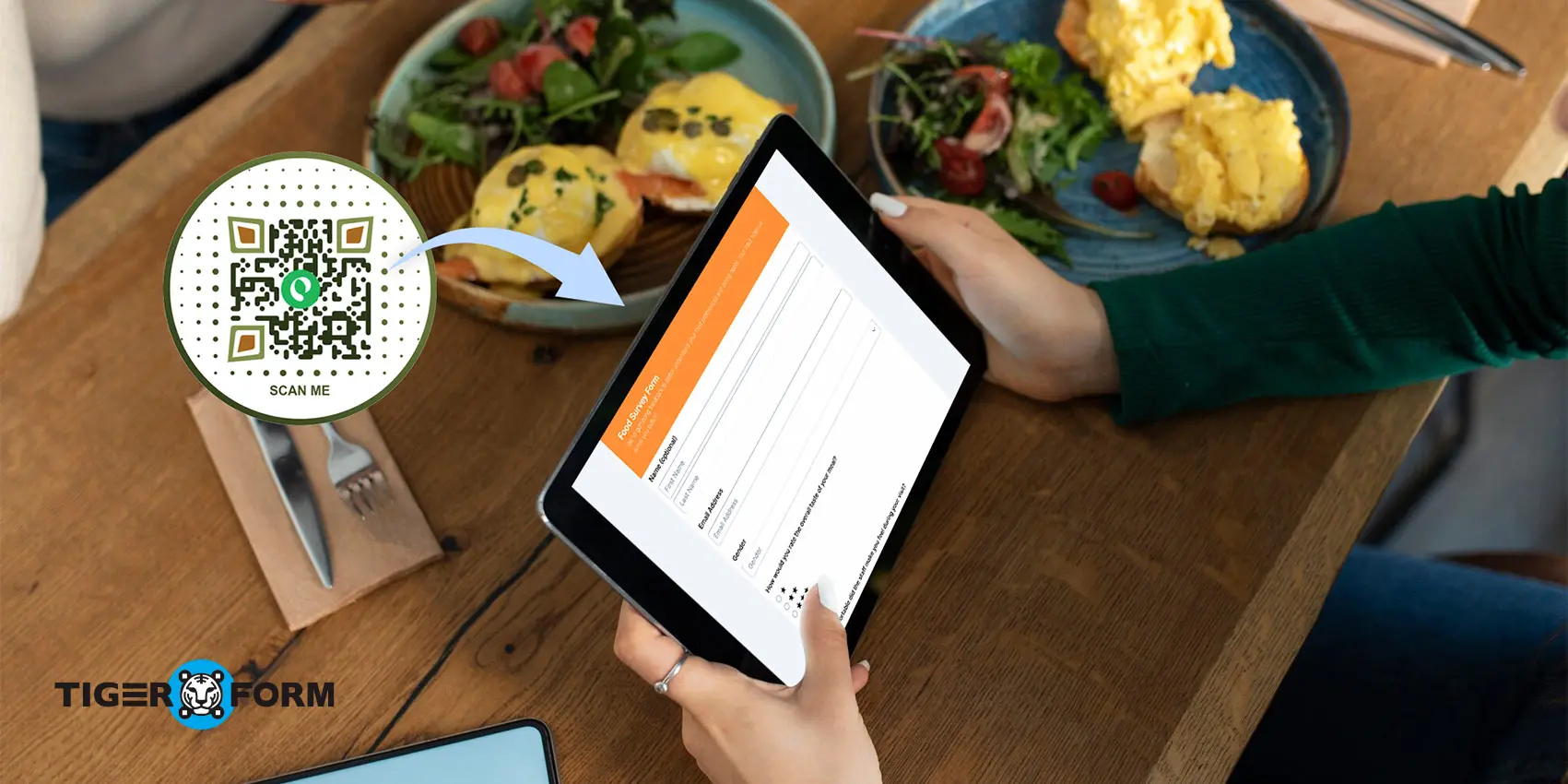
So, below you’ll find 64 ready-to-use food survey questions covering every key aspect of the dining experience. You can copy these questions and build your own survey form or QR code in minutes, making it easy to collect clear, actionable feedback from your guests.
Food survey questions for every area of improvement
The questions you should ask in a customer satisfaction survey for food service should be directly related to the dining experience and customer expectations. Focus on areas that help you understand satisfaction levels and uncover possibilities for improvement.
Food quality and taste
- How would you rate the overall taste of your meal?
- Was the food served at the right temperature?
- Did the ingredients taste fresh?
- Was the food visually appealing?
- Was your meal flavorful and well-seasoned?
- Was the food as described on the menu?
- Were the portion sizes appropriate?
- How would you compare the taste of our food to other restaurants you’ve visited?
- Did any item stand out as exceptionally good or bad?
- Would you order the same dish again?
Beverage and drink options
- Were you satisfied with the selection of beverages?
- Were alcoholic and non-alcoholic options available?
- How would you rate the quality of the drinks?
- Were specialty or seasonal drinks offered?
- Did your drink arrive in a timely manner?
- Was the drink menu clearly labeled and easy to understand?
- Did you find the prices of beverages fair?
- Were drink portions appropriate?
- Did drinks complement your food?
- Would you try a new drink on your next visit?
Eating habits
- How often do you eat out in a typical week?
- What time of day do you usually dine out?
- Do you prefer dine-in, takeout, or delivery?
- Do you usually eat alone or with others?
- Is this meal part of a routine or a special occasion?
- How far do you usually travel for food?
- Do you plan meals ahead or decide on the spot?
- Do promotions influence when you eat out?
- Do you follow a specific eating schedule?
- How often do you try new food places?
Go-to foods questions
- What dish do you usually order when visiting restaurants like ours?
- Do you have a favorite item from our menu?
- What food do you order when you want something familiar?
- Which item do you recommend to friends?
- What dish keeps you coming back?
- Do you usually stick to the same order?
- Which item do you crave most from our menu?
- What comfort food do you order most often?
- Which item would disappoint you if removed?
- What food best represents our restaurant?
New menu items survey questions
- Are you open to trying new menu items?
- What type of new dish would interest you?
- How often do you try newly added items?
- What price range feels right for new items?
- Would limited-time items appeal to you?
- How should new menu items be introduced?
- Do photos influence your interest in new items?
- Would you give feedback on test dishes?
- Do you prefer bold or familiar flavors in new items?
- How likely are you to order a new item on your next visit?

Menu variety and dietary preferences questions
- How satisfied are you with the variety of items on the menu?
- Are there enough options for your dietary needs?
- Did you find the menu easy to understand and navigate?
- Are there any specific dishes or cuisines you’d like us to add?
- Do you feel the menu caters to different age groups or preferences?
- Were the ingredients and allergens clearly marked?
- How frequently would you like the menu to be updated?
- Did you find healthy options easily?
- Are portion choices flexible enough for you?
- Does the menu support your lifestyle preferences?
Customer service experience
- How would you rate the friendliness of our staff?
- Were you greeted promptly upon arrival?
- Did the staff seem knowledgeable about the menu?
- Was your order taken accurately?
- Were your questions or concerns addressed professionally?
- Did the staff check in with you during your meal?
- Were you thanked or acknowledged when you left?
- How comfortable did the staff make you feel during your visit?
- Did staff respond well to special requests?
- Would staff interaction affect your decision to return?
Ambiance and dining experience
- How would you rate the overall ambiance of the restaurant?
- Was the music appropriate and at a comfortable volume?
- Did the lighting contribute positively to your experience?
- Was the seating comfortable?
- How clean and inviting did the dining area feel?
- Was the temperature of the dining area comfortable?
- How likely are you to dine in again based on the atmosphere?
- Did the environment match the restaurant’s theme?
- Did the ambiance affect how long you stayed?
- Would ambiance influence your recommendation?
Food cost and value questions
- Do you feel the food was worth the price you paid?
- How would you rate the portion size relative to the cost?
- Were there any menu items you found to be overpriced?
- Were there good value or budget-friendly options available?
- Would you consider our restaurant affordable or expensive?
- Would you return based on the value received?
- Did pricing match your expectations?
- Were combo meals or deals appealing?
- Did quality justify the price?
- Would pricing affect how often you visit?
Digital food ordering questions
- Was online ordering, delivery, or menu access form easy to use?
- Did you find our mobile app or website user-friendly?
- Was payment convenient and secure?
- Did you use any loyalty or rewards features?
- Were QR menus or digital menus easy to navigate?
- How helpful was technology in enhancing your experience?
- Would you like more tech-driven services?
- Did you face any technical issues?
- Were order updates clear and timely?
- Would you order digitally again?
Food packaging and delivery
- Was the food packaging secure?
- Did the food arrive in good condition?
- Did the packaging keep food at the right temperature?
- Was the packaging easy to open?
- Did the packaging match the type of food ordered?
- Was the delivery time accurate?
- Did delivery affect food quality?
- Were utensils and extras included?
- Would eco-friendly packaging matter to you?
- Would you order delivery again?
Hygiene and cleanliness
- How would you rate the cleanliness of the dining area?
- Were the restrooms clean and well-maintained?
- Did the staff appear to follow hygiene protocols?
- Were tables and surfaces cleaned promptly?
- Did you notice any cleanliness issues that concerned you?
- How confident do you feel about the hygiene standards of our kitchen?
- Was the entrance area clean and tidy?
- Did the food presentation reflect cleanliness?
- Did packaging or utensils appear clean?
- Would cleanliness affect your return visit?
Free restaurant survey and feedback form templates
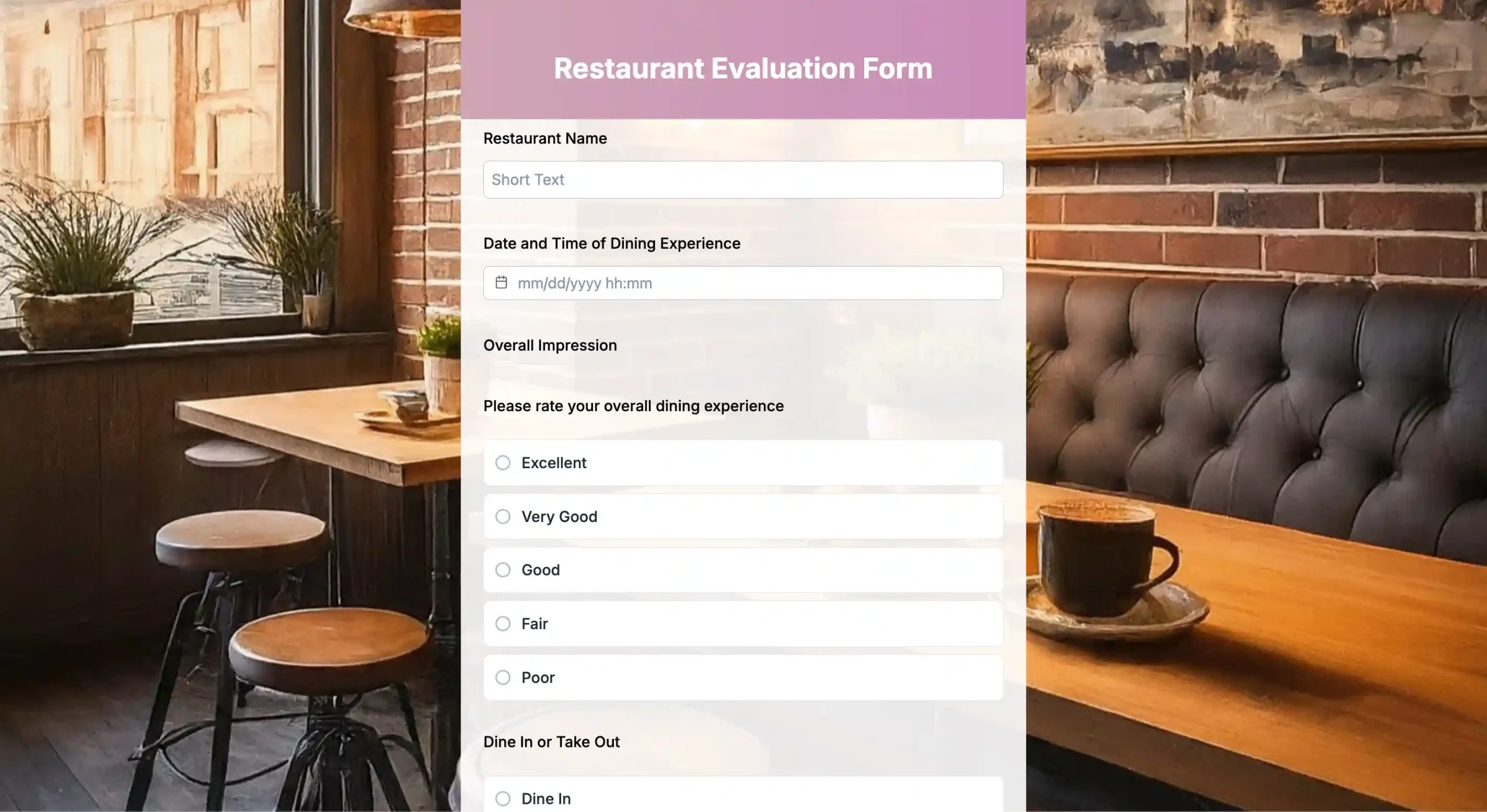
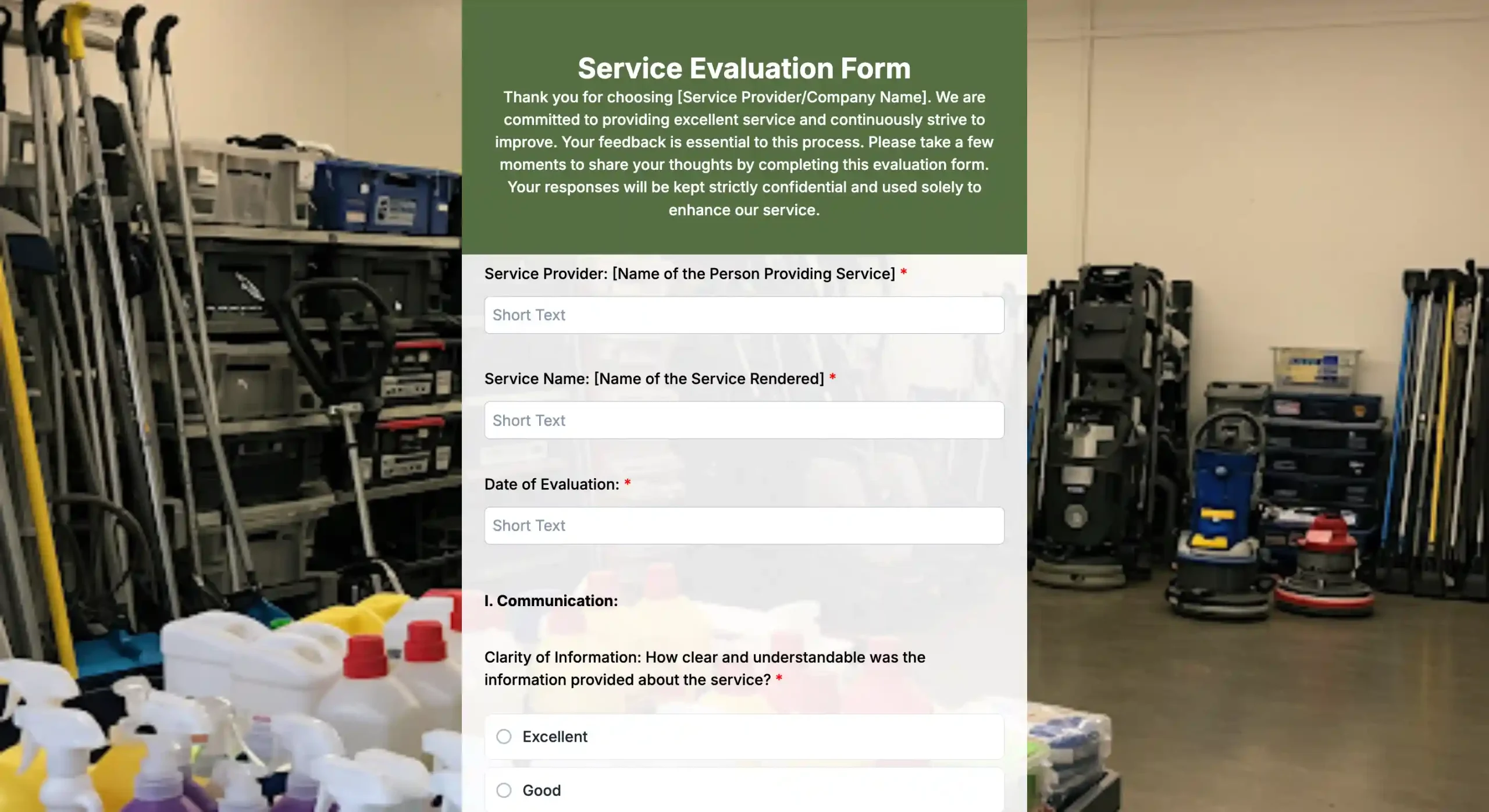
Restaurant evaluation form template
Find out what your customers think about your restaurant through this online restaurant evaluation form template. Collect valuable feedback from your customers to improve satisfaction, boost your reputation, and make data-driven decisions. Try this template now!
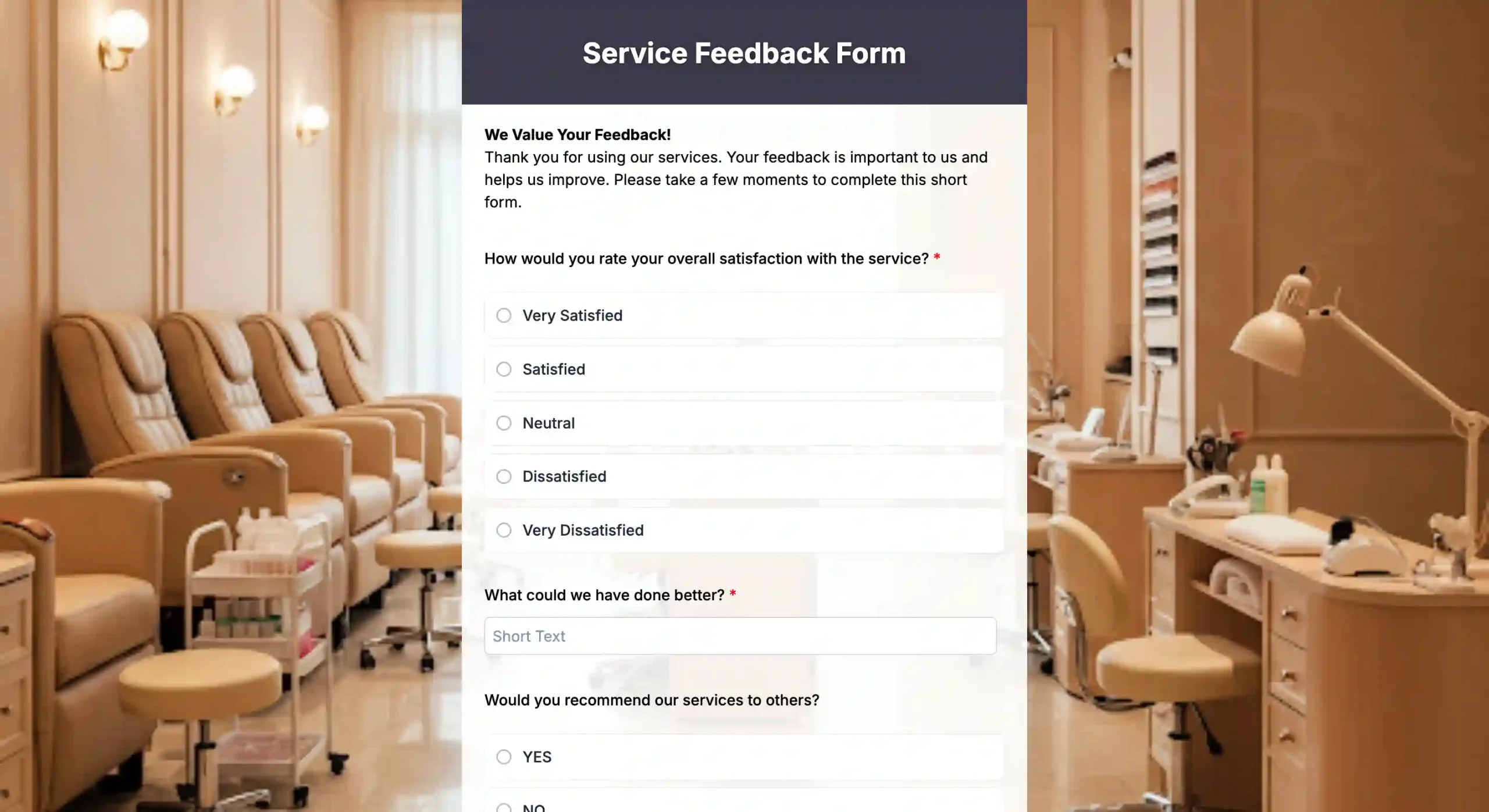
Service evaluation form template
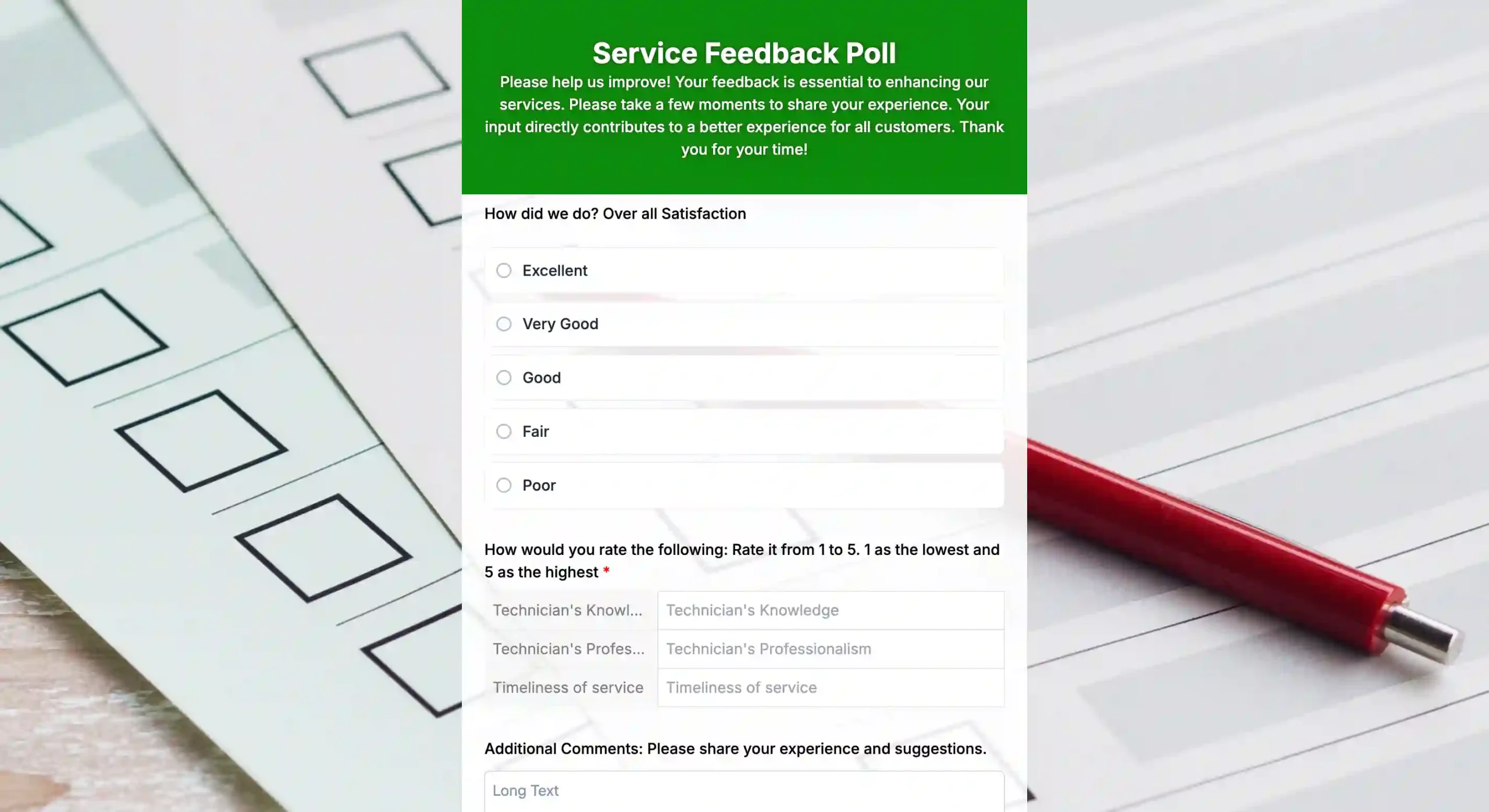
Improve your services using an online service evaluation form and gather post-service insights from clients. Collect valuable insights from your customers and enhance your upcoming service provisions.
How to create a food survey form with an online form builder
Now that you know the basics of survey questions, it’s time to discuss how to create forms using the form-making tool. The process is simple; here are the steps that you will have to follow:
1. Sign up for a form-making tool
Start by choosing a form creator and signing up to create an account.
2. Start building your form
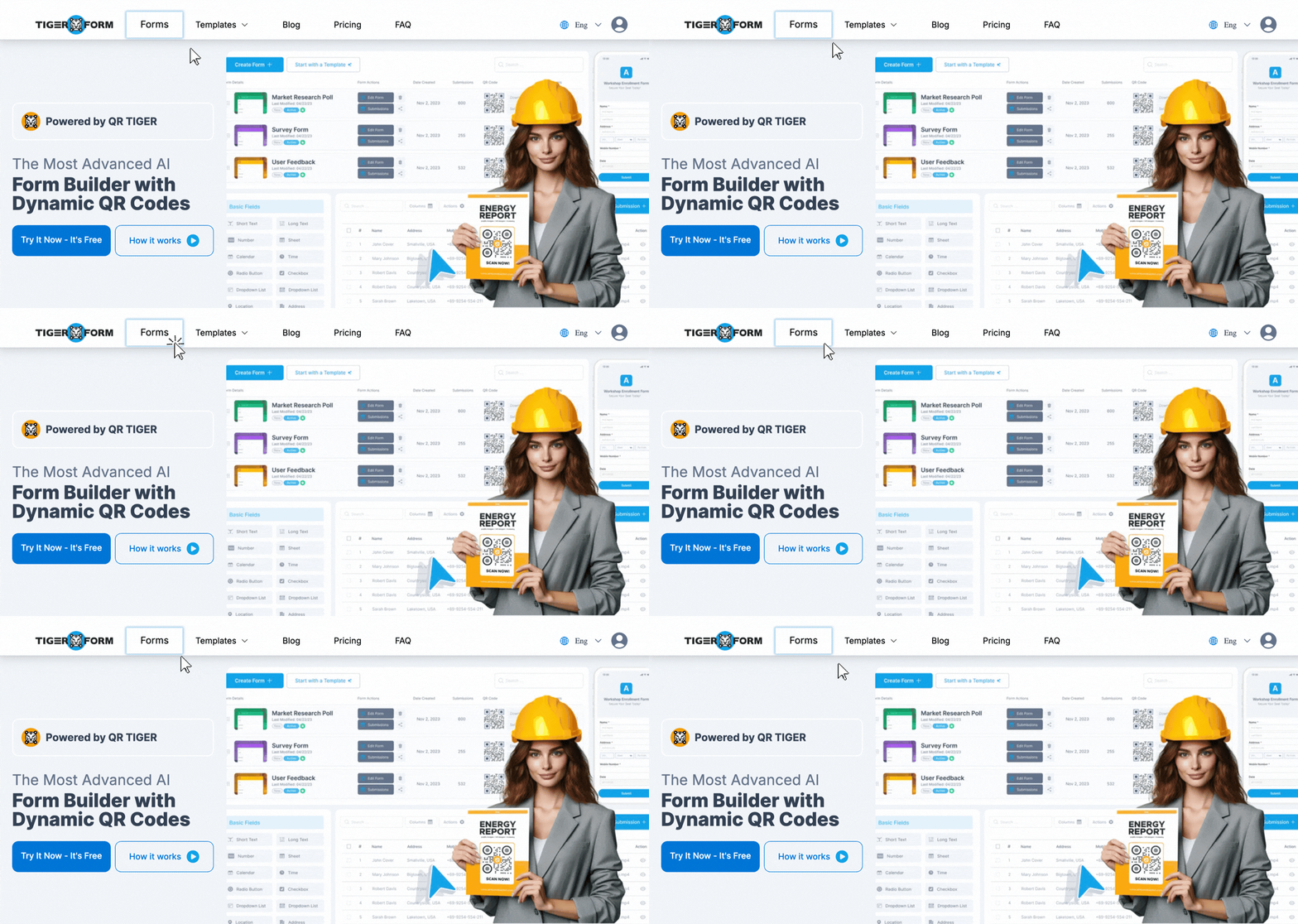
Click “Forms” to build your form from square one, or choose a pre-made template under “Templates” to get started quickly.
3. Add your dining survey questions
Add fields for your questions and mark key fields (name, email, and phone) as required. Customize the font, colors, and layout to reflect your brand.
4. Generate and customize a QR code
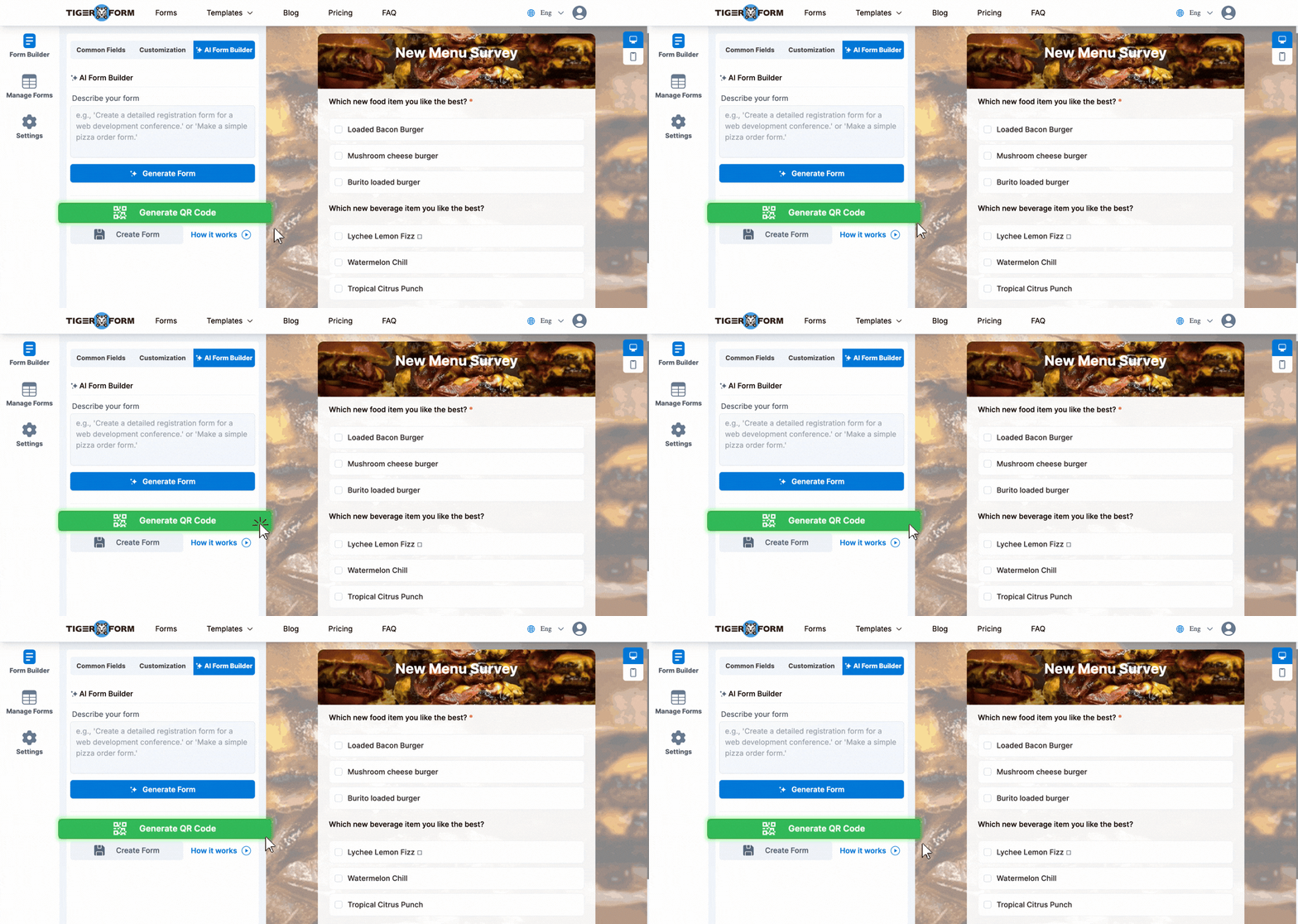
Once your form is complete, generate a QR code. You can customize its visuals to match your brand.
5. Export and share your QR code
Download the QR code to share it digitally via email or online platforms, or print it for physical distribution.
6. Track scans and submissions
Check the analytics feature in the tool’s dashboard to see who’s scanning and submitting your form. Use that info to make improvements.
Tips for writing food questions for surveys

Knowing the right type of survey questions about food isn’t enough; you must craft the survey form clearly, concisely, and engagingly. Below are essential tips and guides for writing a food survey. survey questions about food
1. Open-ended vs. closed-ended questions
Before you begin writing the form questions, deciding between open-ended and closed-ended questions is important.
Open-ended questions allow respondents to reply in detail and provide qualitative insights. On the other hand, close-ended questions don’t give people the same chance to explain since they have to pick from set answers like ‘I’m satisfied,’ ‘I agree,’ or ‘I don’t agree.’
Both types of questions have their upsides, and closed-ended ones make it easier to gather data and get straightforward feedback. But relying only on them isn’t always the best move. The choice should depend on the type of customer feedback you want to collect.
According to Voice of Customer (VoC), open-ended questions reveal 80% more issues than predefined questions; thus, open-ended questions are the best option if you’re looking for deeper insights. Closed-ended questions should always be used for simple feedback.
2. Questions that encourage honest feedback
Another important tip for food surveys is to include questions that encourage feedback. This is possible when we avoid overly technical questions. For instance, questions like “How would you evaluate the efficacy of our staff communication and management?” may confuse respondents and build hesitations.
Instead, ask simple questions like, “How satisfied are you with our staff communication and management skills?”
Clear, simple questions help respondents understand quickly, which makes them more likely to provide thoughtful answers.
3. Keeping questions focused on one topic
Always stick to one topic while writing a food survey question. Combining multiple topics in a question can confuse readers and lead to inaccurate and incomplete answers.
For instance, instead of asking, ‘How do you feel about our customer service and food quality?‘ break it into two separate questions:
- How do you feel about our customer service?
- Do you like the quality of our food?
This shows clarity and allows respondents to provide honest and accurate feedback.
4. Ensuring questions are easy to answer
Avoid incorporating questions that are difficult to answer for respondents. Focus on creating simple and, most importantly, relevant questions to the topic and customer experience.
Rather than asking, “What is the exact nutritional value of the last meal you’re at?” you can pose the question: “Was your last meal healthy, moderately healthy, or unhealthy?“
Such an approach to dining survey questions helps respondents answer quickly and confidently without feeling overwhelmed by the complexity.
5. Concise and simple questions
Once you’ve crafted the questions for the survey form, make sure they’re simple and concise. Users don’t like complex language or long sentences, as they mostly lead to confusion, which results in a high-form abandonment rate. This, in turn, prevents you from collecting valuable qualitative data you need to make informed decisions.
6. Testing your questions for clarity
Finally, test your questions for clarity before using them in a retail survey form or an online feedback form. To do this, ask a small group of people from your target audience and request that they fill out the form.
Focus on the respondents as they fill out the form. Look for any confusion or frustration on their faces. This will help you understand how comfortable they are with the questions.

Improve your food service with polished survey questions
Leveling up your restaurant’s food and service starts with one key thing: real insight. Guesswork and random feedback won’t cut it. By asking the right food survey questions, you’ll get honest, useful input that helps you tweak your menu, make your guests happy, and grow your business on purpose, not by accident.
But it’s not just about asking the right questions; it’s also about how you present them. A polished survey with clear restaurant feedback questions, shared through easy tools like QR code forms, will likely engage people and give you solid feedback.
So don’t just serve food, start a conversation. Include your customers in your upgrades to make things even better. Give it a go and create a smooth, fun experience they’ll actually enjoy
FAQs
How many questions should a food survey have?
Keep it short and focused—typically, 5 to 10 questions are ideal to maintain engagement and increase response rates. Short surveys respect your respondents’ time, which makes them more likely to complete them.
How often should a restaurant run a food survey?
You can run it periodically—monthly, seasonally, or after specific events such as menu updates, holiday promotions, soft openings, special dining impressions, or post-peak seasons. These moments are ideal for capturing timely feedback, helping you stay aligned with customer expectations, and adapting to their evolving preferences.
Why should I create a food survey?
Food surveys help gather insights about customer preferences, improve menu offerings, tailor services, or research dietary trends and nutritional habits.
How should I structure a long survey without losing participants?
Group related questions into sections (e.g., menu, service, value), use progress indicators, and mix multiple-choice with a few open-ended prompts.
What question types work best for food surveys?
Balance: Likert scales for satisfaction (1–5), multiple choice for preferences, dropdowns for demographics, and a couple of open-ended prompts for nuance.
How can I avoid survey fatigue with 60+ questions?
Prioritize essential items, rotate optional questions, and offer incentives or a quick-briefer version for mobile users.
How can I measure repeat visit intent?
Include a direct 1–5 scale on likelihood to return, followed by a request for reasons and potential barriers if they’d avoid returning.
Should I ask about price perception?
Yes—ask about perceived value and price sensitivity (e.g., “Are our prices fair for the portion and quality?”) to gauge value alignment.
How do I ensure a diverse set of respondent voices?
Use demography questions (age range, location, dining frequency) and consider multilingual options if relevant.
How should I handle negative feedback?
Ensure a dedicated open-ended space for complaints, then have a quick follow-up process to address issues.
What’s an engaging closing prompt for insights?
End with: “If you could change one thing about our food experience, what would it be?” to capture actionable ideas.