
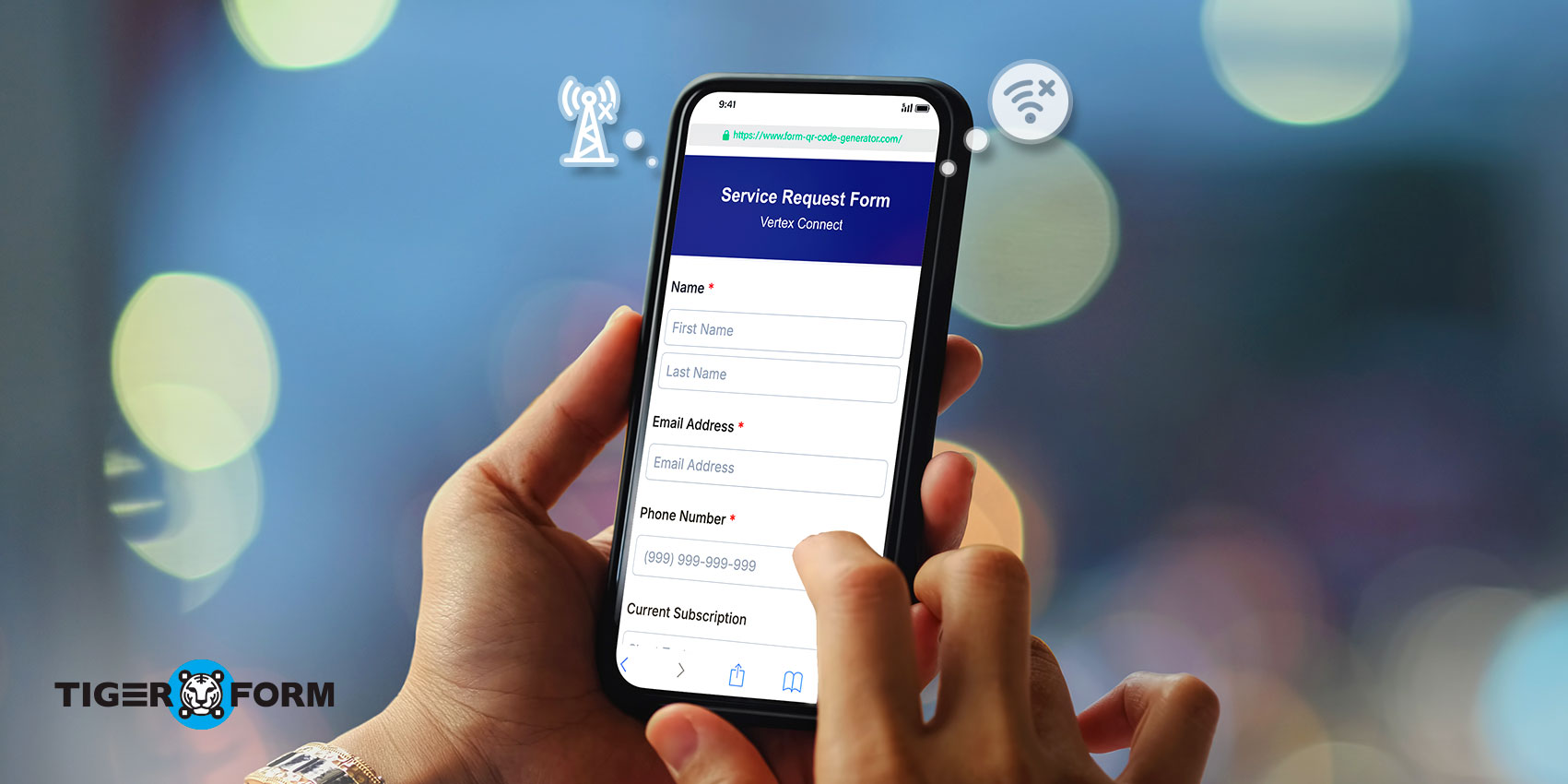
In this digital world, customer service is crucial for the telecom industry’s success because manual service processes often result in errors, inefficiencies, and frustrated customers.
The QR code form builder can help solve these problems and improve service requests and customer satisfaction.
With this tool, one can design a form using a QR code so that customers with mobile phones can conveniently fill out service request forms. All of these requests are logged and managed to ensure smooth services.
Are you looking forward to exploring more about TIGER FORM? Read this article to learn how to create a QR service request form for telecom.
What is a service request in telecom?
In telecom, a service request is a formal customer request for a specific service, support, or resource from a provider. These requests usually involve setting up new services, fixing existing ones, or upgrading systems. For example, a customer might request the installation of internet services, the addition of a new phone line, or help with network problems.
Service requests differ from incidents because businesses plan them and can predict them, making them a regular part of routine operations rather than urgent repairs. Customers can submit these requests through various channels, such as customer support hotlines, web portals, or apps.
Effective service request handling is also a key element of telecom service assurance, helping providers meet quality standards that build customer trust.
A well-structured service request system is fundamental to strong telecom customer service. It allows providers to deliver timely support and effectively meet customer needs.
When to use online service request forms?
Service requests are critical in the telecom sector for several reasons:
- Customer satisfaction: Quick, accurate support boosts customer satisfaction and loyalty.
- Operational productivity: Telecom companies can improve productivity by streamlining service request processing. Streamlining telco digital paperwork will streamline workflows, allocate resources better, and reduce response times.
- Revenue generation: Many service requests involve boosting sales of new services, like adding premium channels or faster internet. It contributes to revenue growth.
- Brand reputation: A good service request system boosts the company’s image. It shows a commitment to reliable service and support.
How to create telecom service request forms in minutes
Implementing a QR code builder to streamline telecom service requests takes a few steps. The guide and steps are mentioned below:
Step 1: Identify service request types
In the first step, determine the types of service requests, as they vary: some are for fault reporting, others for billing inquiries, and some for other issues.
This step is necessary because each request will have a different form of QR codes for telecom. You must know different QR code types and forms to manage telecom digital paperwork effectively. After that, requests will be categorized based on frequency, complexity, and customer impact.
Step 2: Create the digital form
In the second step, design and create mobile-friendly forms using a free-form online builder.
The form should be simple for customers to understand and complete. Combine all required fields and questions to collect the details needed to resolve issues.
For teams looking to speed up setup, you can also use an AI form builder to create the form without manually adding and editing every field. This option works well for telecom support teams handling a wide range of service request types.
Step 3: Deploy the QR codes for telecom
In the third step, create an exclusive QR code for telecom for the telecom ticket submission form type. Since all the request forms have been categorized, the organization will easily create different QR codes for other requests.
Google Forms displays a QR code when customers use features like websites or social media. Here, customers must be instructed on how to scan and submit the request or complete the form.
Step 4: Automate data capture processing
In this step, it is necessary to adjust the settings of the QR form generator to help scan the QR code and process the received data. Subsequently, the data will be incorporated into the existing systems, making errors unlikely.
Step 5: Enable live tracking
This step allows active tracking to monitor the customers’ service request status. You can establish an automated system for notifications and reminders for the customers and the internal teams based on real-time telco info.
Besides, form creators must ensure that the form provides visibility and transparency from initiating a service request to its execution.
Step 6: Test and refine
Before using the QR form, select a limited number of customers and check its efficiency through testing. Finally, you can gather feedback and update the process as needed.
This process can also be adapted for other industries. The same steps could easily apply to a service request form for utilities such as water or electricity providers.

Benefits of QR forms to revolutionize service requests
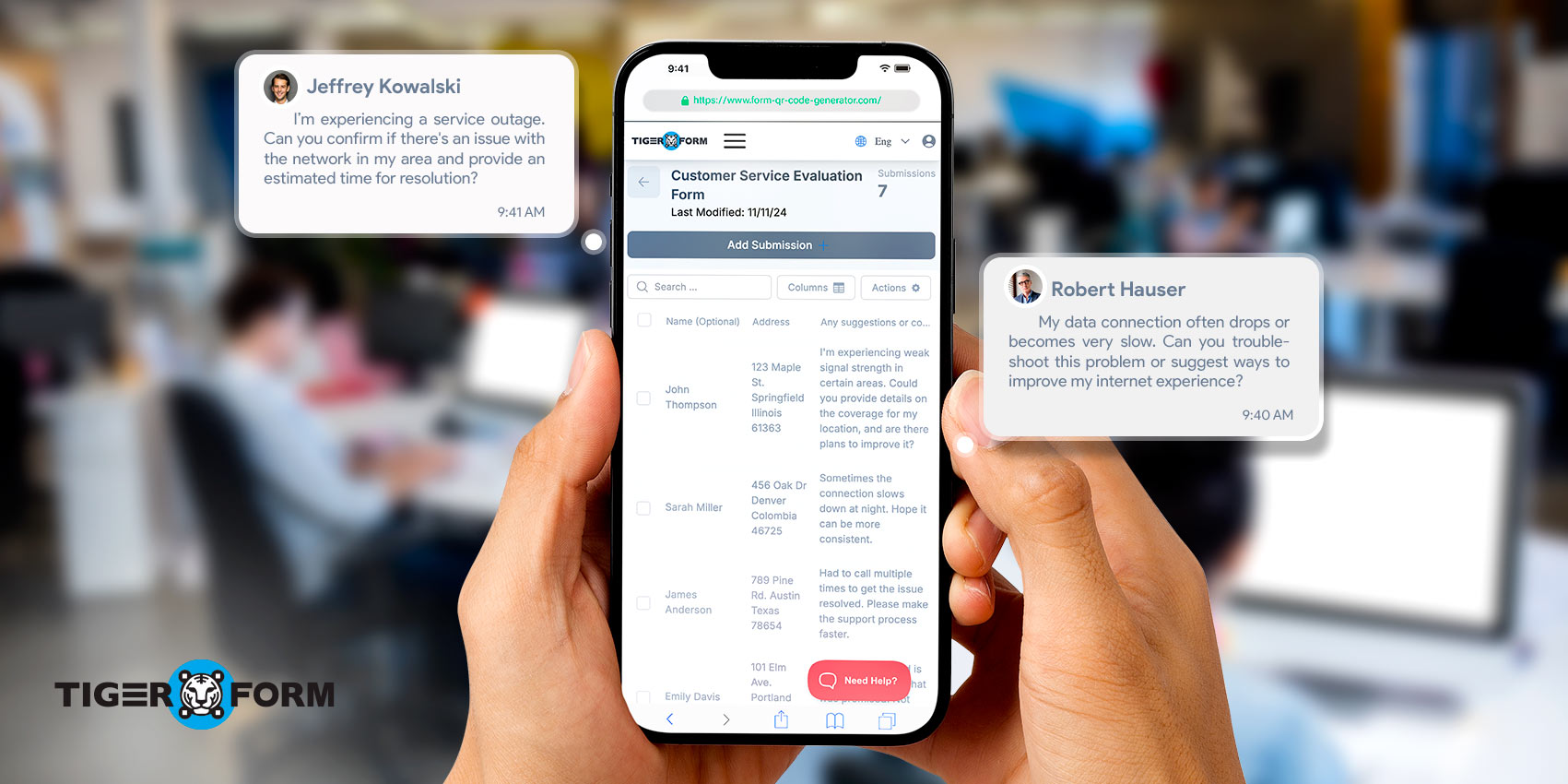
The QR code service request forms benefit telecom companies, their employees, and customers. They are listed here as:
Streamlined service requests
By implementing a Form QR builder, companies like Telecom can simplify their service request process, making every step faster and more functional.
Improved customer experience
They help improve the customer experience. Its incredible features allow customers to quickly submit telecom service request forms using mobile devices, reducing wait time and frustration.
Accuracy through automated data capture
Handles the data precisely and works fast. In other words, the company can use this online service request form to enhance service validation while reducing the risk of errors.
Enhance productivity
A form created from the QR code helps capture and process data, assisting telecom companies in better managing their resources. It also allows staff to shift their attention towards more important issues, increasing productivity.
Increased security
TIGER FORM guarantees that the customer’s data is safe and cannot be accessed by unauthorized personnel. Moreover, there is no question of privacy violation in this case.
Scalability
It is the perfect option for creating forms that can handle many service requests. You can work with many service requests simultaneously. So, unlike traditional methods of processing service requests, there is no concept of assessing one application at a time while others are on hold.
Cost savings
One advantage is that there is no need to spend money manually collecting, analyzing, and processing data. All these functions are executed through the features provided.
Data insights
Provides valuable data insights, allowing telecom companies to make data-driven decisions and improve their services. These insights can also strengthen the Telecom SIEM Framework by feeding security analytics with accurate, real-time form data. Furthermore, advancements in AI data analytics can now leverage this data to identify patterns, forecast demand, and inform smarter operational decisions.
The telecom industry can revolutionize its service request process by enhancing customer satisfaction and productivity through QR forms.
Challenges in telecom service request methods

Every industry faces challenges that affect its smooth functioning, growth, and revenue. The telecom industry also faces challenges with manual processing, including delayed response times and inefficient complaint tracking, which can further damage customer trust and create service gaps.
Additionally, these challenges include communication breakdowns and issues with data accuracy.
These challenges affect service providers’ reputations and credibility and annoy customers.
Telecom companies should shift to the most advanced service methods to improve customer experience and productivity.
Key features of TIGER FORM for a service request form for telecom
TIGER FORM combines extraordinary features to revolutionize how the telecom industry handles service requests.
Here are some critical features present:
- Easy form: It is easy to create a service request form, and people can quickly fill it out using smartphones.
- Quick submission: It enables people to submit forms in just a few seconds without unnecessary delay.
- Flexible: Allows users to customize the tool to meet their evolving needs and specific requirements.
- Automatic data capture: Collects data automatically; no manual intervention required.
- Mobile-friendly: The most beneficial feature is that it provides forms that can be accessed through phones and are available to almost everyone.
- Real-time updates: Submissions are automatically recorded.
- Secure and safe: Keeps people’s data and information safe and secure.
- Availability: It is always available, and customers can fill out the form anytime.
Beyond service requests, TIGER FORM can also build other telecom forms. Read this guide to explore the builder in depth.
The role of QR forms for service requests
The QR code online form builder is used worldwide as a practical solution for handling telecom service requests.
It is a tool that enables telecom companies to create online forms that customers can access. The QR form contains all the necessary questions provided by the telecom companies.
Customers fill out those forms using their phones and tablets. The service providers then collect the information from the telecom service request form and organize it, solving the issues accordingly.
Each form template has a unique QR code for telecom that differs from the others. You will be amazed to learn how QR codes resolve all the issues associated with telecom service requests.
In 2022, approximately 89 million US smartphone users scanned QR codes, indicating a growing trend of integrating QR code technology into daily consumer activities and business operations.
By digitizing and automating service request management with QR codes for telecom providers, they can more easily handle large volumes of requests while ensuring accuracy and efficiency.

Simplify the service request form in Telecom with TIGER FORM
TIGER FORM simplifies service request procedures in the telecom sector. This approach makes service request handling, submission, data capture, and processing more productive.
Furthermore, in a world where customer satisfaction is the most challenging task, QR forms shorten response times, increase operational performance, and help with customer retention.
If you want your telecom company to enjoy all the above benefits, you can contact QR Tiger, a reliable company, to develop the service request form for telecom. So, it is the right time to optimize your telecom service requests with the QR form generator and improve response times and customer satisfaction.
FAQs
How is it different from a traditional service request form?
It uses progressive disclosure, smart defaults, inline validation, digital signatures, and AI-assisted routing to speed up processing and improve accuracy.
Who can use the form?
Customers (end users, business clients) and internal agents can submit requests; it adapts to user type with relevant fields and help text.
Is it secure and compliant?
Yes, it uses encryption in transit and at rest, role-based access controls, audit trails, and compliance with data privacy regulations (e.g., GDPR/CCPA, as applicable).
What kinds of service requests can be submitted?
New service activation, plan changes, equipment swaps, repairs, outages, relocation, temporary services, and order modifications.
Does it support digital signatures?
Yes, customers can sign electronically to authorize changes or approvals, speeding up processing and reducing paperwork.
Can it integrate with other systems?
Yes, it can integrate with CRM, ticketing, inventory, and provisioning systems via APIs or connectors for seamless data flow.
How can organizations measure their effectiveness?
Built-in analytics track completion rates, average handling time, error rates, user satisfaction, and SLA adherence.