
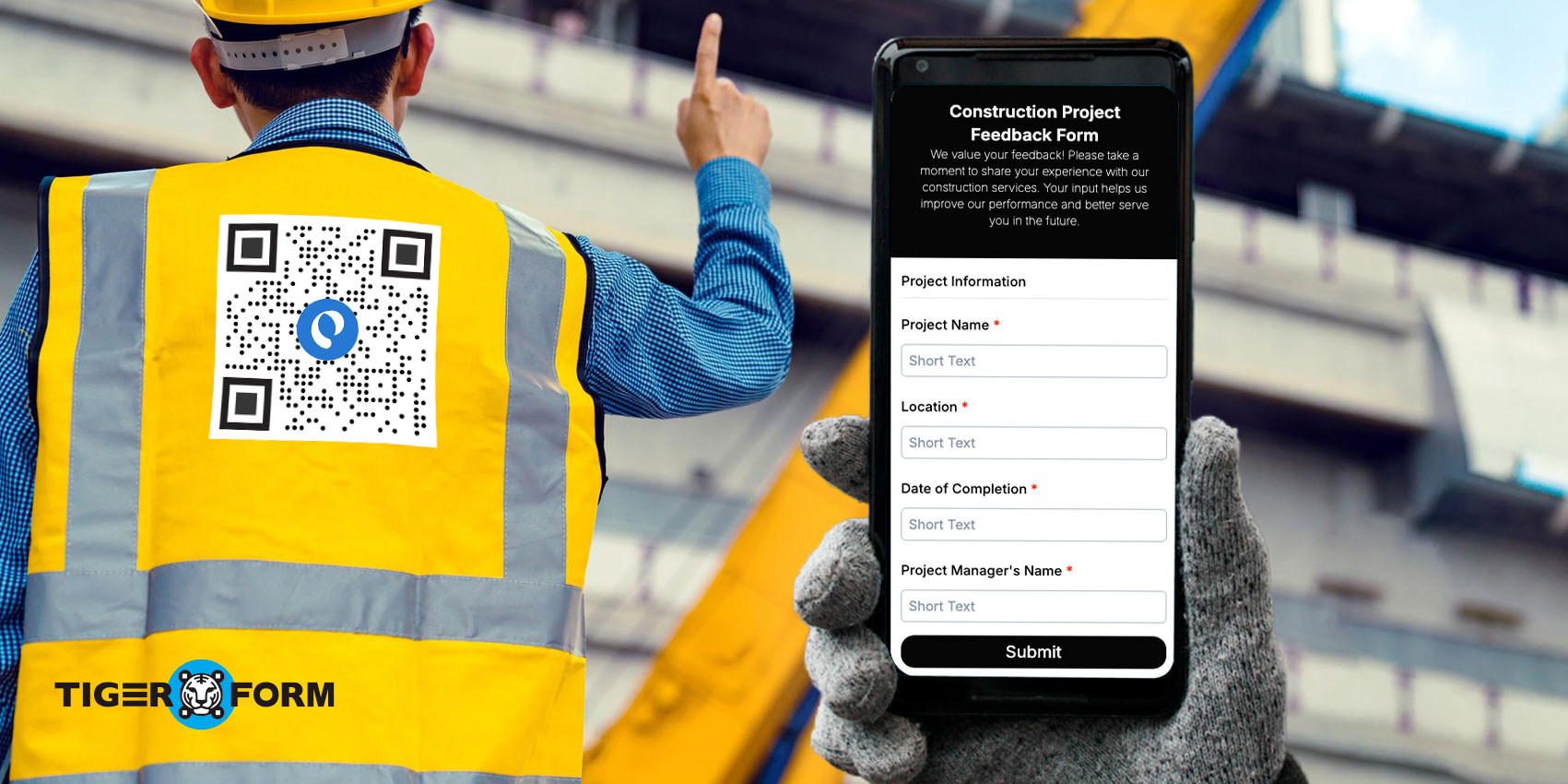
Regardless of the industry, an employee feedback form for construction is essential for companies to correct mistakes and create a more welcoming and comfortable working space to improve productivity. Previously, companies gathered this information by sharing the paper form with their employees.
However, now, they use QR codes to collect employee feedback forms for construction. QR codes enable companies to gather collective data more quickly. Their feedback is essential, especially in the construction industry, as their opinions may highlight issues that companies fail to realize, such as safety and work productivity. Let’s find out how construction companies boost productivity through employee feedback with the help of QR code forms.
What is employee feedback, and its importance?
Employee feedback is when managers and employees share insights on performance and skills. This process helps everyone improve and strengthens the team. Feedback can be positive or negative. A manager might give constructive criticism to encourage focus and praise efforts to boost morale.
Giving feedback to your team is crucial. It shows their strengths and weaknesses, helping them improve and build on their skills. Positive feedback keeps employees engaged and motivated. It boosts performance and team spirit, creating a better work environment.
Also, sharing and receiving feedback builds trust and open communication. This encourages stronger relationships and makes team members approach you with questions or concerns.
The following are the tips to provide feedback successfully:
Be specific
Unclear feedback in construction leads to confusion and errors. If a team member outperforms, be specific. For instance, point out what they did well in electrical work or framing tasks. Instead of saying “Good job,” mention their skills or accuracy. This helps them see what to keep doing and what to improve.
Give timely feedback
In construction, timing and communication go hand in hand. Feedback only works when it’s shared at the right moment and in the right way. Some team members prefer on-site quick check-ins. Others like scheduled reviews during meetings. The key is to ask what works best for each person.
Once you know their preference, plan and seek feedback as soon as possible. Regular and timely job site productivity feedback supports the team, keeps them aligned, and ensures safety and project quality.
Use the problem-solving method
For the construction industry, finding solutions to unexpected issues is most needed. So, seek feedback on how an employee thinks critically and manages time when under pressure.
- Ask for Reflection: “The concrete pour was delayed by the weather, but you quickly reorganized the formwork crew to jump on the interior framing schedule. How did you decide to pivot that quickly, and what did you learn about scheduling from that challenge?”
- Acknowledge Initiative: “I saw you used a different clamp system that shaved an hour off the setup time for the shear wall. That kind of resourceful thinking and initiative is exactly what we need to meet our schedule.”
Focus on a few main key points
The construction environment is fast-paced and demanding, and employees often handle more than just evaluations. To keep feedback sessions short and effective, focus on the main issue and one or two side points.
Limit each session to the most critical concern or the most impactful positive observations so the message is clearly understood.

What is a QR code feedback form?
What is a QR code feedback form in construction? QR codes are widely used to simplify data collection and reduce human error, especially in construction. Businesses use QR codes to track assets and collect feedback from employees, similar to how a retail survey form gathers customer insights and preferences.
Employees can quickly fill out feedback forms on their devices by scanning the QR code, and the data is automatically stored for review. These customizable feedback forms allow companies to tailor them to their needs, such as assessing stress levels and the working environment. Integrating QR codes streamlines information sharing and enhances productivity.
Top benefits of QR codes for employee feedback in construction
Companies need to use a builder to create a form QR code. This tool enables them to create and customize their forms according to the needs of the construction employee survey.
QR codes are a versatile tool for collecting employee feedback, offering benefits such as:
Convenient to use
Many people use QR codes because they are convenient to implement. QR codes are much more convenient than the traditional method of collecting opinions through physical paper.
These code forms are not complicated to create; companies can only use form builders to make them. They may even use employee feedback forms for construction templates that are widely available online.
With QR codes for employee feedback, users do not need to write their opinions manually on a piece of paper. Instead, they can scan the codes on their mobile phones and fill out the survey form from their phones, which is beneficial for company growth and can be a valuable strategy in understanding how to get more product reviews.
Versatile URL
Companies may create a form with a form tool to make it easier for employees. QR codes generate a scannable link that works on all devices, including tablets, phones, and desktops.
Each code also creates a short form of the URL. Companies can share this short URL with employees as an alternative to the QR code, making it easy to distribute via digital platforms like social media and email, speeding up data collection.
Customizable QR code for construction
The QR code form is highly customizable, meaning companies can make any form according to their needs. For example, your construction employee feedback form may include several metrics, such as job satisfaction, performance feedback, senior leadership, and individual management.
Additionally, companies can make these forms more accessible and complete using rating scales. Thus, employees can fill out the site worker feedback form by choosing available options rather than writing their opinions. They can add categories or lists to enable more extensive data collection.
You can also make custom QR codes more visually appealing by using illustrations or dynamic designs so that the document does not look blank.
Ways to use QR codes effectively on construction sites
As you may know, QR codes are two-dimensional barcodes that can be scanned with a QR scanner. Most modern phones already possess this feature by default.
To see the content within the codes, users only need to open their camera app and point it directly at the code. This process enables users to enjoy the benefits of the QR code, including seamless information-sharing.
QR codes may be helpful in industries that require manual labor, such as construction. Many manual tasks involve asset tracking, progress checking, and material assessment.
Manual work will slowly progress. Therefore, the best solution for any company is to integrate QR codes into its systems. This strategy may lead to a smoother workflow, as it can ensure accurate data collection and easy information sharing.
Some benefits of QR code integration in the construction field are:
Easier access to blueprints
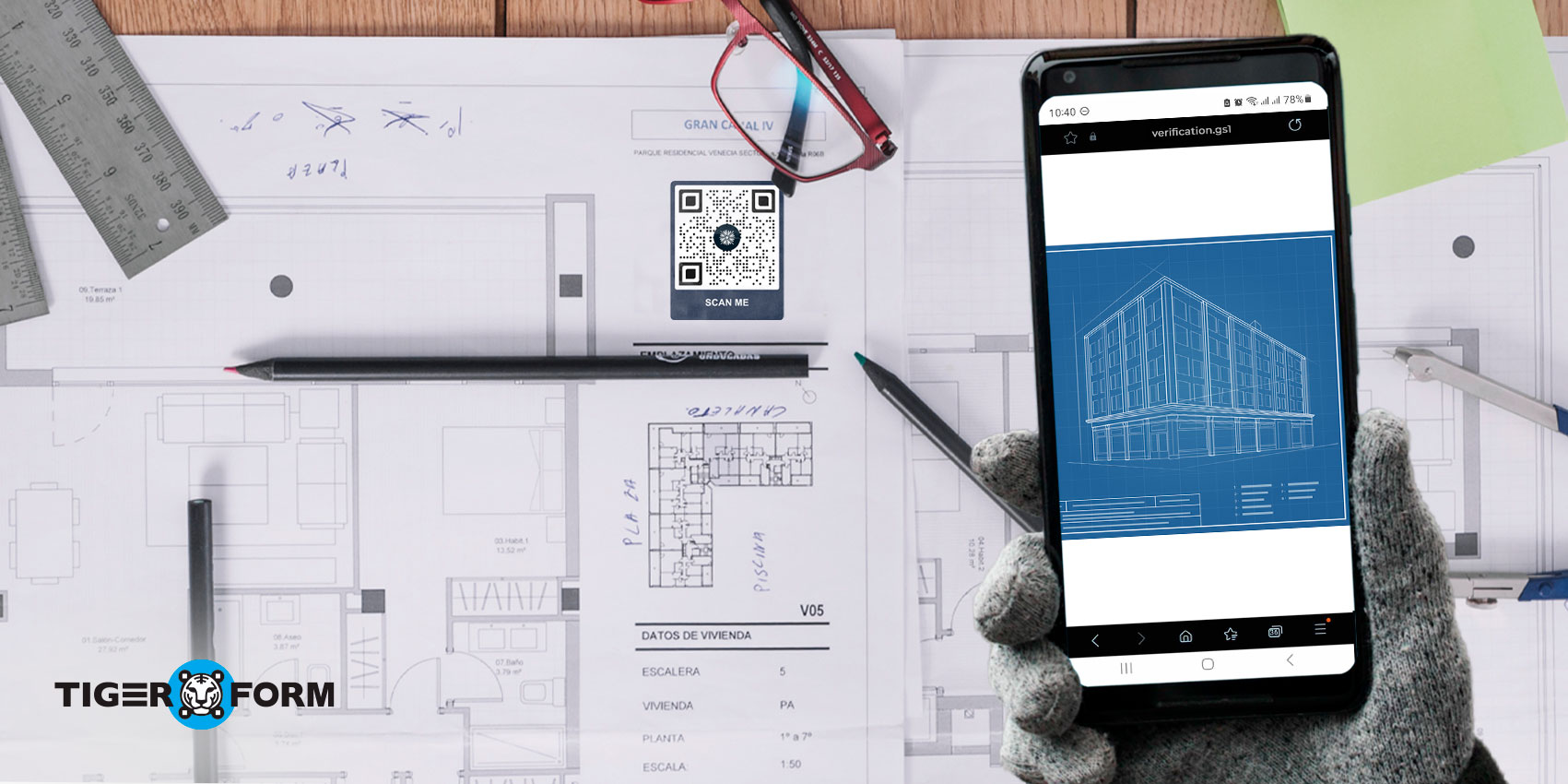
Blueprints are key for builders in construction companies. Therefore, they must be able to access them at any time. As blueprints might change during the building process, it is also important to keep everyone updated about them.
How is this possible if blueprints are only available as physical documents? This is a very troublesome issue, so companies need a way to share blueprints easily among builders. One solution they need is QR codes.
Companies may use the form QR code to generate dynamic QR codes. They can share the codes by placing them on building sites for workers to access a construction worker feedback form. With a scan, anyone can obtain information about the blueprints of the building they are working on.
They can also change QR codes anytime after an update or revision. Thus, anyone responsible, especially workers, may always get the most accurate information.
Easily track employee attendance
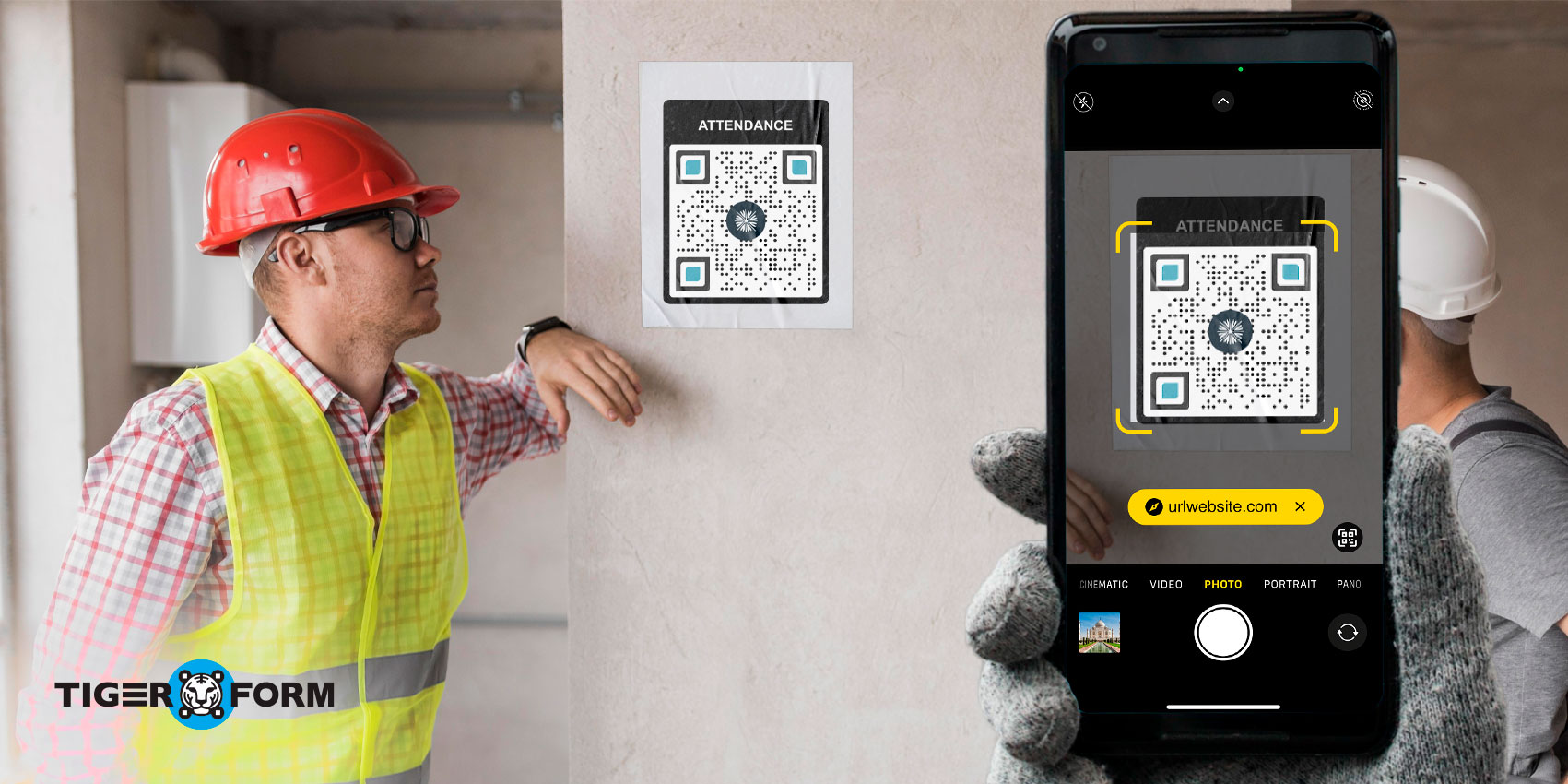
Aside from using QR codes to create employee feedback forms for construction, companies may also integrate them into their attendance systems. Instead of checking the workers individually, as in the old days, it would be better and faster for the company to use QR codes.
The way it works is by placing the codes at the entrance of building sites. Construction team members can scan the IDs whenever the workers enter the area. The data will be transferred and projected directly into the system for the management team to check later.
With this integration, companies may also benefit from better employee engagement with QR codes.
Preventing theft with an employee feedback form for construction
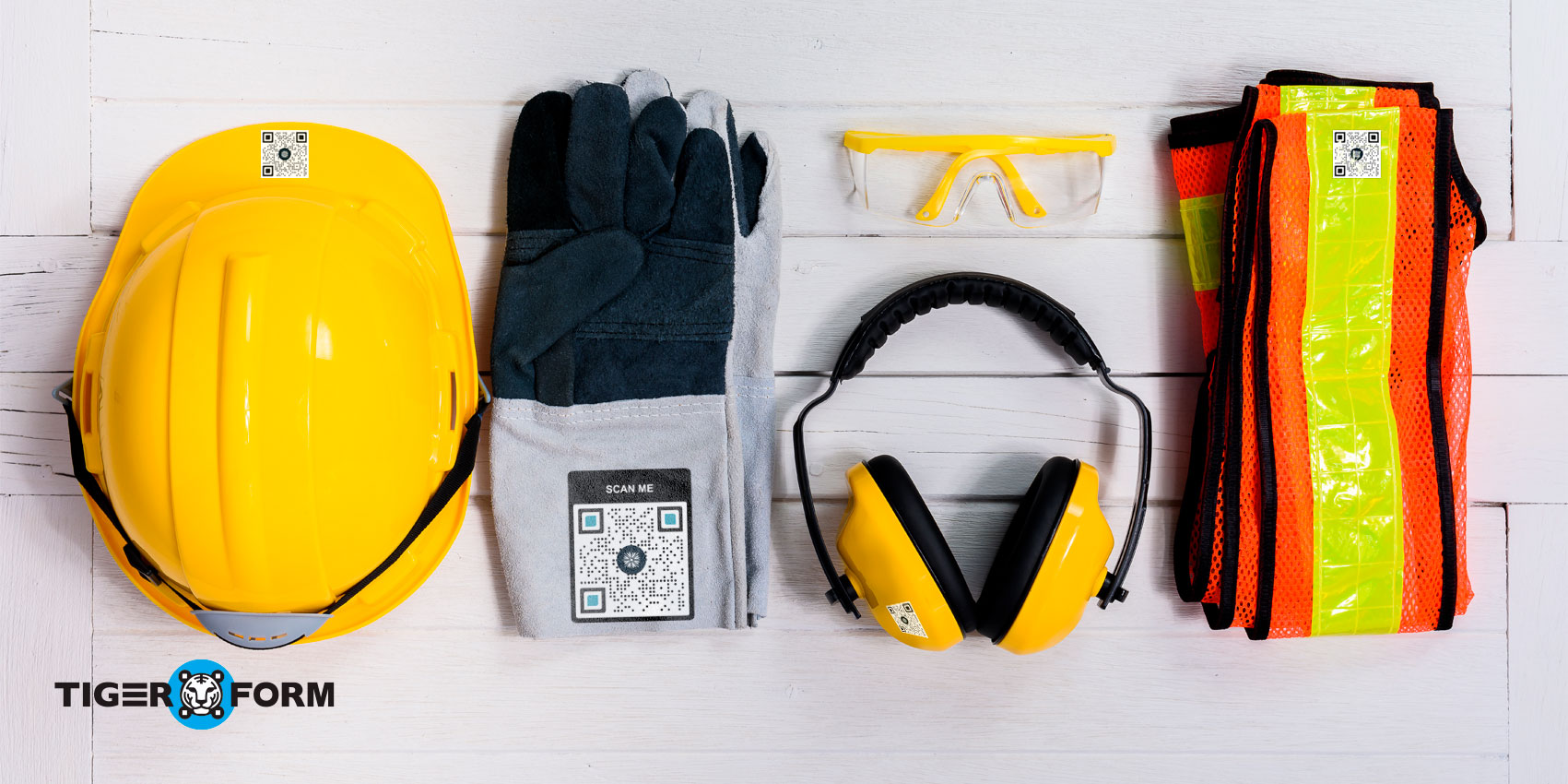
Companies can reduce the risk of theft by using the form QR code. The most common method of using QR codes in the construction field is to track assets. By placing the codes on each asset, companies can keep track of their assets and prevent them from losing millions of dollars due to theft.
Must-have fields in an employee feedback form for construction
A well-structured feedback form captures insights that improve safety, productivity, and team satisfaction. Organize your form into these key categories:
1. Employee and context information
This section provides context for each response, helping you identify trends by role, location, or project. It ensures feedback is actionable and relevant to specific teams or sites.
- Name or ID (optional/anonymous choice)
- Job Title/Role
- Site/Project Name
- Submission Date
2. Safety and compliance
Safety is critical on construction sites. This section captures employee input on training, hazard reporting, and adherence to standards, helping prevent accidents and enforce compliance.
- Safety Training Effectiveness
- Hazard Reporting
- Safety Standards Enforcement
3. Resources and efficiency
An efficient workflow depends on available tools, materials, and processes. This section identifies bottlenecks and resource gaps that may slow down productivity.
- Tool & Equipment Availability
- Material Delivery Timeliness
- Workflow Bottlenecks
4. Management and work culture
Employee satisfaction and clear communication influence morale and retention. This section helps companies understand how leadership and teamwork impact daily operations.
- Overall Job Satisfaction
- Supervisor Communication
- Team Collaboration & Culture
5. Open feedback and suggestions
Employees often have valuable insights beyond the scope of structured questions. This section encourages them to share ideas, concerns, or suggestions that can drive meaningful improvements.
- Additional Comments
- Ideas for Improvement
Ready-to-use construction feedback form templates
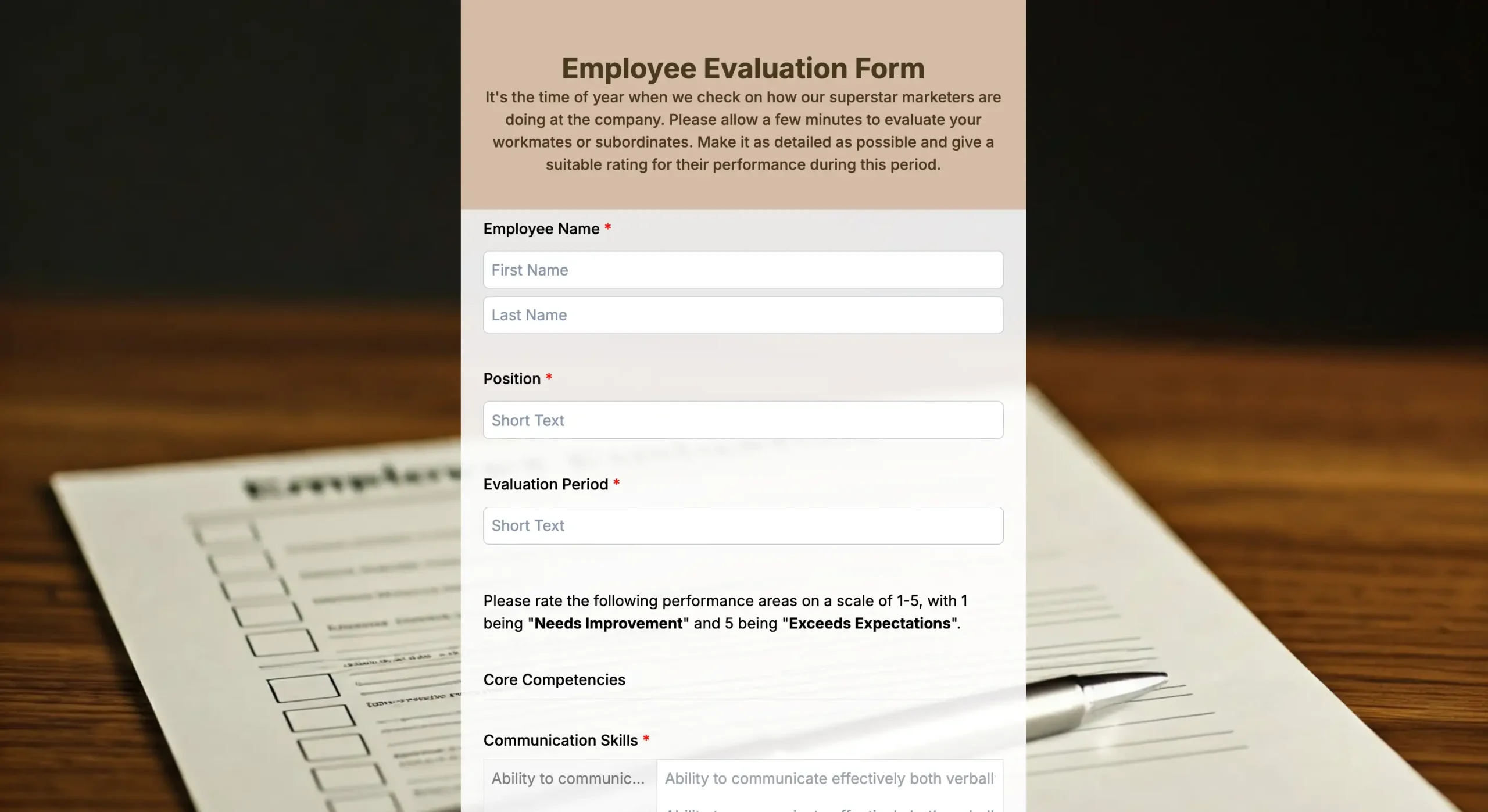
Employee evaluations form template
Improve communication and feedback with an online employee evaluation form. Facilitate two-way feedback, track performance goals, and foster a culture of continuous improvement.
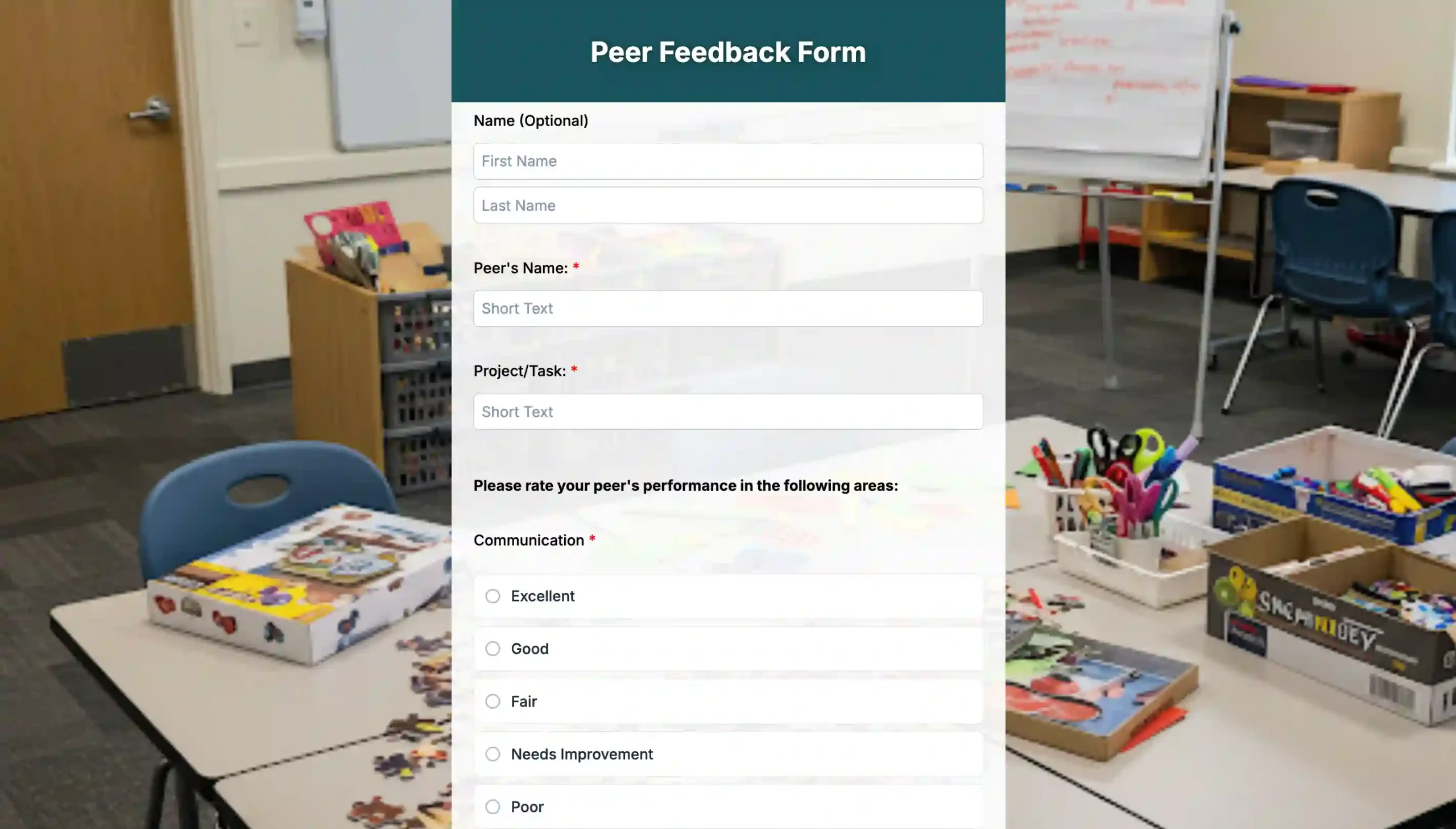
Peer feedback form template
Provide constructive peer feedback through our online peer feedback form template to enhance collaboration and growth, foster a supportive environment, and boost team performance.
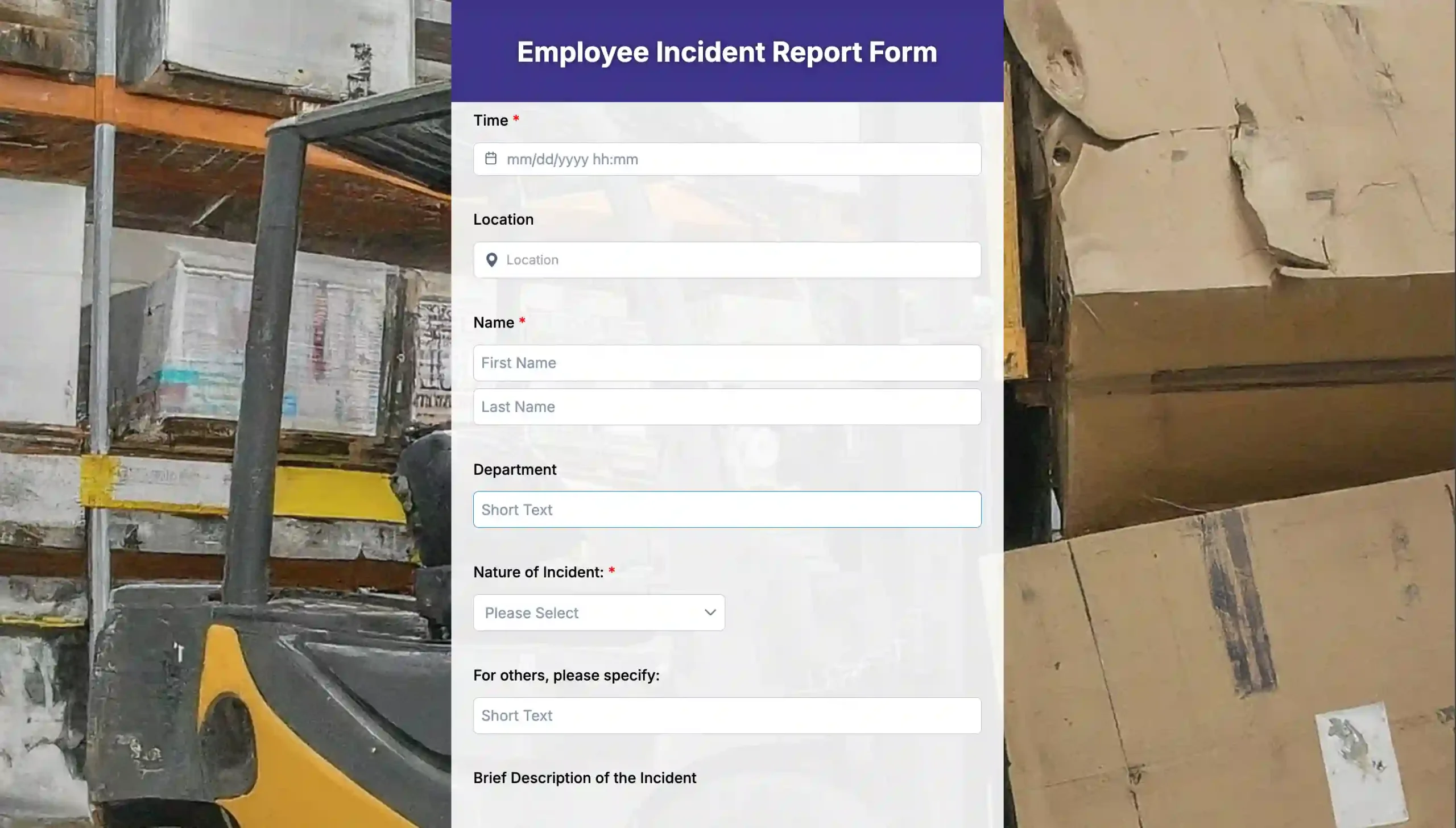
Employee incident report form
Improve your organization’s risk management with our online incident report form template. Use it alongside your safety inspection checklist to track incidents, identify root causes, and implement corrective actions to prevent future occurrences.
Best practices for implementing QR code forms in construction sites
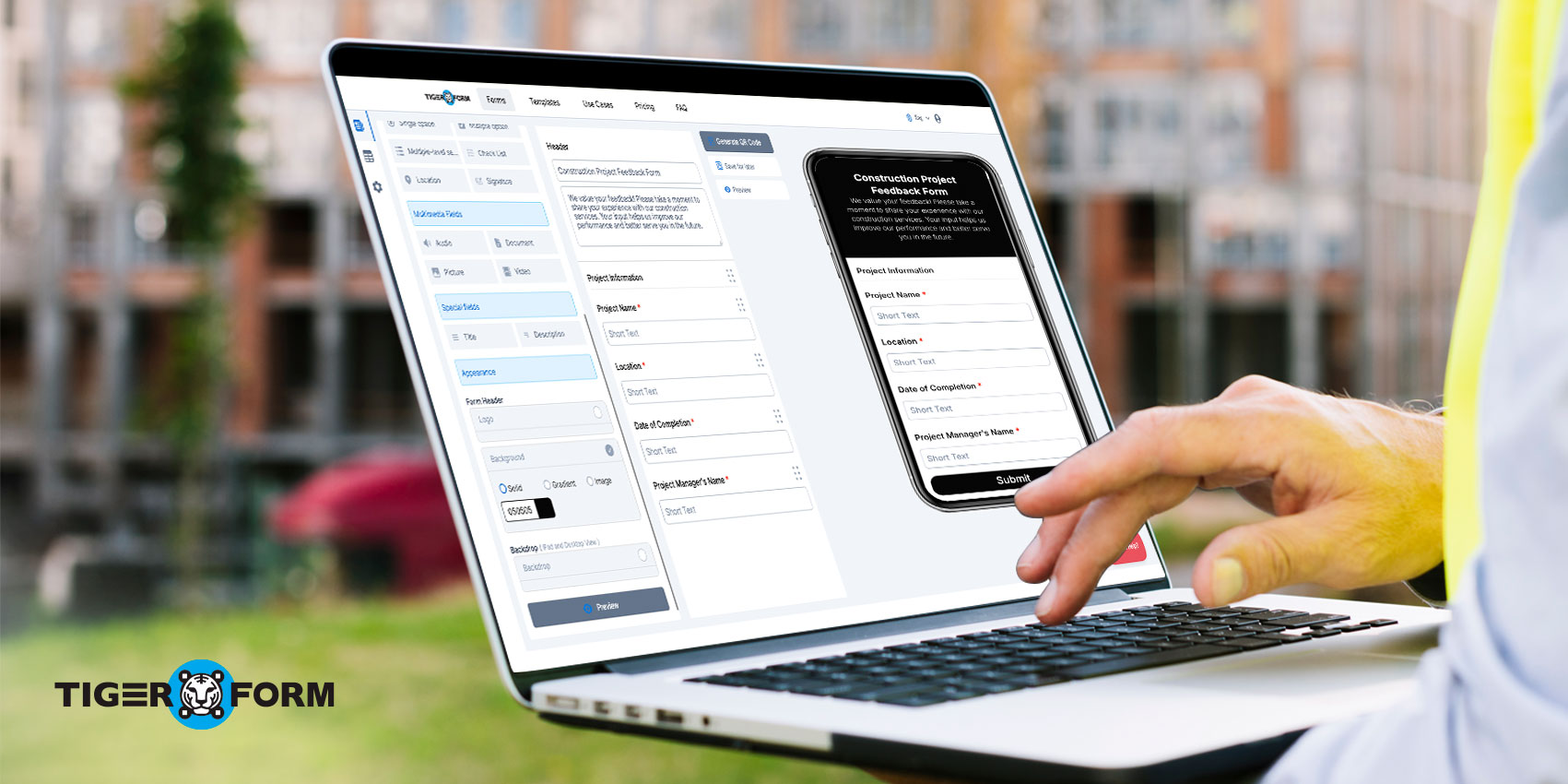
By using QR codes for construction, companies may experience faster and more well-organized employee feedback collection through an employee feedback form in the construction industry. They can easily simplify all tasks that appear daunting. However, they must know how to integrate QR code technology into their digital feedback system to enjoy the benefits.
Applying the QR codes
First, they must generate bulk QR codes. Companies also require supplies and equipment to print them. Fortunately, QR codes are easy to manufacture using regular printers and label paper.
Scanning equipment is also important. These tools are mandatory to ensure the corresponding staff can easily obtain data inside the codes. Companies may utilize more proper tools to provide a smoother scanning process.
Implementation of the construction QR Code
Finally, companies must also ensure that their employees understand the system adequately. If necessary, companies may hold training sessions on QR code integration, including explaining how codes work and how to scan them using their mobile devices.
If your company is ready to reap the benefits of QR codes, there is no time to waste. It would be better to start creating code for your purposes.
Fortunately, making an employee feedback form is simple. Businesses can use the form QR code generator to create business QR codes.

Create an employee feedback form with QR code form builders
Using QR codes for employee feedback forms for construction offers a more organized and simple approach to data collection. Unlike traditional paper methods, QR codes simplify the process, making it faster and more convenient for companies and employees.
By integrating QR codes, construction companies can gather valuable insights, enhance productivity, and address safety and job satisfaction issues. Implementing QR codes also allows businesses to customize forms, track assets, and improve attendance systems.
If you want to boost productivity in your construction business, create QR code forms for employee feedback from the QR code form creator.
FAQs
Should feedback be anonymous?
Anonymity is recommended to encourage honesty, but optional name fields help clarify follow-up needs.
What kinds of questions work best on a construction site?
Short, specific prompts about safety, workflow, equipment, shifts, communication, and on-site obstacles.
What if workers don’t see immediate changes?
Communicate a transparent action plan and timeline; quick wins build trust and participation.
How should the form be delivered on-site?
Tablet or mobile-friendly surveys at shift start/end, with paper backup for remote sites.
How can we measure improvements from feedback?
Compare productivity metrics (output per hour, downtime, and rework rates) before and after the actions, along with morale indicators.
Can we customize the form for different trades?
Yes, include role-specific sections for carpenters, electricians, masons, crane operators, etc.
How do we train crews to use the form effectively?
Brief onboarding, demonstrate how to answer quickly, emphasize anonymity, and reassure that feedback drives real changes.