
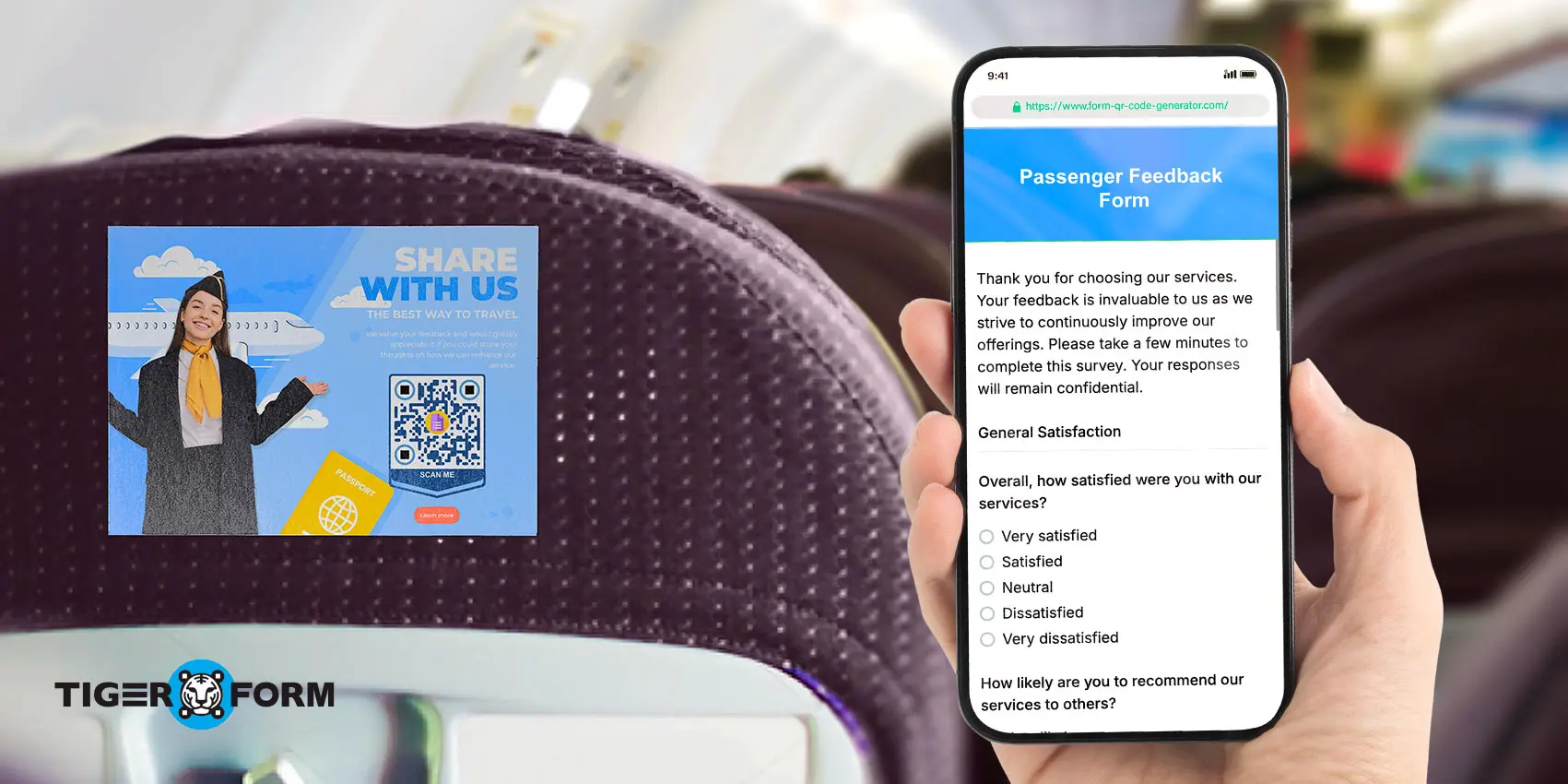
Passenger feedback is essential for transportation companies. It enhances services and ensures satisfaction. Understanding what passengers need and their preferences is essential for bettering service quality and achieving customer satisfaction.
Digital tools now make feedback collection quicker and easier. Travel feedback forms for transits are among the best methods for this. These forms provide valuable insights into what customers like and where companies can improve.
Let’s discover how transportation companies can use a passenger feedback form to improve their services. We will also discuss the importance of feedback, the issues with old methods, how QR codes can help, and best practices for creating impactful feedback forms.
Why are passenger feedback forms essential in transportation
Passenger feedback is a critical component of any transportation service. It enables riders to express their views directly, helping identify areas for improvement and improving transportation service with feedback. Here’s its importance:
Understand passenger needs
Feedback tells transportation companies exactly what passengers want. It can showcase aspects like cleanliness, timeliness, or staff friendliness. This knowledge aids companies in targeting their improvement efforts.
Spot issues early
Frequent issues, like delays or uncomfortable seating, can be addressed quickly when commuters point them out. A feedback form for transportation services helps transportation companies make changes before the problems get worse.
Increase satisfaction and loyalty
When companies listen to constructive feedback and make improvements, customers are happier. Satisfied customers are more likely to use the service again and recommend it to others.
Make data-driven decisions
Feedback helps companies make informed decisions. For instance, the company can adjust schedules if many passengers complain about delays.
Common issues, such as delays, dirtiness, or poor client care, can be identified through their feedback, thus improving a company’s services and leading to repeat customers who appear loyal even during challenging business cycles.
How to create an effective passenger feedback form for transportation
To get helpful feedback, the form must be well-designed. Here are tips on how to build a form for your passenger feedback using a form builder:
Keep it short and simple
The pre- and post-ride feedback forms should be easy to understand and complete. Ask straightforward questions and avoid making the form too long. Focus on key areas, such as:
- Being on schedule (e.g., “Was your bus or train on time?”)
- Cleanliness (e.g., “Was the vehicle clean?”)
- Customer service (e.g., “How would you rate the staff?”)
Use mixed question types
Use closed-ended questions, like yes/no or rating scales, and open-ended questions for feedback.
Closed-ended questions are more accessible to analyze, especially when using a transport feedback form template. Meanwhile, open-ended questions provide more detailed insights.
Keep your feedback form anonymous
Ensure that the feedback form is anonymous. Passengers are more likely to give honest negative or positive feedback if their identity is safe.
Offer incentives to increase participation
Offer a reward, like a discount or a prize draw entry, to encourage customers to complete the form.
Offer mobile accessibility with QR codes
Most travelers will fill out the form on their phones. So, it must work well on mobile devices. One tool that will help you support mobile accessibility is QR code forms. It make it easy for customers to access the feedback form through their phone scanners. Place the code in visible locations, such as inside buses, trains, or station entrances.
Challenges of traditional passenger feedback collection
In the past, companies used paper travel agency feedback form or asked passengers to give feedback in person. These methods have some serious problems:
Low response rates
Most people don’t want to fill out paper forms, especially in a hurry. As a result, few share their feedback, and the company gets limited data.
Slow manual processing
Paper transport feedback forms need to be collected and processed manually. This takes a lot of time and delays action on the feedback.
Limited honesty from passengers
Some commuters don’t like sharing feedback face-to-face. They might feel shy or uncomfortable and not give honest opinions. This leads to biased results.
Higher operational costs
Printing, distributing, and collecting paper forms costs money. It also requires extra labor from staff to manage the feedback process.
Modern solutions for passenger feedback in transportation
How do customers leave feedback for transport providers? Today, most feedback is shared through fast, digital methods. Passengers no longer want to fill out long paper forms or send emails that get ignored. They want simple, instant ways to share their experience.
Using QR codes for feedback
Thankfully, modern technology offers better ways to collect feedback. TIGER FORM is the best tool available today.
A QR code is a barcode that passengers can scan with smartphones. Here’s why QR codes are effective for gathering feedback:
- Easy to use: Feedback contributors can just scan the code with their phones to access the feedback form. No apps or special software are needed.
- Quick feedback: Customers can fill out the form in seconds, making it more likely that they will share their thoughts.
- Real-time data: Feedback is collected instantly, allowing companies to analyze data and respond quickly.
- Cost-effective: Using QR codes means no more printing or collecting paper forms, saving time and money.
- Eco-friendly: QR codes reduce paper use, which helps the environment.
QR codes are versatile passenger feedback solutions. They go beyond feedback and can function as customer engagement forms for marketing to drive better interactions. Transportation companies can turn feedback requests into valuable marketing opportunities by integrating promotional offers or surveys, further enhancing interaction.

Online form builders
TIGER FORM helps transportation companies create an online feedback form powered by a QR code. These forms can be made quickly without the need for any technical knowledge. Here’s why they are helpful:
- Fully customizable: Companies can create a feedback form that asks the most relevant questions about their service.
- Analytics: Capable of tracking and analyzing feedback.
- Mobile-friendly: Passengers can quickly fill out the form on their phones or tablets. This ensures a smooth experience.
- Integration: The data from QR code forms can be integrated with other tools, such as customer service platforms or email marketing systems.
Benefits of QR code passenger feedback forms
Implementing a QR code for transportation forms also provides many advantages to customers and transport service providers. Here are some key advantages:
Convenient for passengers
This makes it easy for passengers to give feedback through QR codes. Scanning takes seconds, and no physical forms or extra apps are required.
This ease of use invites more commuters to tell their stories, thus leading to higher responses and more comprehensive feedback.
Reduce costs for transport companies

QR codes dramatically reduce the costs of printing and distributing copies of paper forms.
Moreover, a QR-powered customer feedback form for a travel agency decreases the manual labor needed for collection and processing among personnel, freeing staff time for other important chores.
Provides real-time insights & analytics
Real-time feedback submission via QR code forms allows transport firms to obtain and analyze data in real time.
QR Code Tiger’s analytics dashboard provides insights into passengers’ opinions. It shows response rates and common issues in transportation services. Using a customizable travel feedback form template, it also tracks how well the firm has served its customers over time.
Hence, companies that need changes that lead to better service delivery can make quick, informed decisions based on this real-time data.
Supports eco-friendly initiatives
Enables an eco-friendly survey approach by eliminating paper forms. It also contributes to an effort to conserve the environment, driven by green initiatives and sustainability programs, improving the company’s image in the public eye.
Boosted engagement and response rates
In addition to serving as a way of gathering customer feedback, these codes have additional purposes. They involve client contact points, like exclusive offers and promotions.
They even include sections for clients to interact with support operatives, which adds value to the overall customer experience during transit.
QR codes can also link to a promotion form for advertising and work along with getting feedback. This allows transportation companies to offer customers exclusive deals or discounts, which boosts engagement while also serving marketing purposes.
How to use feedback to improve transportation services
Once feedback has been collected, it’s important to act on it. Here are some ways transportation companies can use passenger feedback forms to improve services:
Spot common issues in transit
Look for patterns in the feedback. If a lot of people mention the same issue, such as late buses or dirty trains, it’s a sign that improvements are needed.
Fix critical problems first
Not all feedback is equally important. Focus on fixing the biggest problems first, especially if they impact a lot of clients.
When passengers report broken air conditioning or bad seating, transportation personnel can initiate repair by submitting a service request form for utilities to address the issue promptly. This ensures that reported problems are not only acknowledged but also routed to the right department for timely resolution.
Enhance employee training
If passengers frequently mention poor customer service, consider providing additional staff training. A well-trained team can greatly improve its transit experience.
Refine routes and schedules
Feedback on delays or overcrowded vehicles can help companies adjust their schedules or routes to better meet customer needs.
Track and monitor improvements
After making changes based on feedback, continue collecting customer feedback to see if the improvements have made a difference. Use tools like form QR code generators to update your tour feedback forms easily.
Various issues, such as poor onboard amenities or malfunctioning equipment, can be collected through a service request form for utilities. This can help identify areas where infrastructure or utilities may need immediate attention, ensuring smoother operations.
Best practices for passenger feedback collection
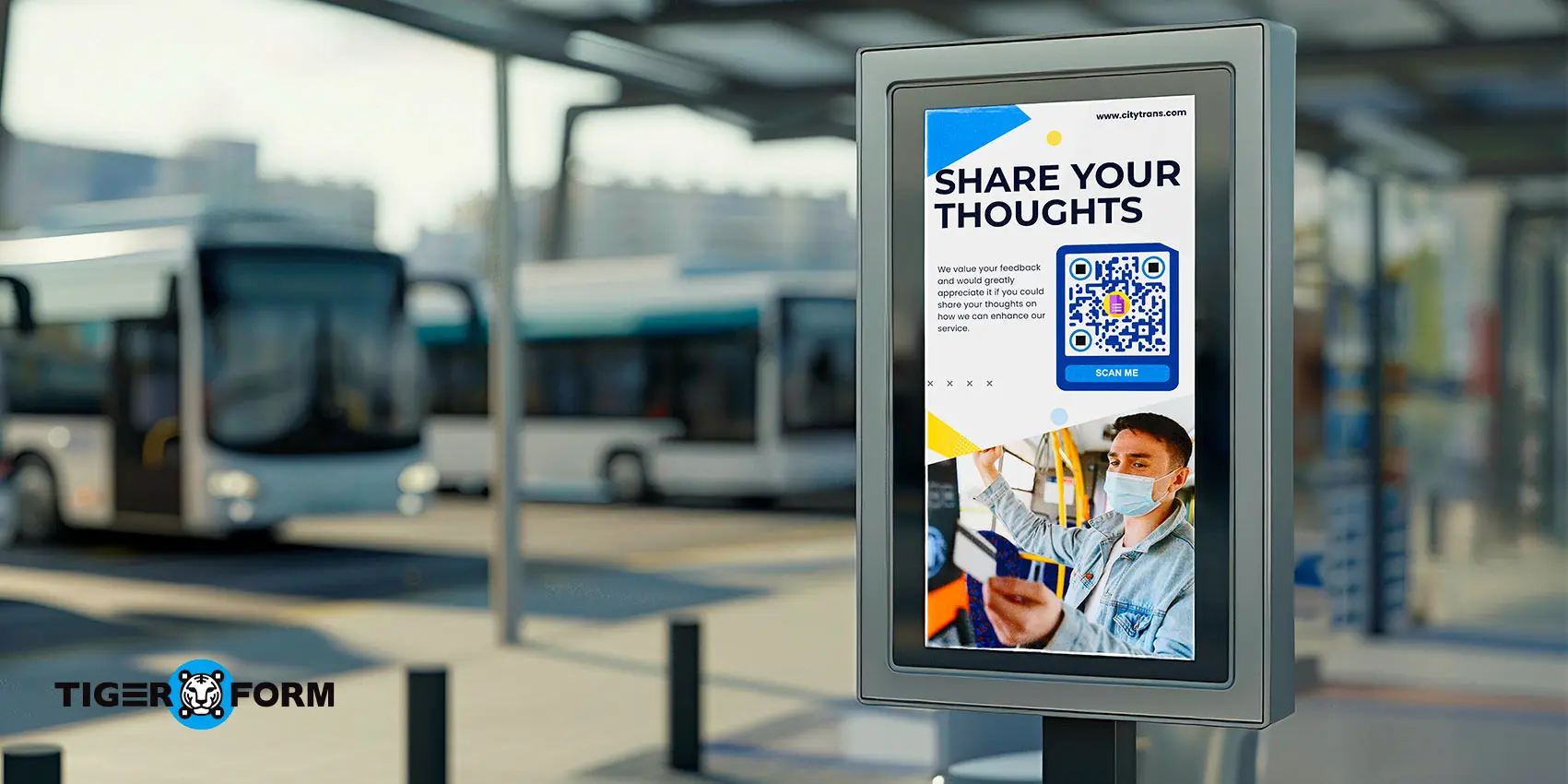
To get the most value from the transportation feedback form, transportation companies should follow these best practices. These guides for form creation will help you keep the passenger feedback clear, useful, and easier to analyze.
Place QR codes in visible locations
Put QR codes where people will likely see them, such as on ticket booths, inside vehicles, or at transit stops. The more visible the QR code, the more feedback you will collect.
Promote and explain the feedback form
Make sure your passenger knows why their feedback matters. Use announcements, signs, or in-app messages to explain how their feedback helps improve services.
Keep questions updated and relevant
Review and update your feedback form regularly. This ensures that the questions remain relevant and helpful as services evolve.
Analyze and act on passenger feedback
Don’t just collect feedback—use it. Regularly analyze the feedback to spot trends and issues. Then, use this data to make improvements.
Share improvements with riders
When you act on feedback, let your customers know. Share updates about service improvements or changes made because of their suggestions. This shows that their opinions matter.
Passenger evaluation criteria and sample questions
1. Booking process
Passenger feedback helps travel companies identify issues with pricing clarity and ease of use with their booking system. This will improve passenger satisfaction and encourage repeat trips.
- How satisfied are you with the overall booking experience?
- Were ticket prices and fees clearly stated?
- Did you experience any technical issues during booking?
2. Customer service
Failing to evaluate service quality risks your brand reputation, as poor service erodes customer trust. Passengers should be able to get help when needed, whether before, during, or after their trip.
- How friendly and professional was the taxi driver?
- How satisfied are you with staff communication?
- Would you rate the customer support as helpful?
3. Comfort and amenities
Passengers expect a comfortable travel experience. Feedback in this area helps improve seating, cleanliness, and extra services provided during travel.
- Was the vehicle clean and well-maintained?
- Was the seat comfortable for the duration of your trip?
- How would you rate the overall comfort of your trip?
4. Timeliness and reliability
Passengers value punctuality. Delays without proper updates cause frustration. Measuring this area helps companies improve scheduling and time management.
- Did your trip depart on time?
- Did you arrive at your destination as scheduled?
- How reliable do you find our transport service?
5. Safety and security
Safety is a top priority in transportation. Feedback here reveals how safe passengers feel and if drivers follow safety procedures.
- Did you feel safe during your trip?
- Did the driver follow traffic and safety rules?
- Were safety instructions provided before or during the trip?
Transportation feedback and service form templates
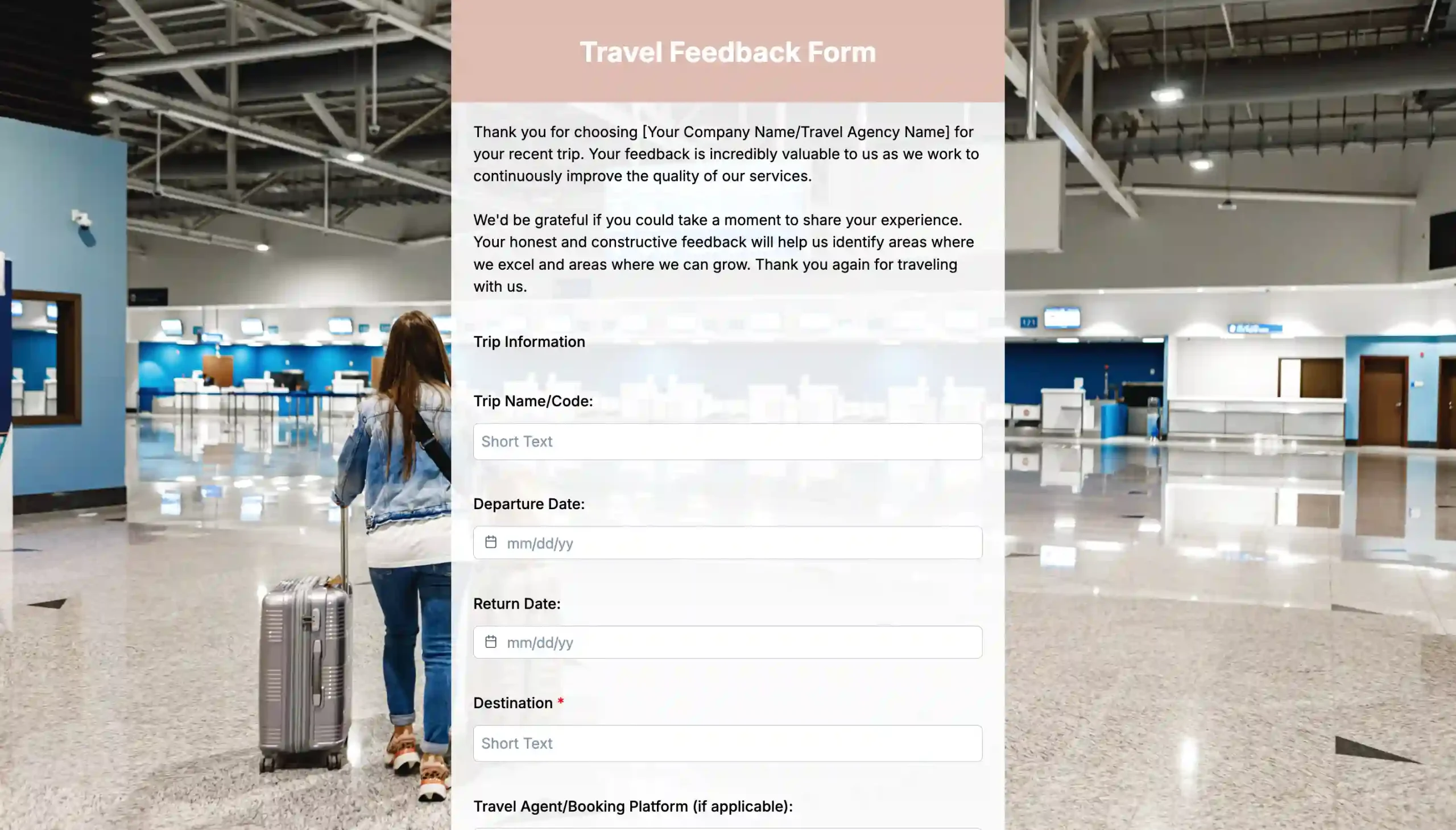
Travel Feedback Form Template
Enhance your clients’ travel journey! Use an online travel feedback form to provide valuable feedback on their recent trip. Their honest opinions on flights, accommodations, tours, and service quality help you improve and offer better travel experiences for all. Encourage them to share their thoughts today and contribute to a better travel future.
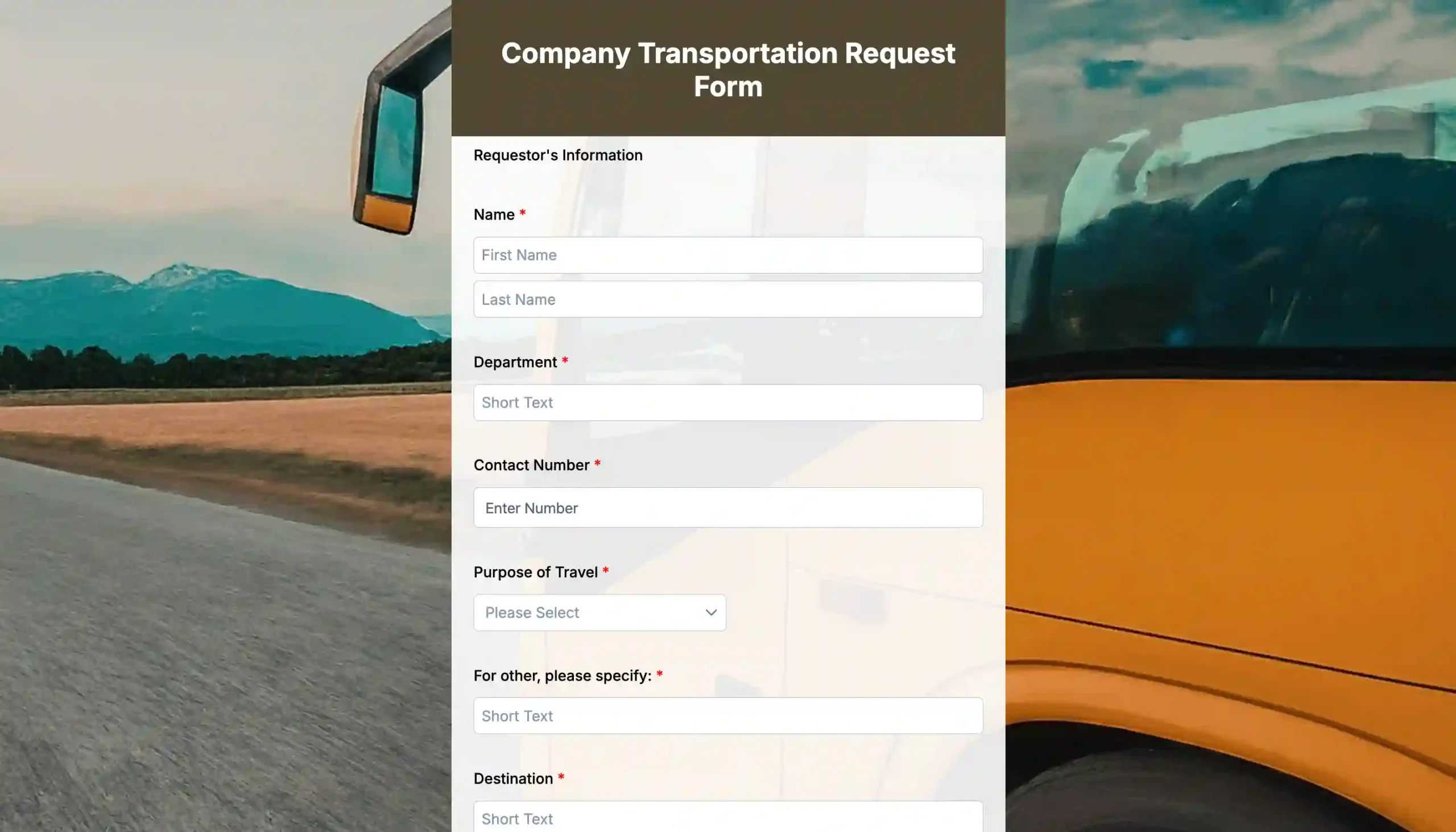
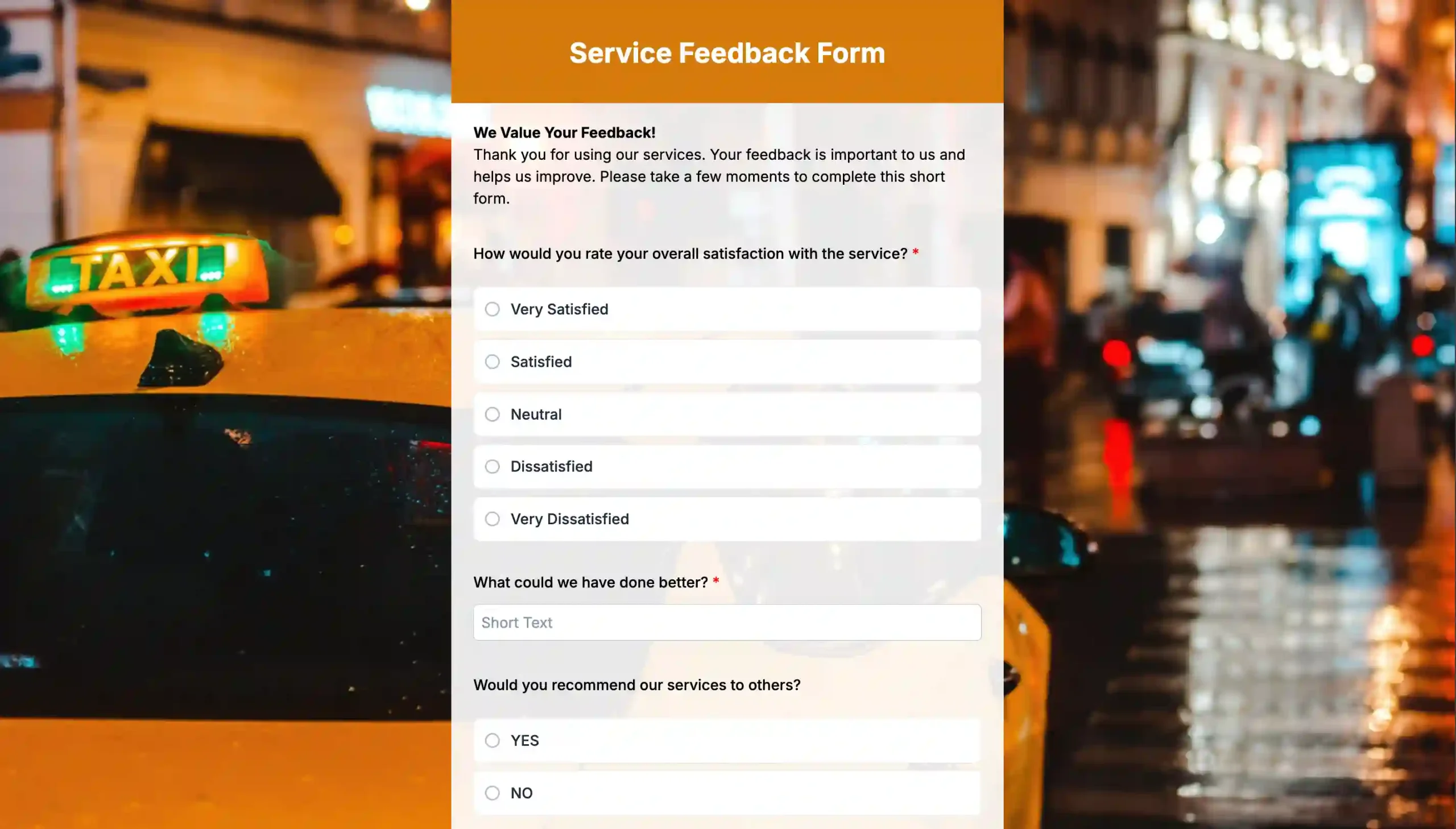
Service Feedback Form Template
Boost service quality and build stronger customer relationships with an online service feedback form. Gather customer insights, identify areas for improvement, and grow your business.
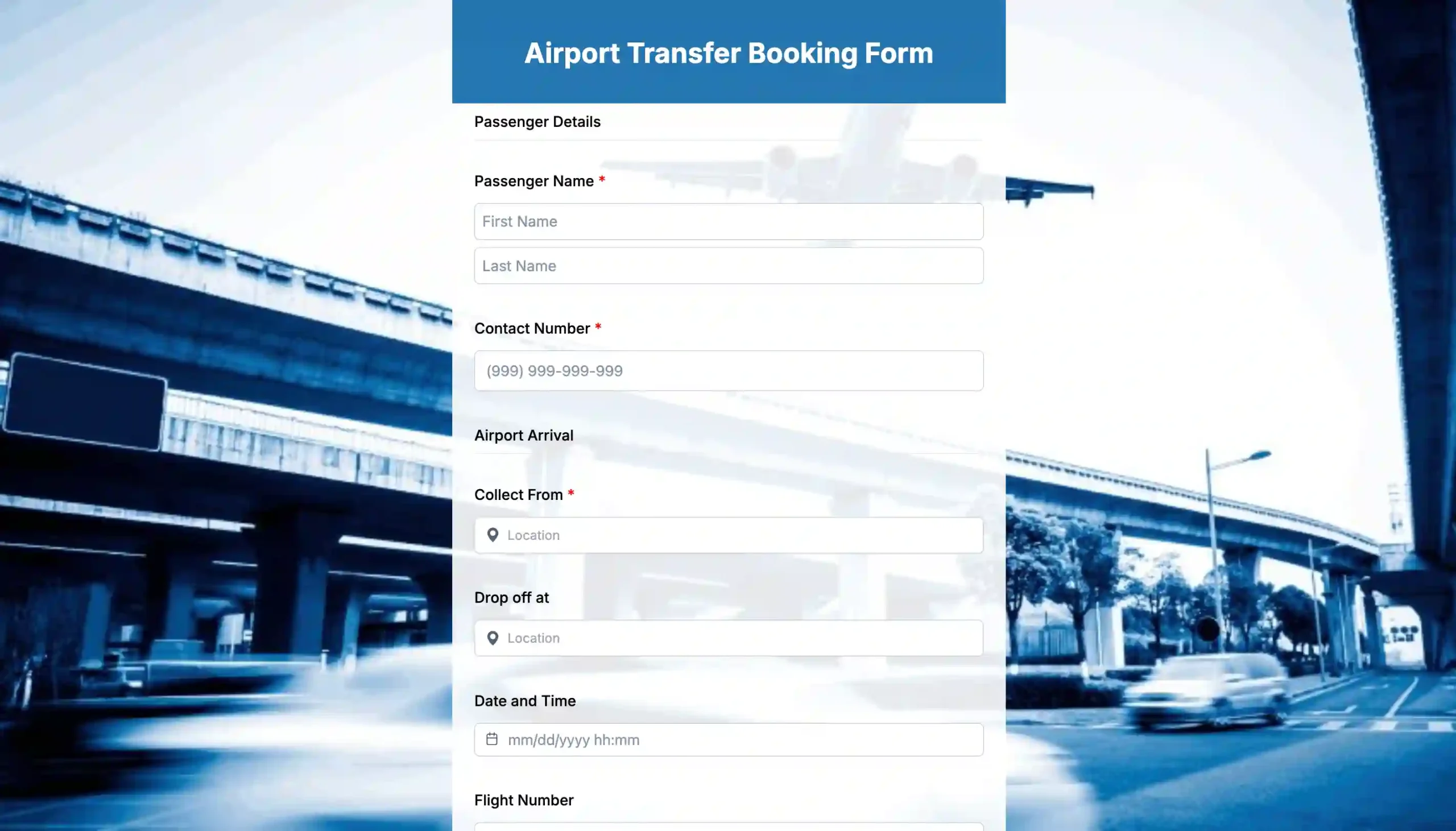

Improve transportation services with a QR code for feedback collection
Customer feedback is vital to better transportation services. Now, companies can use QR codes and online forms to gather feedback easily, respond quickly, and make informed choices.
These tools encourage customers to share their views, leading to improved service, higher satisfaction, and better operations.
Use QR codes and form creators for real-time input to streamline feedback collection and enhance services. With these tools, you can foster trust with your customers as they feel more heard, thus improving your service.
Are you looking forward to simplifying the passenger feedback form for transportation and making informed choices? Try TIGER FORM creator today. Learn how real-time feedback can elevate your transportation services. Improve your transit services! Create your own QR code feedback form today!
FAQs
What is a passenger briefing?
A passenger briefing is an informational session or announcement given before or during a journey to ensure travelers are aware of safety procedures, travel guidelines, and essential details about their trip. It is commonly used in aviation, maritime, and public transportation to enhance safety and customer experience.
How effective is customer feedback in transportation?
Customer feedback is highly effective in transportation, as it helps operators understand commuter needs, improve service quality, and address pain points. Real-time feedback, especially through digital forms and QR codes, allows for quick adjustments, improving efficiency, safety, and overall customer satisfaction.
How long should the form be?
Keep it short: 6–12 questions plus an optional comment. Longer forms reduce completion rates.
How do I tailor the form for different languages?
Provide multilingual versions or a language selector. Keep translations accurate and concise; consider right-sized response options.
How can I protect passenger privacy?
Limit data collection to necessary fields, clearly state purpose, and comply with relevant data protection laws. Secure data storage and restrict access.
How can I protect passenger privacy?
Limit data collection to necessary fields, clearly state purpose, and comply with relevant data protection laws. Secure data storage and restrict access.
How do I make the QR code accessible to all passengers?
Ensure the code is large enough, high-contrast, and placed at reachable heights. Provide alternative methods to give feedback (short URL, paper forms).