
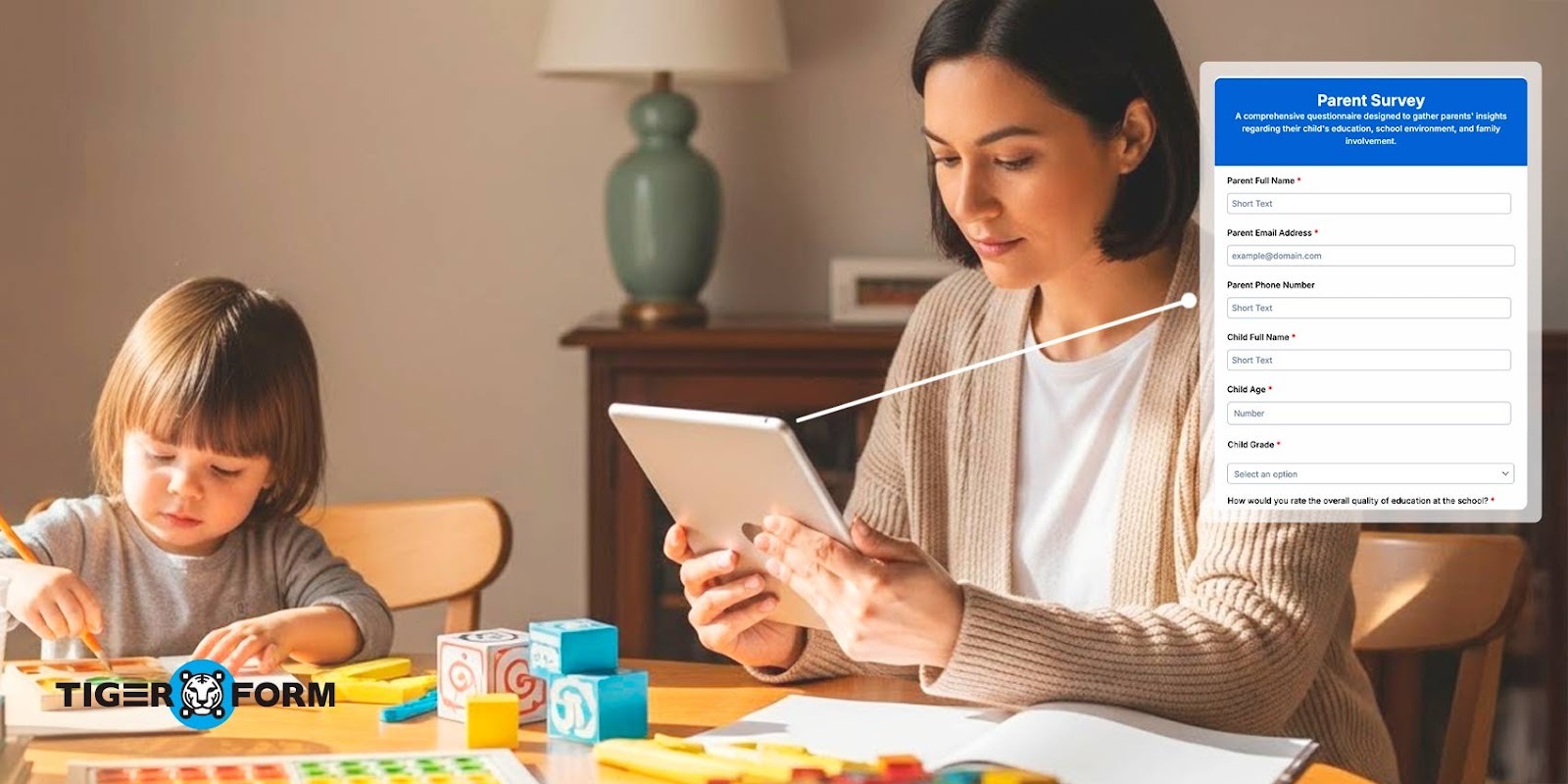
Parents have opinions, concerns, and ideas shaped by what they see at home, during homework time, and in everyday conversations with their children. The problem is, there’s only very few effective feedback systems available in schools to either commend the service or raise concerns.
Yes, they can directly call teachers, visit a website for testimonials or complaints, or answer physical survey forms. But how often do they get dropped or unanswered calls, unresponsive websites, or misplaced paper forms?
When schools rely on these feedback systems, gaps form. Communication feels one-sided. Small issues turn into ongoing frustrations. And valuable insights that could improve learning, support, and trust never surface.
That’s where a well-designed online parent survey changes everything. It creates a direct, structured way to understand what families actually experience, not what schools think is happening.
Read the blog to learn how to create a parent survey that parents are willing to complete. We’ll cover the sample questions to ask, the different types of parent surveys, and practical tips for creating a parent survey with a form builder.
What is a parent survey, and why is it important for schools and educators?
A parent survey is a feedback or survey system for schools to understand how families experience their child’s education. It asks parents about academics, communication, school climate, and student support, giving educators insight into what’s working and what needs attention.
This type of survey is offers strong parent involvement and is closely linked to student success. According to a recent study by Gitnux, students with engaged parents are up to 30% more likely to perform better academically and have improved attendance and behavior. When schools invite feedback regularly, they create trust, improve communication, and make more informed decisions that support both students and families.
Why parent surveys matter for schools and educators:
- Improve student outcomes: Parent input helps schools address learning gaps, emotional needs, and engagement issues early.
- Strengthen communication: Surveys give every parent a clear, equal way to share feedback, not just those who speak up often.
- Identify hidden challenges: Repeated feedback can reveal issues like unclear expectations, workload stress, or support gaps.
- Support better decision-making: Data from parents helps schools plan programs, policies, and resources more effectively.
- Build trust and transparency: When parents see their feedback taken seriously, confidence in the school grows.
- Increase long-term engagement: Schools that listen to parents tend to see higher participation in school activities and initiatives.
Types of parent surveys and sample questions

Parent surveys come in different formats and serve different purposes. Using the right survey type ensures schools gather meaningful feedback to improve student outcomes, communication, and overall parent satisfaction. Here are common parent survey types with sample questions you can use:
1. School parent satisfaction survey
This survey measures how happy parents are with the overall school experience, including academics, facilities, extracurricular activities, and policies.
Sample questions:
- How satisfied are you with the quality of teaching your child receives?
- Do you feel your child is making adequate academic progress?
- How satisfied are you with the variety of extracurricular activities offered?
- How well does the school maintain a safe and clean environment?
- Are school facilities (library, sports areas, labs) adequate for your child’s needs?
- How satisfied are you with the responsiveness of school administration?
- Do you feel your child’s needs are recognized and supported?
- Would you recommend this school to other parents?
- How effective are the school’s disciplinary policies in managing student behavior?
- Overall, how satisfied are you with your child’s school experience?
2. Preschool or daycare parent survey
Focused on early childhood education and care, this survey collects feedback about safety, learning activities, teacher interaction, and developmental support.
Sample questions:
- How safe do you feel your child is at the preschool/daycare?
- Are daily activities engaging and age-appropriate for your child?
- How well do teachers support your child’s learning and development?
- How effectively does the staff communicate with parents about daily routines?
- Are meals and snacks nutritious and appropriate for your child?
- How satisfied are you with the cleanliness of the facility?
- Does your child feel happy and comfortable attending the center?
- How well are your child’s individual needs recognized and supported?
- Are parent-teacher meetings helpful and informative?
- How likely are you to continue enrollment next year?
3. Parent engagement survey
This survey evaluates how involved parents feel in their child’s learning and school activities. It identifies gaps in engagement and highlights ways to strengthen parent participation.
Sample questions:
- How often do you attend school events or meetings?
- Do you feel encouraged to participate in your child’s learning?
- How often do you review your child’s homework or assignments?
- Are school communications clear and helpful for getting involved?
- How confident are you in supporting your child’s learning at home?
- Do you feel your opinions and feedback are valued by the school?
- How often do you volunteer or assist in school programs?
- Do you feel informed about school policies, programs, and activities?
- How connected do you feel with your child’s teachers?
- What could the school do to help you be more involved in your child’s learning?
4. Parent-teacher communication survey
This survey assesses the effectiveness of communication between parents and teachers, ensuring parents feel informed about their child’s progress and school activities.
Sample questions:
- How often do teachers provide updates about your child’s progress?
- Do you find the communication methods (emails, calls, portals) effective?
- How clear is the information you receive about homework and assignments?
- Are teachers responsive when you reach out with questions or concerns?
- How well are school events and schedules communicated?
- Do you feel informed about your child’s strengths and areas for improvement?
- Are parent-teacher meetings organized and helpful?
- How comfortable do you feel discussing sensitive issues with teachers?
- Does the school provide sufficient channels for feedback?
- Overall, how satisfied are you with communication between home and school?
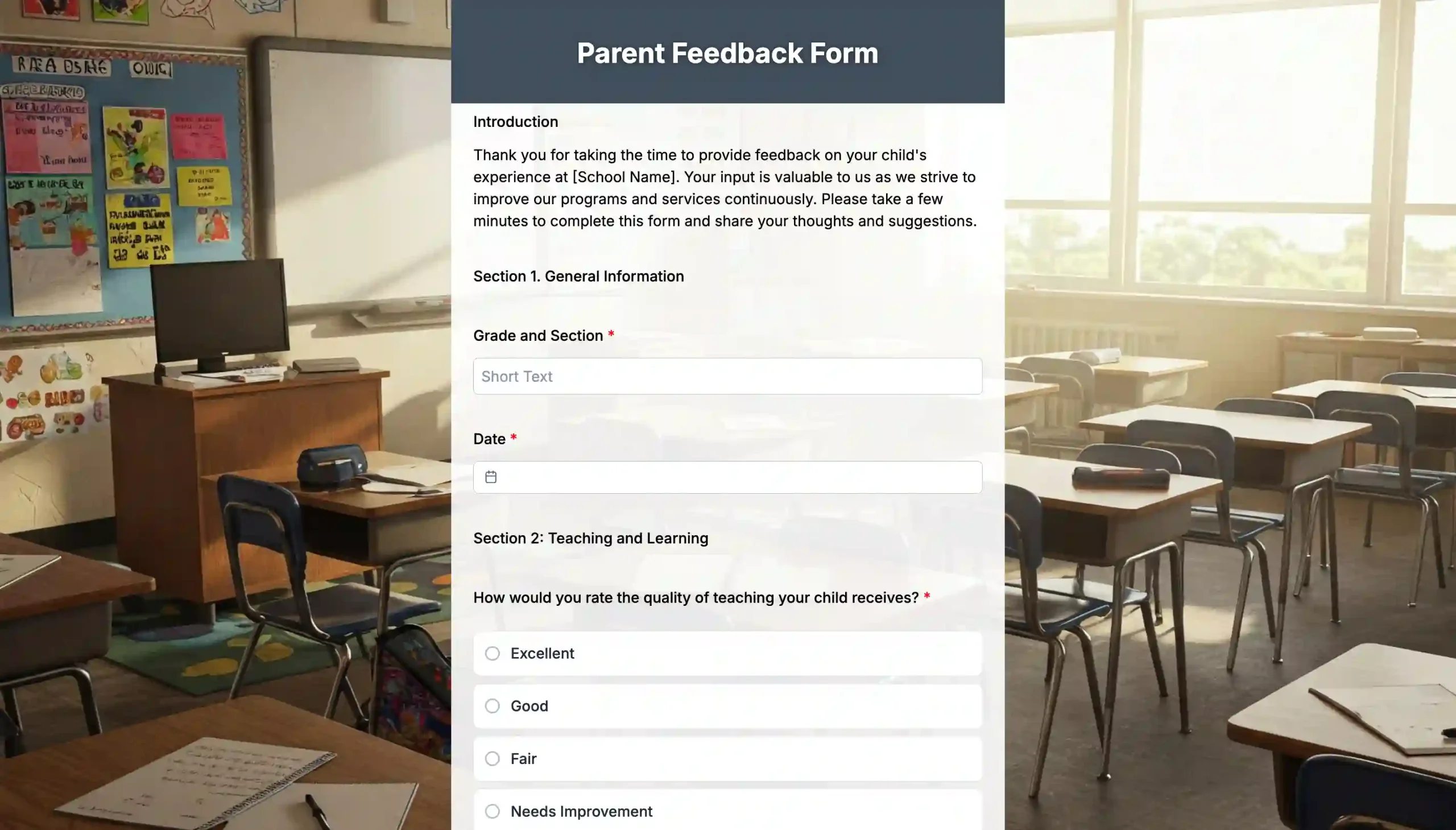
Simple steps to create a parent survey form online with a form builder
Creating a parent survey can be quick, simple, and even enjoyable when you have the right tools. Online form creators like TIGER FORM help you build a polished, easy-to-use parent form in just minutes, gather honest feedback from parents, and keep all responses neatly organized for fast review.
Here’s the step-by-step process:
1. Choose a template
TIGER FORM offers a variety of ready-made parent survey form templates. You can pick one that fits your school’s needs. If you prefer, start with a blank form and customize it to your requirements. Templates save time and ensure your survey includes all essential fields.
2. Customize your fields
Decide what information you want to collect. With TIGER FORM, you can add text fields, variety of question types like multiple-choice questions, checkboxes, ratings, or dropdowns. Use AI-assisted form building to automatically suggest fields based on your survey type, ensuring you don’t miss any critical questions. Mark mandatory fields to ensure complete responses.
3. Organize the form logically
Group related questions into sections like Student experience, Communication, School facilities, and Suggestions. Clear, organized sections make the survey easier for parents to complete and help you review responses efficiently.
4. Add instructions and branding
Add your school logo, brand colors, and a professional layout to make the form visually appealing and trustworthy. This makes parents confident and improves completion rates.
5. Enable file uploads (if needed)
If your survey requires documents, for example, consent forms or permission slips, TIGER FORM allows parents to upload files directly within the form. This keeps submissions organized and reduces back-and-forth emails.
6. Generate a QR code or shareable link
Once your form is ready, TIGER FORM lets you create a QR code for the survey form or a shareable link. Parents can scan the QR code form or click the link from any device, making the survey easily accessible whether at home or during school events.
7. Test your form before sharing
Preview your survey to ensure all fields work correctly, instructions are clear, and the form is mobile-friendly. Testing prevents confusion and ensures accurate, complete responses from parents.
8. Collect, track, and analyze responses
Submissions are automatically organized in TIGER FORM’s dashboard. You can track which parents have responded, identify missing information, and export data for reports or planning. AI analytics can even help identify trends in feedback.
9. Follow up and act on feedback
Use the insights from your parent survey to improve school policies, communication, and student support. Sharing results and actions taken with parents also strengthens trust and engagement.
Tips for getting higher parent survey response rates
Even the best parent survey won’t help if parents don’t respond. To make sure you get meaningful feedback, it’s important to design and deliver your survey in a way that’s simple, respectful, and convenient. Here are some proven best practices for schools and educatorsto use to boost response rates:
1. Keep surveys short and focused
Parents are busy, so limit your survey to the most important questions. A concise survey of 5–15 well-crafted survey questions is more likely to be completed than a long, overwhelming form. Focus on what you really need to know and save additional questions for follow-up surveys.
2. Use clear, respectful language
Avoid jargon, technical terms, or complex phrasing. Each question should be easy to understand at a glance. Use polite, respectful language that values the parent’s time and opinion. For example, instead of “Evaluate the efficacy of instructional methods,” say “How effective do you find your child’s learning activities?”
3. Time the survey correctly
Send your survey when parents are most likely to engage. Avoid busy periods like exam weeks or holidays. Mid-week mornings or early afternoons often get the best response rates, but testing different times with your community can help find the sweet spot.
4. Reassure parents about privacy
Parents are more likely to provide honest feedback when they know their responses are confidential. Clearly explain how responses will be used, who will see them, and how privacy is protected. A short note at the beginning of the survey builds trust and encourages participation.
5. Send gentle reminders
Even with a great survey, some parents forget to respond. Send polite follow-up emails or notifications reminding them to complete the form. One or two reminders spaced a few days apart is usually enough without being intrusive.
6. Make it easy to access and complete
Use online form builders like TIGER FORM to make your survey mobile-friendly and accessible from any device. You can also generate a QR code so parents can complete it quickly from their phones during school events or pick-up times.
7. Show the impact of feedback
Parents are more motivated to respond if they see that their feedback leads to real improvements. Share highlights or actions taken based on previous survey results to demonstrate that their input matters.

Building stronger school-parent partnerships through online surveys
Feedback is only valuable when it’s heard and acted upon. Parent surveys give schools a clear view of what matters most to families. When schools listen, respond, and act, parents feel involved, students feel supported, and the whole community benefits. Stronger partnerships start with asking the right questions and taking feedback seriously.
By regularly reviewing survey results, schools can identify trends, address concerns before they escalate, and celebrate what’s working well. Over time, this cycle of listening, acting, and reporting back creates a culture of collaboration where students thrive, teachers feel supported, and families feel connected to the school’s mission.
Don’t let valuable parent insights go unheard. Use a form builder to design a smart, mobile-friendly survey that gathers honest feedback and organizes it automatically. Make your parent surveys count — create yours now!
FAQs
1. What are 5 positive parenting skills?
Active listening, consistent discipline, encouragement, empathy, and modeling good behavior.
2. What is a 1 to 10 survey question?
A question where respondents rate something from 1 (lowest) to 10 (highest), e.g., satisfaction with school communication.
3. What are some examples of parent feedback?
Examples include feedback on academics, communication, homework load, teacher support, and school programs.
4. How often should schools send parent surveys?
Once per term or semester is ideal, short pulse surveys can be sent for specific topics as needed.
5. What is the best way to encourage parents to complete surveys?
Keep surveys short, clear, and mobile-friendly, reassure privacy and show that feedback leads to action.