
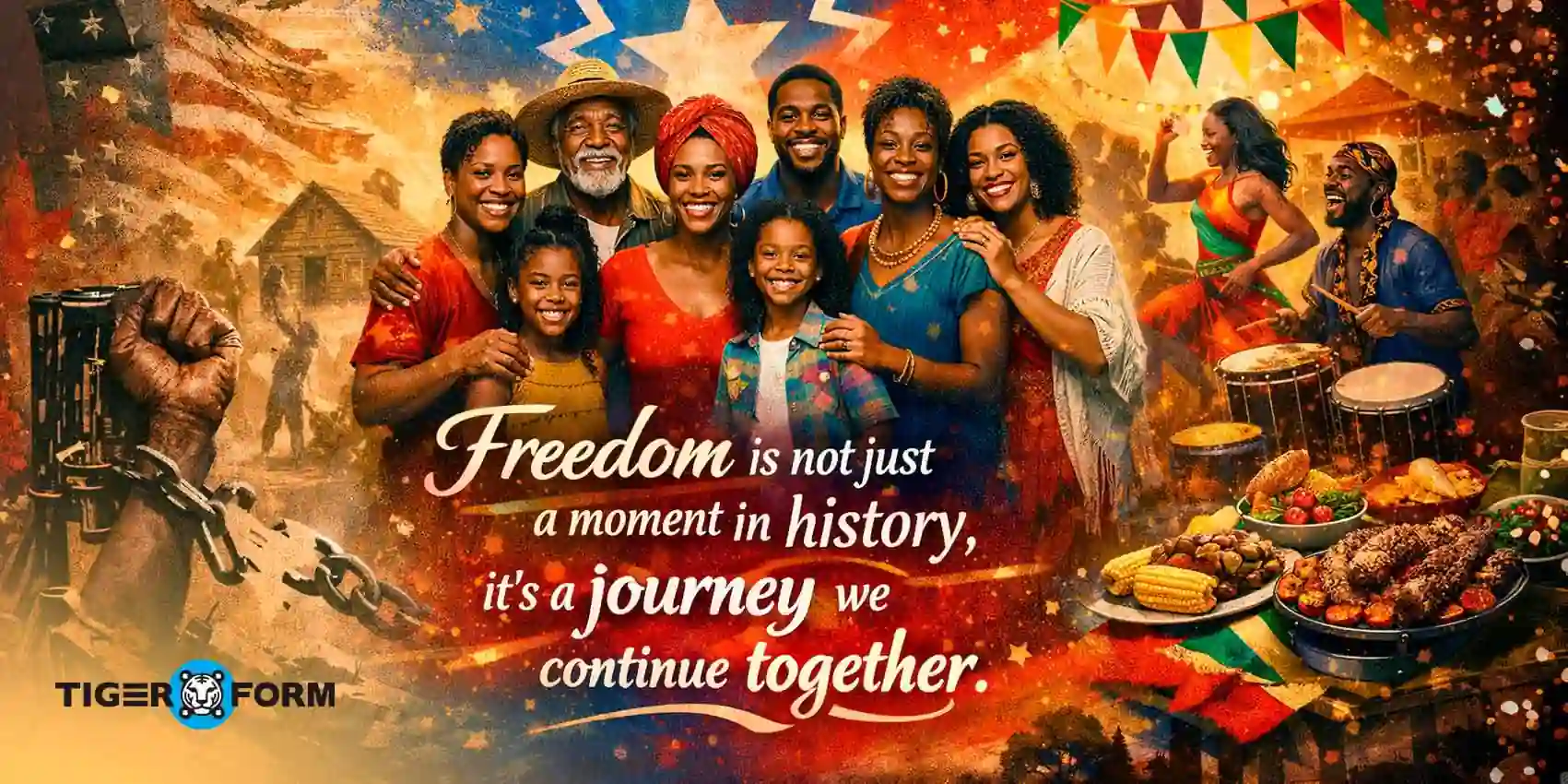
Juneteenth is a holiday observed annually on June 19, commemorating the end of slavery in the United States. The name itself comes from combining “June” and “nineteenth,” which has been recognized for generations as a symbol of freedom. It is also known as Freedom Day and has been celebrated since the late 1800s, making it one of the oldest continuing African American holidays.
Today, Juneteenth is often seen as a second Independence Day, offering a moment to reflect on the past while also thinking about progress, equality, and the future. In this guide, we’ll explore Juneteenth Day’s meaning, history, traditions, and the ways it is celebrated today.
The history of the Juneteenth holiday
The background of slavery in the United States
Before 1865, slavery was part of everyday life in the United States, especially across the South. Enslaved people were forced to work long hours on plantations, often under brutal conditions, with little to no control over their own lives.
For years, millions of African Americans lived without basic rights or freedom, even as the nation spoke about liberty and independence. Later, disagreements about slavery grew stronger, dividing the country more deeply.
Around the 1800s, those tensions had reached a breaking point, leading to the American Civil War, a conflict that would eventually change the course of the nation and the future of slavery.
The Emancipation Proclamation
In 1863, President Abraham Lincoln issued the Emancipation Proclamation. It declared that enslaved people in Confederate states were free.
This didn’t immediately change reality for everyone. Many enslaved people, especially in remote areas, didn’t know about it or were still held in bondage.
What happened on June 19, 1865?
On June 19, 1865, Union troops arrived in Texas. They announced that all enslaved people were free. Texas had remained isolated during the war, which is why freedom came later there than in other places. This moment is what the Juneteenth Day’s meaning is built on. It represents delayed justice, but also the beginning of real freedom.
Why Juneteenth took time to be recognized
After 1865, newly freed African Americans began marking June 19 with gatherings, prayers, music, and community events. But for a long time, they stayed within communities and didn’t receive wider attention. In some places, they were even discouraged.
Juneteenth holiday symbols and traditions
The Juneteenth flag
The Juneteenth flag is one of the most recognizable parts of the holiday. At first glance, you’ll notice the familiar red, white, and blue. But the design tells a deeper story.
At the center is a starburst. It represents a new beginning, almost like a moment of freedom breaking through. Around it, there’s a curved line that looks like a horizon. That line symbolizes a new future, something open and full of possibilities.
The star symbol
The star, often seen on the Juneteenth flag, is also used on its own as a symbol. It represents Texas, where the last enslaved people were freed, and at the same time, it stands for a broader idea of freedom for all. You’ll often see it in decorations, artwork, and event materials as a quiet but powerful reminder of where the story comes from.
The broken chain
The image of a broken chain is one of the most powerful symbols linked to Juneteenth.
It represents the end of slavery, but also something more personal. It stands for breaking free from systems that held people back for generations. Even when you don’t see an actual chain in decorations, the idea behind it is still present in speeches, art, and storytelling.
This is one of the reasons Juneteenth feels different from many other holidays.
The colors red, black, and green
While red is the most prominent color in Juneteenth traditions, you’ll also sometimes see red, black, and green used together. These colors are tied to Pan-African identity and represent unity, heritage, and connection to African roots. They often appear in clothing, flags, and event themes.
Candles and reflection spaces
In some celebrations, candles are used to honor ancestors and reflect on the past. These moments are quieter and more personal, offering a contrast to larger public events.
Together, these symbols add layers to the holiday. They turn Juneteenth into something people can see, feel, and connect with in different ways.
Traditional foods
Food plays a big role in Juneteenth celebrations, and one detail stands out immediately: the color red. Many traditional dishes and drinks are red, such as watermelon, red velvet cake, strawberry soda, and hibiscus tea. These foods have become a way to honor heritage while bringing people together in a familiar and comforting way.
Music and storytelling
Music and storytelling are at the heart of Juneteenth traditions. Long before written records were widely accessible, stories, songs, and oral histories were how many African American families preserved their experiences and passed them down through generations.
During Juneteenth celebrations, you’ll often find live music, spoken word performances, and community storytelling.
10 meaningful and creative ways to celebrate Juneteenth 2026

1. Host a cultural awareness gathering
Bring people together for a small event where history, music, and conversations take center stage. It doesn’t have to be formal, even a simple evening with shared stories and food can create impact.
2. Host a history quiz or learning session
Turn learning into something interactive. Create a quiz night or discussion circle can make the history behind Juneteenth more engaging and memorable.

3. Organize a storytelling or spoken word session
Give people space to share. It could be poems, personal thoughts, or stories from history. These moments help keep voices and experiences alive. Invite friends, colleagues, or community members to engage in these activities.
4. Volunteer for a cause that promotes equality
Spend the day volunteering with organizations working toward social justice or community development. Using a volunteer registration form, you can help organize participants and manage impact more effectively.
5. Organize a fundraiser with purpose
Create an event or online campaign where proceeds go toward meaningful causes. A simple fundraising form can make it easier to collect donations and keep everything organized.
6. Run a workplace or social awareness campaign
If you’re part of a team or community, use your platform to share information, start discussions, or highlight important voices and stories.
7. Support Black-owned businesses intentionally
Make it a point to shop, promote, or collaborate with Black-owned brands. This turns celebration into direct economic support.
8. Create a Juneteenth-themed community event
Plan a local meetup, pop-up event, or mini festival with music, art, and food. Even a small-scale event can build awareness and connection.
9. Celebrate through food with intention
Prepare traditional foods tied to Juneteenth Day history, culture and take a moment to understand the meaning behind them while sharing the experience with others.
How to organize a smooth and stress-free Juneteenth Celebration
We’ve seen plenty of ways to celebrate this special day, but planning and executing it smoothly is just as important as the celebration itself. What if you could focus more on the experience and less on the coordination? With a little planning and the right tools in place, you can organize a Juneteenth celebration that feels well-managed from start to finish.
Here are some quick, useful steps to execute your events easily:
1. Set a clear goal for your event
Start by deciding what you want your celebration to focus on, whether it’s education, community bonding, or fundraising. This helps guide every other decision.
2. Use a form creator to manage registrations
You can choose an online form builder to create various forms based on your event needs. For example, an event registration form helps collect attendee details, a volunteer registration form or volunteer tracking form keeps your team organized, a fundraising form makes it easy to collect donations, and a feedback form helps you gather insights after the event. Form generators also provide form templates, so that you don’t have to start form scratch.

3. Plan your activities in advance
Outline the flow of your event, including music, food, and sessions, to make everything engaging.
4. Choose the right venue and timing
Pick a location and schedule that works well for your audience to ensure better participation.
5. Promote your event clearly
Share event details through social media, emails, or community groups so people know what to expect and how to join.
6. Keep communication simple
Send reminders and updates so attendees and volunteers stay informed without confusion.
7. Prepare for small changes
Have a flexible plan so you can handle last-minute adjustments without stress.
8. Collect feedback after the event
Use a simple feedback form to understand what worked well and improve future celebrations.
Juneteenth: A celebration of freedom and progress
Generations of African Americans carried forward the meaning of this day through stories and traditions, even when it wasn’t widely recognized. It was shaped by people who believed it was important to remember and honor this part of history.
Today, Juneteenth is not only about looking back. It’s also about understanding the present. It creates space for conversations about equality, opportunity, and the kind of future people want to build.
Happy Juneteenth!

FAQs
When did Juneteenth become a holiday in the USA?
Juneteenth became a federal holiday in 2021, officially recognized across the United States.
Why is Juneteenth called Independence Day?
It is often called a second Independence Day because it marks the true freedom of enslaved people, extending the idea of independence to all.
When were the last slaves freed in America?
The last enslaved people were effectively freed on June 19, 1865, when Union troops arrived in Texas and announced their freedom.