

Taking out a loan through a bank can be a quick way to secure needed funds, especially in emergencies. But there’s often a significant hurdle: completing the loan application form for banks.
With pages of detailed sections covering personal and financial data, this process can feel complex for many. From income history to creditworthiness checks, the amount of information required in these forms can make the experience time-consuming and even frustrating.
Fortunately, QR code technology is transforming this process. By scanning a QR code provided by the bank, borrowers can now skip the hassle and access a straightforward digital form that’s optimized for ease.
No more sifting through paperwork or struggling with long, manual entries; instead, applicants can simply complete the loan application form digitally. Let’s explore how loan QR codes are streamlining applications and reshaping the lending experience in the banking sector.
What is a loan application form for banks?
Loan application forms are documents that individuals or businesses must complete to obtain financial assistance. These forms are comprehensive and cover a wide range of details, from personal data to financial history, income statements, and more. Banks require this data to assess the candidate’s creditworthiness.
QR code loan application forms play a key role in simplifying the process for both financial institutions and consumers. You can use a free online form generator to create these forms. Banks and lenders gain multiple advantages by incorporating these forms into their lending procedures, improving overall efficiency and enhancing the customer experience during the loan application process.
The banking load industry reached an all-time high in 2023. Gross loans and leases from FDIC-insured commercial banks have reached 12 trillion US dollars. That said, using methods like QR-coded forms for efficient application processes is essential. The best part about these forms is that they can be built with any online form builder for loan applications.
The rise of bank QR codes
Two-dimensional barcodes, known as QR (Quick Response) codes, can be scanned using a smartphone camera to access digital content immediately. The banking and finance sectors have found great use for these flexible codes, which provide smooth links between offline and online touchpoints.
From mobile banking to online bank loan applications, QR codes offer a convenient and user-friendly approach for consumers to access a wide range of services; hence, they have gained considerable popularity in the banking sector.
Banks and lenders can improve the whole customer experience and simplify the loan application process by including QR code technology in the lending procedures. The QR codes in banking are increasingly popular, and US banks expect to utilize them in their operations.
Furthermore, QR code payments are expected to reach $3 trillion by 2025 from $2.4 trillion in 2022. This growth clearly attests to the main impact of this technology on the BFSI ( Banking, Financial Services, and Insurance) sector.

The benefits of QR code bank loan application forms
Here is why these QR forms are so beneficial for banks.
Improved customer experience
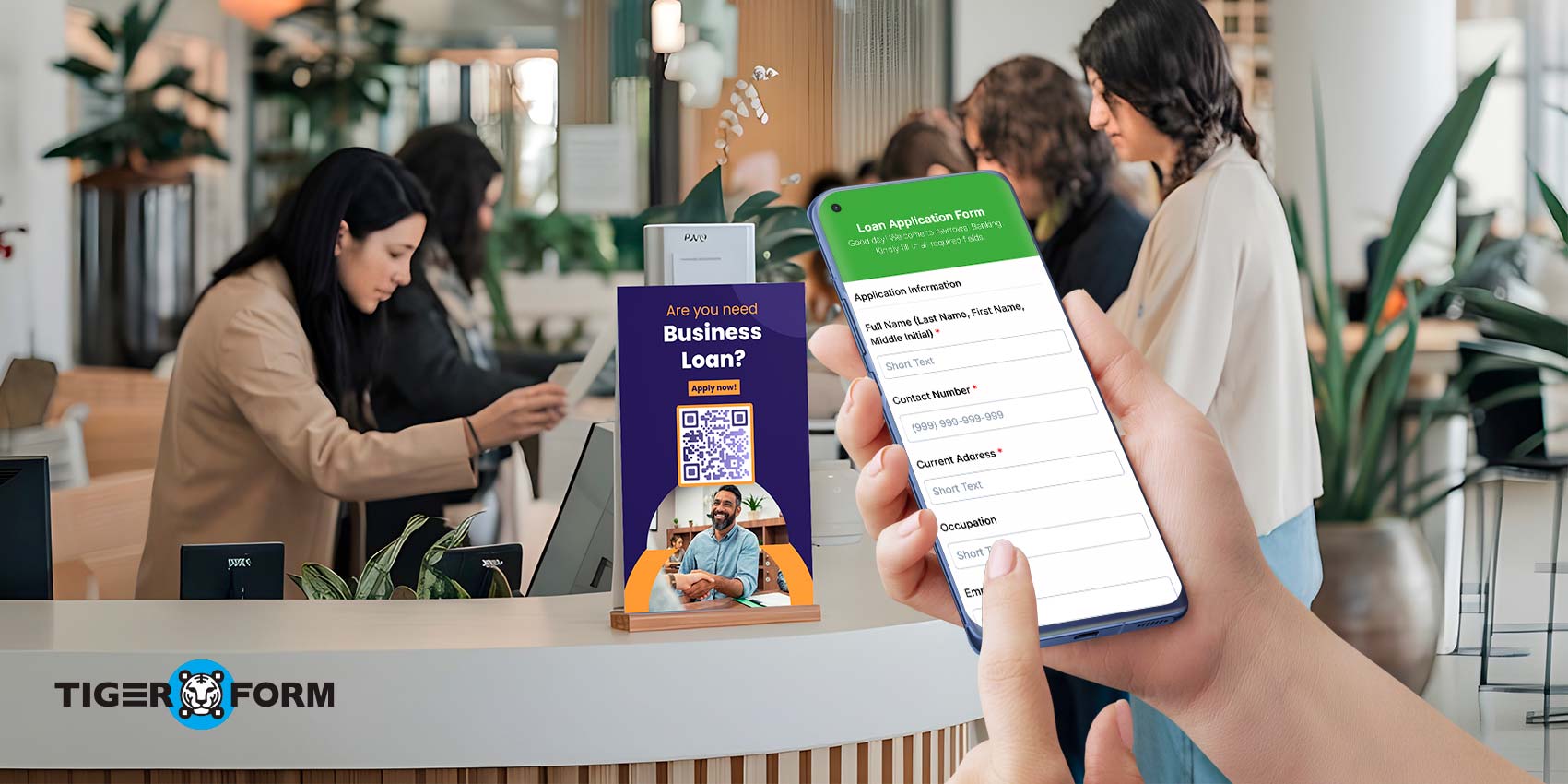
Applying for a loan may often be a tiresome and time-consuming process for consumers who have to go through extensive paperwork or complicated web portals. However, these digital bank loan forms allow direct access to and completion of loan applications straight from consumers’ cell phones and offer a more user-friendly and convenient substitute.
Customers can be quickly directed to a mobile-optimized digital loan application form that is easy to use. It can be completed just by scanning a QR code. This reduces the chances of mistakes and the need for manual data entry, therefore simplifying the application process and improving the whole client experience.
Through a flawless and quick loan application process, banks and lenders can increase consumer satisfaction, boost loyalty, and maybe draw a larger clientele. You can lessen the time-consuming and frustrating nature of conventional approaches, which sometimes call for extensive documentation and several touchpoints.
By offering a more practical and user-friendly alternative, banks and lenders may show their dedication to customer-centric service and keep ahead of the curve in the competitive market.
Increased accessibility
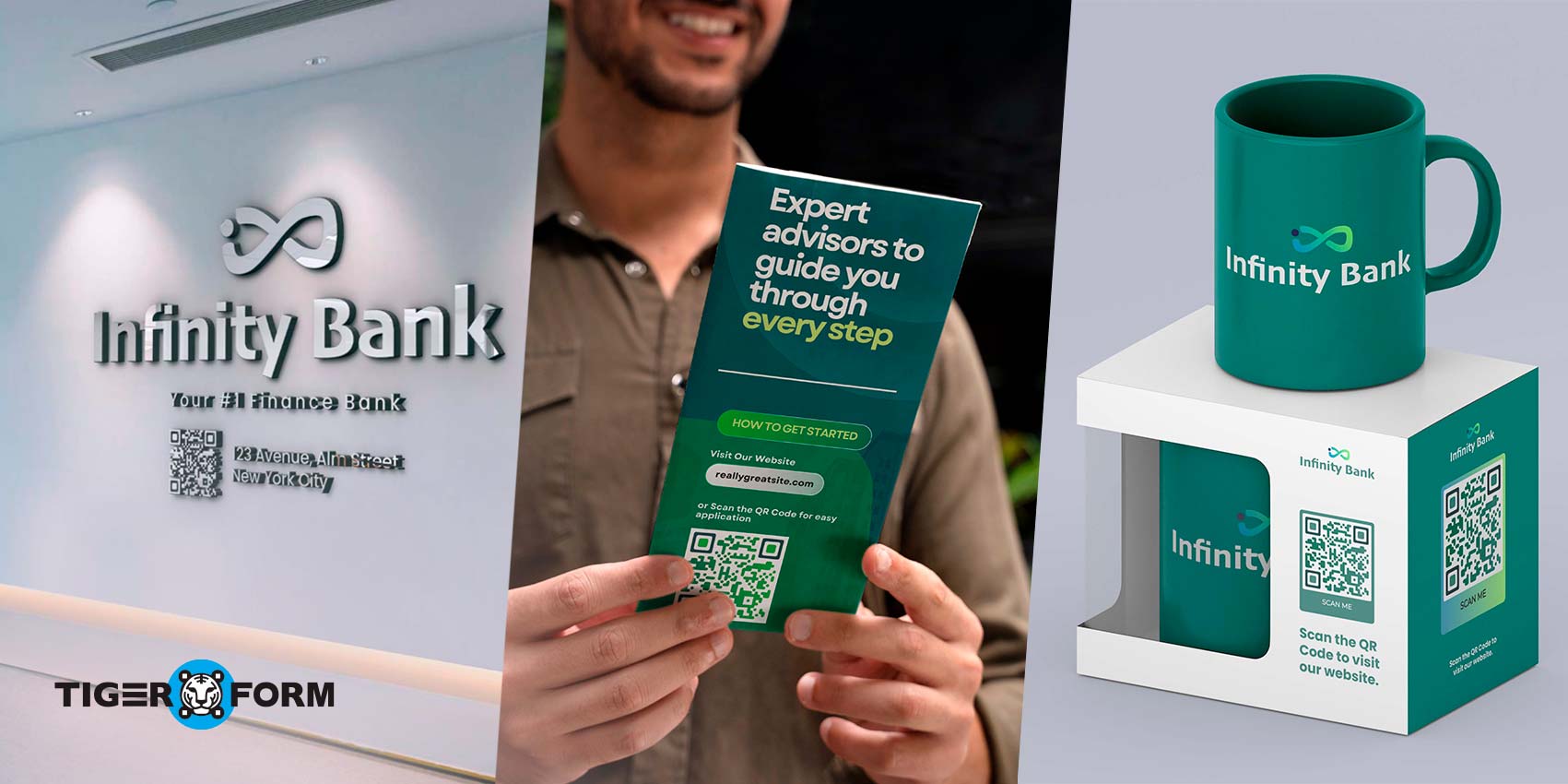
Customers can quickly access them through several physical and digital touchpoints. To enable consumers to rapidly access the online loan application form for banks wherever and whenever they need it, banks can include QR code signs on marketing materials, within their branches, and even on product packaging.
In addition to making business loan application forms more convenient for consumers, this improved accessibility creates additional loan application channels, so the bank may reach a larger audience and broaden its clientele. Making the loan application procedure more easily available helps banks and lenders meet the changing wants and preferences of their clients. This can significantly help boost financial inclusion and give underprivileged or underbanked groups more chances to use credit and other financial tools.
Efficient data collection and management
Manual data entry in traditional loan application forms or financial account form systems can be time-consuming and prone to mistakes. Conversely, bank QR codes allow for easy digital data collection since customer information is directly entered into the systems of the bank. Banks can use digital forms with QR code capabilities to create customized loan application forms that gather all the required information—from personal details to financial information.
This information can then be immediately synchronized with another pertinent program or the bank’s customer relationship management (CRM) system, simplifying the entire loan application and processing procedure. These forms always ensure faster processing times, better decision-making, and a more simplified whole loan process can all follow from this.
Improved compliance and security
Compliance with rules and data security are crucial in the banking and finance sectors. These forms can assist financial institutions in tackling these issues by including secure data transmission, compliance checks, and digital signatures, supporting a secure loan application process.
QR codes make it difficult for fraudsters to access important information by eliminating the actual card from the process and using encrypted connections, strengthening security during transactions. Banks can also design a secure loan application form with validation rules and mandatory fields to ensure all necessary data is entered, helping them meet legal and compliance requirements.
Moreover, integrating digital or e-signatures into QR codes helps simplify the approval process and lessen reliance on actual documentation. This can especially help in a time of increased government inspection and growing worries about data privacy and protection.
How to implement QR codes in banking forms
Refer to this form guide for implementing QR code lending functions in your forms:
Choose a reliable form-maker
Select a form maker that offers QR code integration capabilities. Look for features such as customizable template forms, data integration with your CRM or other systems, and secure data transmission. Some options, like Google Form QR code creation, allow you to share simple forms for customer feedback or surveys.
Design your loan application form
Create loan application forms for banks using the user-friendly drag-and-drop builder interface for loan applications. Include essential fields such as personal information, income details, loan amount requested, employment history, and contact information.
You can also follow this video tutorial for a visual guide on setting up and designing basic forms. It’s a good starting point before moving on to more specific forms, such as loan applications:
Integrate with your systems
Connect your form with your CRM, loan management software, or other relevant systems to enable seamless data flow and streamlined application processing.
Distribute and promote your form
Create a form for your loan applications with integrated QR codes and make it available at many physical and digital touchpoints, including your website, marketing materials, and branch offices. Ask consumers to access the form using the QR code and fill it out.
To reach more customers, consider tri-mode sharing. This lets you distribute your form in three ways at once: QR code, direct link, and email. Customers can choose the method that works best for them, increasing accessibility and submission rates.
Monitor and optimize
Regularly review the performance of your form, analyze customer feedback, and make necessary adjustments to improve the overall experience and streamline the loan application process. You can generate a loan form with QR codes to quickly share a survey or collect responses at events without needing to distribute physical forms.
The future of loan applications: Embracing QR forms
Banks and lenders can revolutionize the loan application process by integrating QR-coded forms, enhancing security, efficiency, and convenience for both consumers and financial institutions. Embracing this innovative solution in this technological age allows you to stay ahead of the curve, meet evolving consumer expectations, and streamline lending practices.
The adoption of QR forms is truly going to be a game-changer as the banking and finance sectors develop. This technology will transform consumer interaction with their lenders and banks, certainly resulting in customer satisfaction and overall competitive advantage.

Get started with a loan form with QR codes for banks
To truly benefit from the loan application forms, banks should focus on reducing application errors and improving the speed of application processing.
QR-coded forms can revolutionize the competitive banking and finance sector. These flexible tools can help you simplify loan application forms for banks, enhance customer experience, and increase compliance and data management by linking the physical and digital worlds.
Now that you know how to implement QR codes on forms in banking, why not take the next step and transform your loan application process? Create a bank loan QR form today and experience the convenience and efficiency firsthand.
FAQs
Is the information I enter secure?
Reputable banks use encryption and secure portals. Ensure you’re on a legitimate bank domain and avoid sharing credentials in unsecured networks.
What documents will I need to upload with the form?
Commonly: ID proof, income proof (pay slips, tax returns), bank statements, residence proof, and proof of assets or collateral if required.
How do I save and resume later if I’m unable to finish in one session?
Most digital forms auto-save progress or offer a “Save and continue later” option. You’ll typically need to create or sign in to an account.
How can I verify if my credit or loan eligibility has been approved?
The bank will review your application after it is submitted. You’ll typically receive a notification via email/SMS or check the status in the portal. Some decisions are conditional.
Can I use the QR code for multiple loan types (home, auto, personal)?
Yes, but scanning may direct you to the specific product’s form. Please make sure that you select the correct loan type in the form.
How long does the loan application process take after it is submitted?
It varies by product and bank, often from a few hours to several days. The portal will give status updates and any follow-up steps.
What should I do if the QR code isn’t working?
Try refreshing the page, using a different scanning app, or scanning the printed QR from a clean surface. If you are still experiencing issues, please contact the bank’s support desk.