
Running a business means living with unanswered questions. Is it actually doing well? Are your customers truly happy, or just not saying anything? Is your product solving the right problem?
You won’t find out by guessing. You find out by asking—through a well-built questionnaire.
But, most people don’t know what to ask or how to put the questions together. Ask too much, and people drop off. Ask the wrong thing, and the answers don’t really help.
That’s exactly what this guide will help you with. You’ll find real questionnaire types, examples, ready-to-use questionnaire templates, and simple tips to create something people actually respond to.
Types of questionnaires (with examples)
These are the three main formats. The one you choose depends on what you’re trying to learn:
1. Structured questionnaires
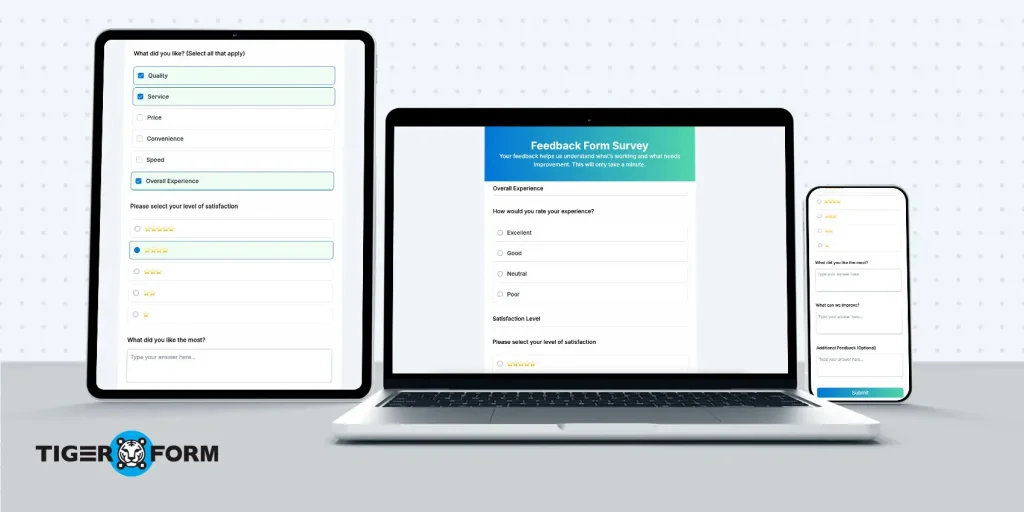
A structured questionnaire is the most straightforward type. It uses a fixed set of questions, and everyone answers in the same format. This makes it easy to collect and compare responses, especially when you’re dealing with a large number of people.
To keep responses consistent, structured questionnaires mainly use closed-ended question types like:
- Yes/no questions
These are the simplest type of questions and are used when you need a clear, direct answer. They work best for quick decisions or confirmations.
Example: “Would you recommend our product?” - Likert scale questions
These are a type of rating scale that measures opinions or attitudes, usually from “strongly agree” to “strongly disagree.” Likert scale questions useful for understanding perceptions in more detail.
Example: “The product meets my expectations – Strongly agree to Strongly disagree.” - Multiple choice questions
These give respondents a set of options to choose from, making it easier to collect specific information. Multiple choice questions allow single or multiple selections depending on your needs.
Example: “Which feature do you use the most?” - Rating scale questions
Rating scales are used to measure satisfaction, experience, or performance on a scale, usually from 1 to 5 or 1 to 10. They help you understand how strongly someone feels about something.
Example: “Rate your experience from 1 to 5.” - Dropdown or checkbox questions
These are helpful when you have many options or want to keep the form clean. Checkboxes allow multiple selections, while dropdowns keep things compact.
Example: “Select your preferred service option.”
2. Unstructured questionnaires
An unstructured questionnaire is more flexible and less rigid. It doesn’t follow a fixed set of questions or answer options, so the conversation can flow naturally. Instead of sticking to a strict format, it allows you to explore ideas based on how the person responds.
This type is useful when you want a deeper understanding, not just quick answers. People can share their thoughts, experiences, and opinions more freely, hence we will get more honest and detailed feedback.
To allow this flexibility, unstructured questionnaires mainly use open-ended and exploratory question types like:
- Open-ended Questions
Open-ended questions let people answer in their own words without restrictions. They are useful when you want detailed opinions or experiences.
Example: “What do you think about our service?” - Descriptive Questions
These encourage people to explain their experiences in detail, often with context or examples.
Example: “Can you describe your experience using our product?” - Probing Questions
These are follow-up questions asked to dig deeper into a response. They help you understand the reasons behind an answer.
Example: “Why did you feel that way?” or “Can you explain that a bit more?” - Experience-Based Questions
These questions focus on real situations the person has gone through, helping you understand actual behavior instead of assumptions.
Example: “Can you tell me about a time you faced an issue with our service?”
3. Semi-structured questionnaires
A semi-structured questionnaire is a mix of both structured and unstructured formats. It follows a set of planned questions, but also gives you the flexibility to explore further when needed. This means you don’t have to stick strictly to a script, you can go deeper based on how someone responds.
These questionnaires combine closed-ended questions for quick, measurable answers and open-ended questions for more detailed feedback. This balance helps you collect clear data while also understanding the reasons behind it.
For example, in an event feedback form, you might first ask, “How would you rate the event?” with a scale from 1 to 5. Then you follow it with, “What did you like the most?” or “What could we improve?” This way, you get both a clear rating and a deeper explanation.
Because of this mix, semi-structured questionnaires are one of the most commonly used formats. They give you the best of both, easy-to-analyze responses.
Questionnaire vs. survey: What’s the difference?
| Aspect | Questionnaire | Survey |
| Meaning | A set of questions used to collect information from people | A complete process of collecting, analyzing, and understanding responses |
| Focus | Mainly on questions and responses | Focuses on insights and conclusions from responses |
| Scope | Narrow and tool-based | Broader and process-based |
| Purpose | To gather raw data or feedback | To study trends, patterns, and make decisions |
| Components | Only questions (open-ended, closed-ended, etc.) | Questionnaire + data collection + analysis |
| Example | A customer feedback form asking for ratings and comments | A study analyzing customer satisfaction based on collected responses |
| Usage | Used to collect direct responses from individuals | Used in research, business decisions, and reporting insights |
| Output | Raw responses | Meaningful insights and conclusions |
100+ Sample questionnaire questions and templates
1. Customer feedback questionnaire
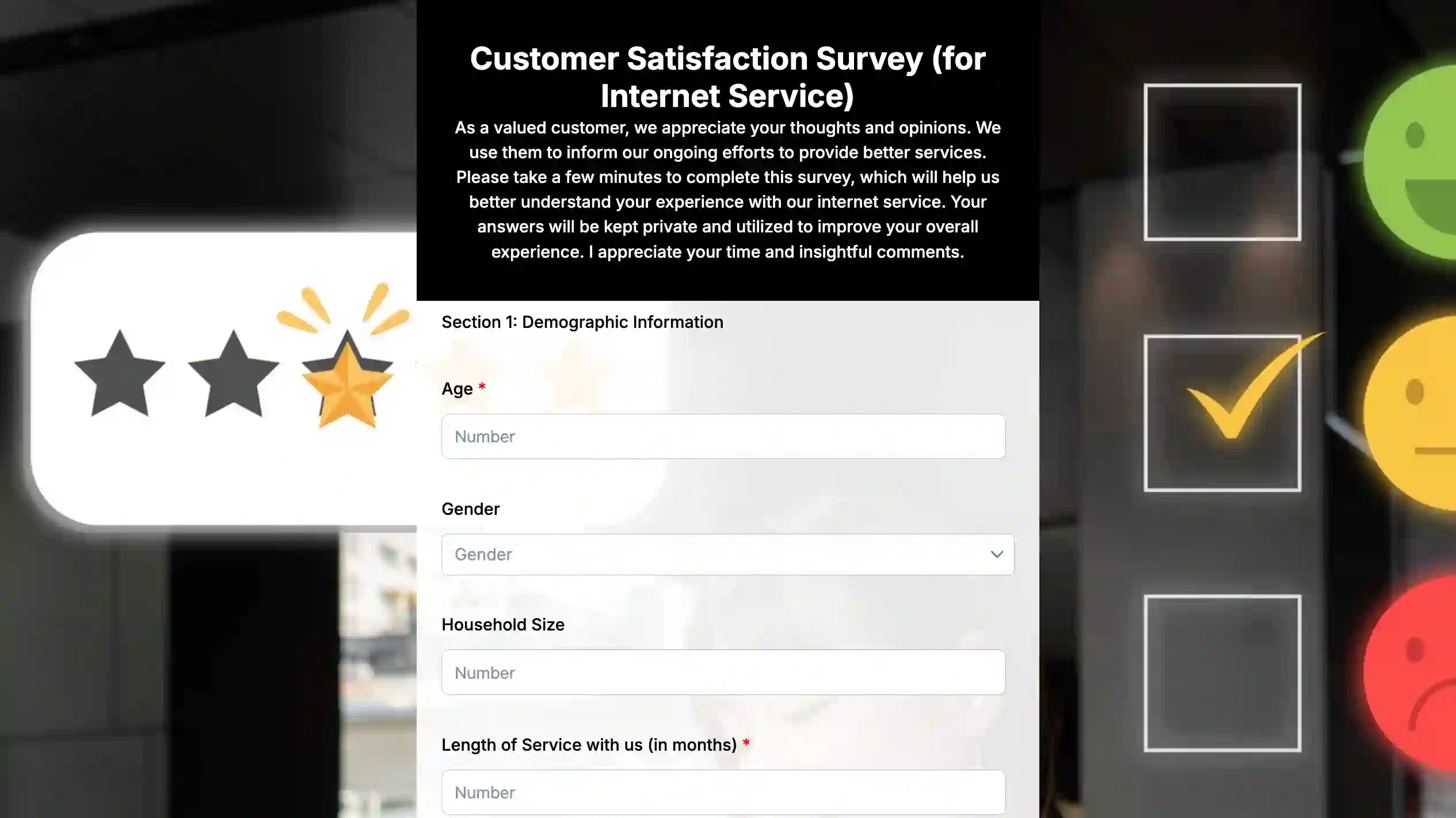
A customer feedback questionnaire is used by businesses to understand how customers feel about their product, service, or overall experience. It helps you learn what’s working well, what needs improvement, and what customers actually expect.
- How satisfied are you with our product/service?
- How would you rate your overall experience?
- How easy was it to use our product/service?
- Did our product/service meet your expectations?
- What did you like the most about our product/service?
- What did you like the least?
- How would you rate the quality of our product/service?
- How responsive was our customer support?
- Was it easy to find the information you needed?
- How likely are you to recommend us to others?
- Did you face any issues while using our product/service?
- Which feature did you use the most?
- What improvements would you suggest?
- How does our product/service compare to others you’ve used?
- Any additional comments or feedback?
2. Employee satisfaction questionnaire
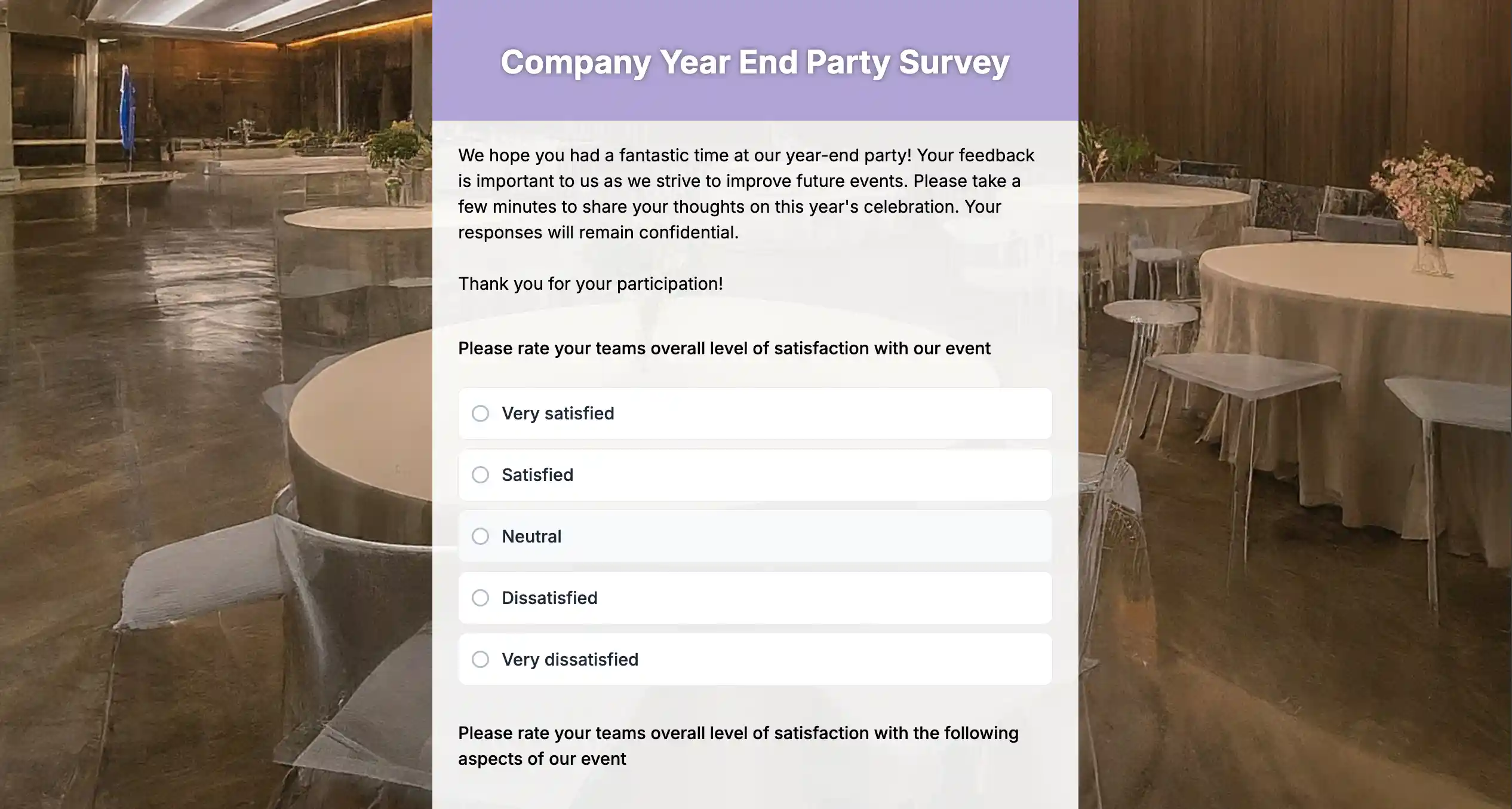
An employee satisfaction questionnaire helps organizations understand how employees feel about their work, team, and overall workplace experience. It gives insight into motivation, challenges, and areas that need improvement.
- How clear are you about your job responsibilities?
- Do you feel your work is recognized and appreciated?
- How comfortable do you feel sharing your ideas at work?
- Are you satisfied with the support you receive from your team?
- How manageable is your current workload?
- Do you feel there is fair treatment across the organization?
- How well does leadership communicate important updates?
- Do you feel encouraged to learn new skills in your role?
- How satisfied are you with the company’s policies and processes?
- Do you feel a sense of belonging at your workplace?
- What motivates you the most in your current role?
- What is one thing that could improve your work experience?
- Are there any tools or resources you feel are missing?
- How do you usually handle work-related stress?
- What would make you stay longer with the company?
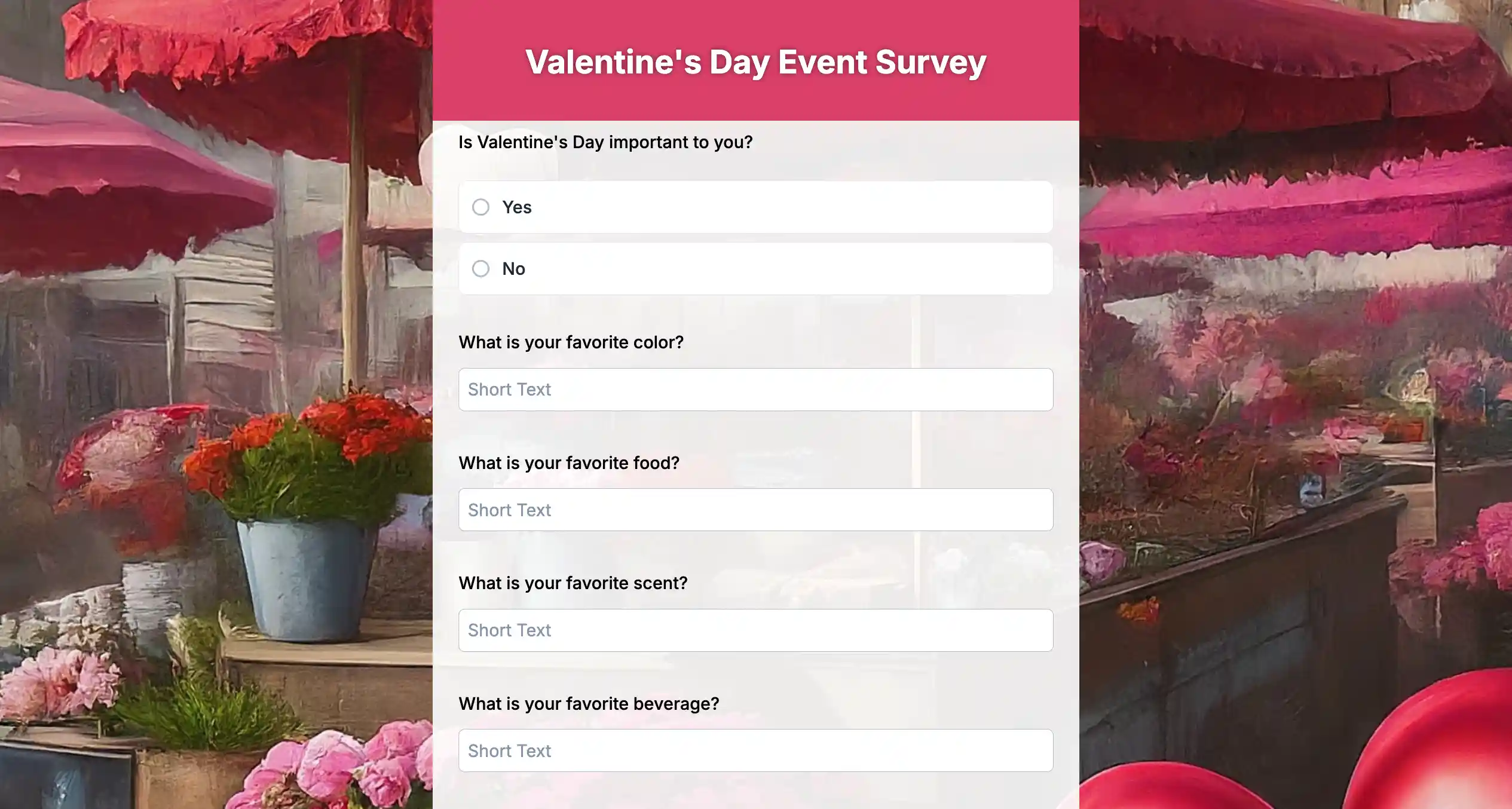
3. Event feedback questionnaire
After an event, the real value comes from knowing how people experienced it, what stayed with them, what felt smooth, and what didn’t land well. An event feedback questionnaire helps you capture all of that in a simple way so you can improve the next one.
- How would you describe your overall experience at the event?
- What was the most memorable part of the event for you?
- Did the event feel well-organized and easy to follow?
- How did you feel about the timing and flow of the sessions?
- Was the venue comfortable and suitable for the event?
- Which session or activity added the most value for you?
- Did anything feel confusing or unplanned during the event?
- How would you rate the speakers or presenters?
- Was the information shared before and during the event helpful enough?
- Did the event feel worth your time? Why or why not?
- What is one thing that stood out in a positive way?
- What is one thing that could have been done better?
- If you could change one part of the event, what would it be?
- Would you attend a similar event again? What would make it better for you?
- Any thoughts you’d like to share with the organizers?
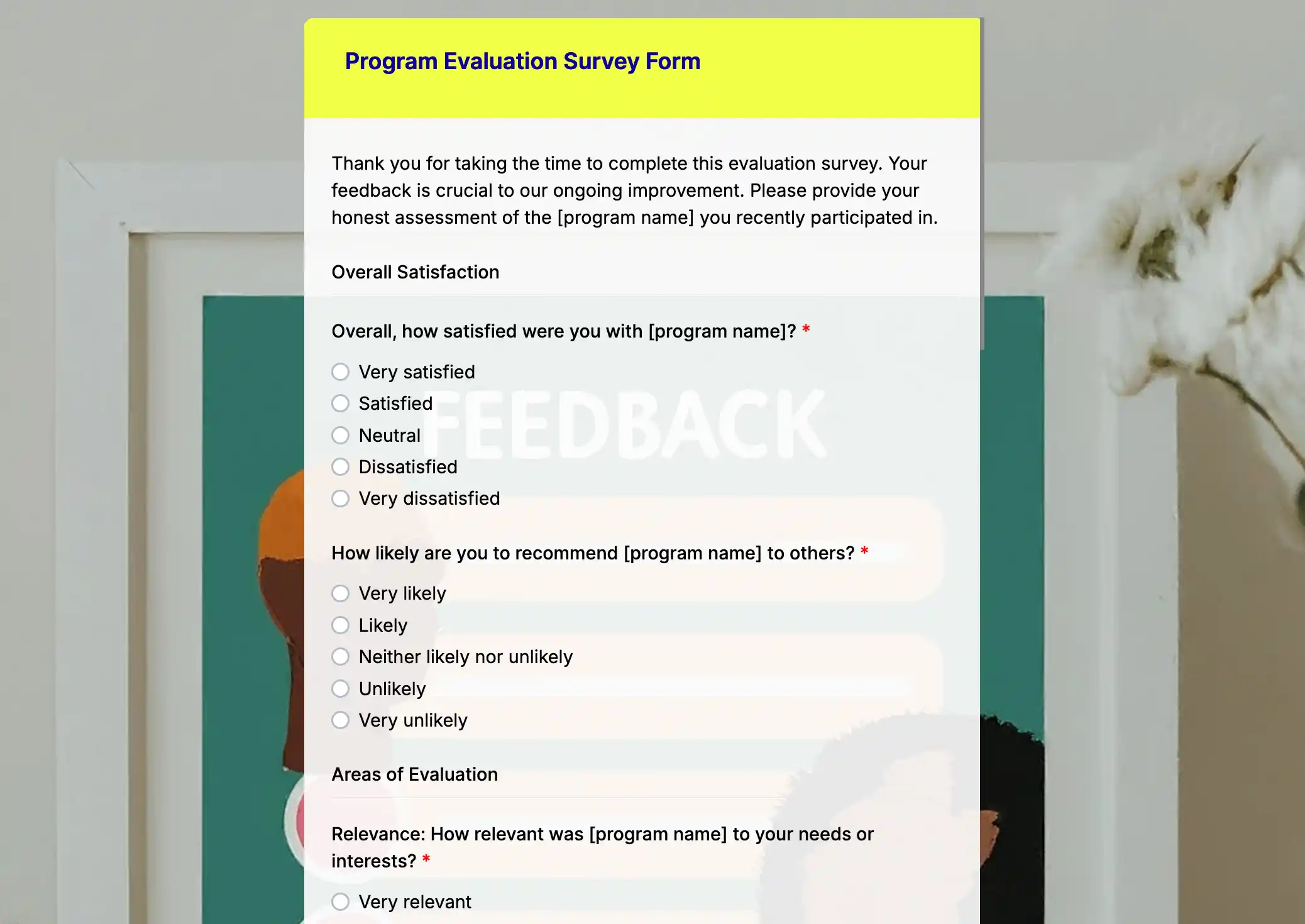
4. Student survey questionnaire
A student survey questionnaire is used by schools, colleges, or training institutes to understand how students feel about their learning experience. It helps teachers and institutions see what’s working well in the classroom and what needs to be improved, from teaching methods to study materials and overall support.
- How clear are the lessons taught in your classes?
- Do you feel comfortable asking questions in class?
- How useful are the study materials provided to you?
- Are the teaching methods easy to understand?
- How well do teachers explain difficult topics?
- Do you feel motivated to attend classes regularly?
- How supportive are your teachers when you need help?
- Is the classroom environment comfortable for learning?
- How manageable is your current study workload?
- Do you feel your learning needs are being met?
- What subject do you find most interesting and why?
- What challenges do you face in your studies?
- What changes would improve your learning experience?
- Do you get enough time for revision and practice?
- Any suggestions to improve your classes or learning environment?
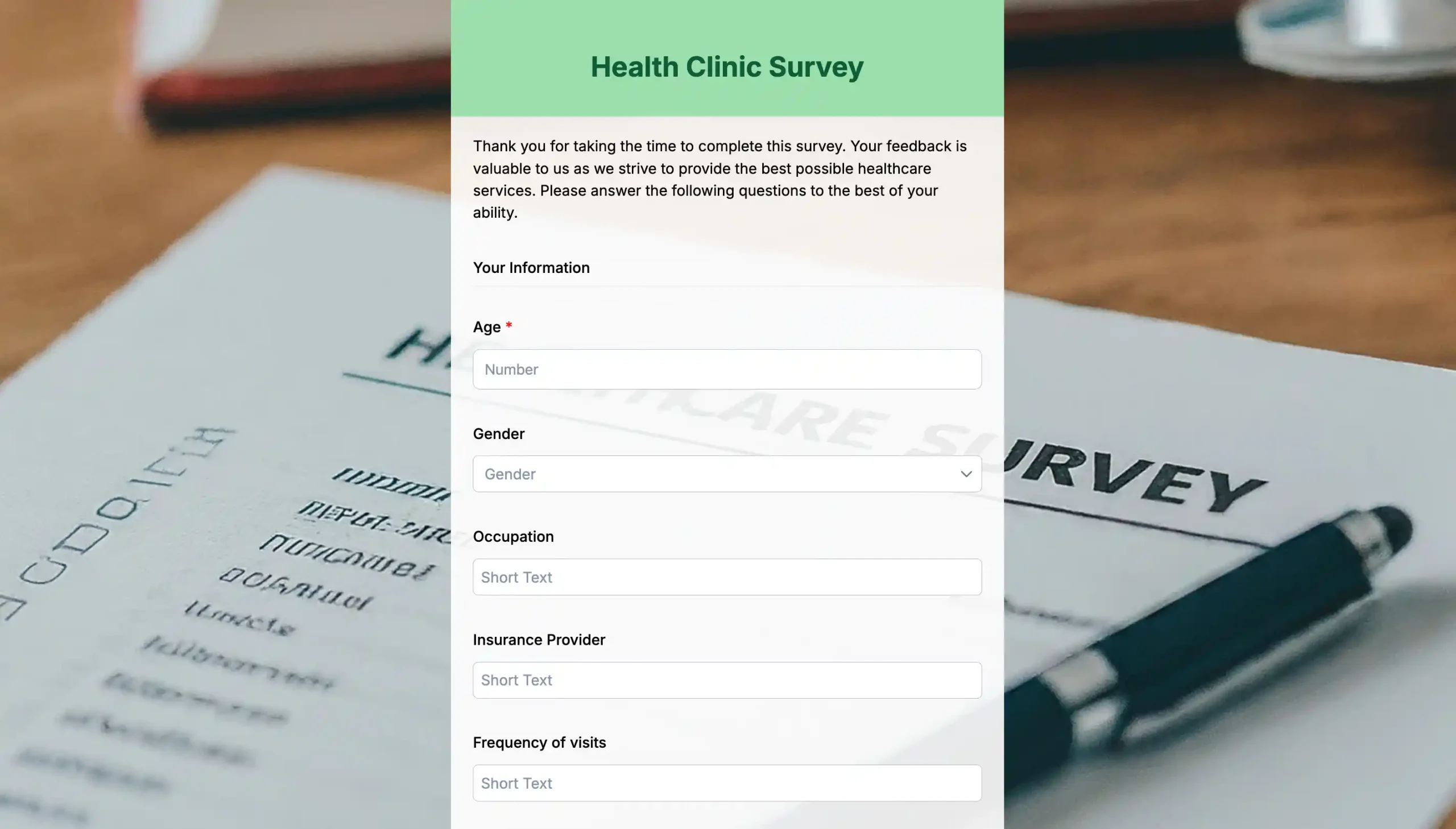
5. Healthcare questionnaire
A healthcare questionnaire is used by hospitals, clinics, and healthcare providers to collect important patient information. It helps doctors understand a patient’s medical history, current health condition, and recent experiences so they can provide safe and accurate treatment.
These types of questionnaires are usually simple but very important, as it ensures the right care is given based on real patient details.
- Do you have any existing medical conditions?
- Are you currently taking any medication?
- Do you have any known allergies?
- Have you undergone any major surgeries in the past?
- What symptoms are you currently experiencing?
- How long have you been experiencing these symptoms?
- Have you had any similar health issues before?
- Are you currently under any medical treatment?
- How would you rate your recent visit to our clinic/hospital?
- Do you have a family history of any chronic diseases?
- Are you experiencing any pain or discomfort right now?
- Do you follow any specific diet or lifestyle restrictions?
- Have you been hospitalized in the last year?
- Do you smoke or consume alcohol regularly?
- Any other health concerns you would like to share?
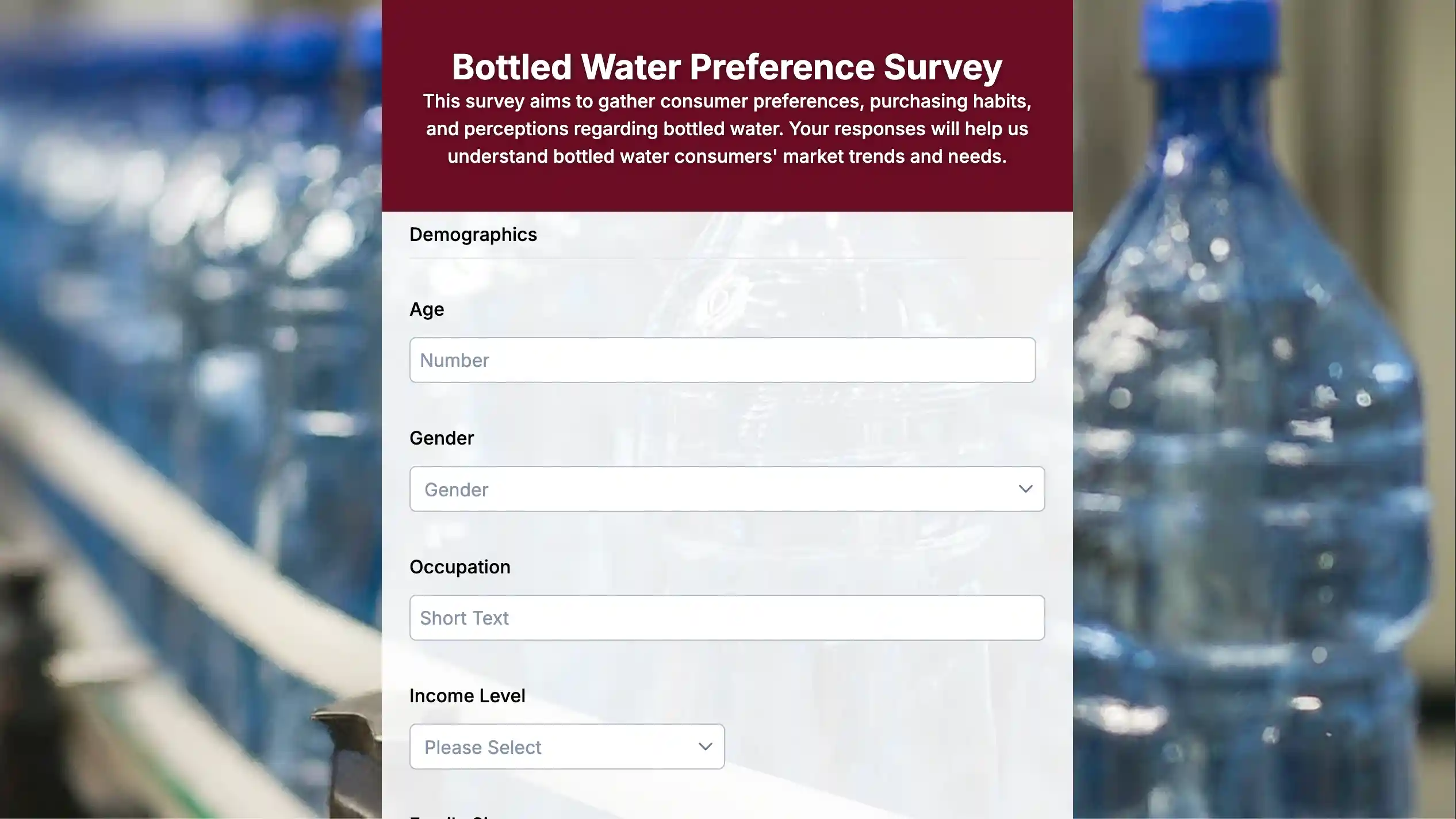
6. Product feedback questionnaire
A product feedback questionnaire is used by businesses to understand how customers feel about a specific product after using it. It helps identify what people like, what feels missing, and what needs improvement. This kind of feedback is very useful for improving product quality, features, and overall user experience.
- How satisfied are you with this product overall?
- How would you rate the quality of the product?
- Did the product meet your expectations?
- How easy was it to use the product?
- What do you like most about the product?
- What do you like least about the product?
- How well does the product solve your problem?
- Did you face any issues while using the product?
- How would you rate the design and appearance of the product?
- How does this product compare to similar products you’ve used?
- Which feature of the product do you find most useful?
- Is there any feature you feel is missing?
- How likely are you to continue using this product?
- Would you recommend this product to others?
- Any additional feedback or suggestions?
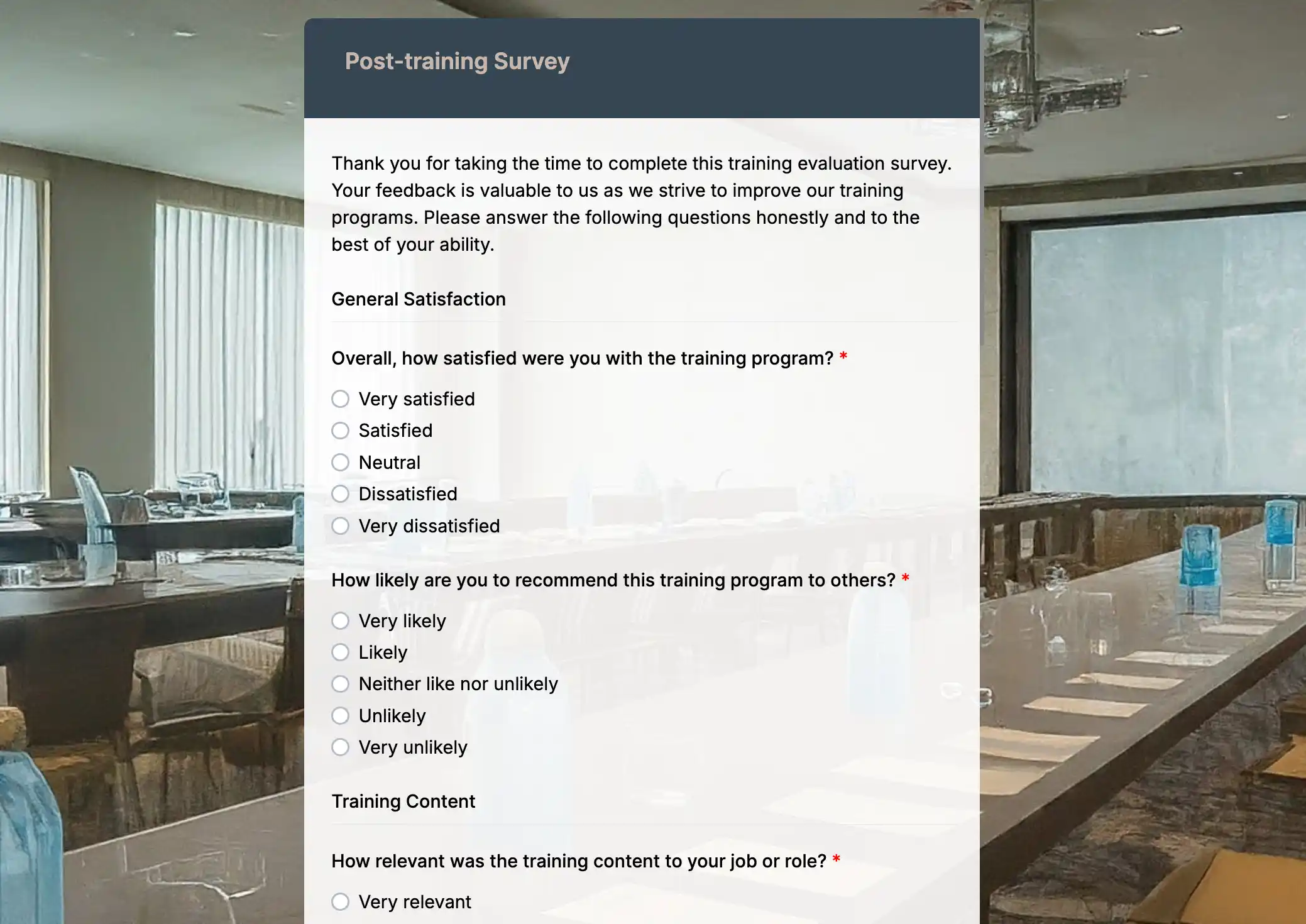
7. Training evaluation questionnaire
A training survey questionnaire is used to understand how effective a training session has been for participants. It helps organizations check whether the content was clear, useful, and practical, and whether it actually helped people improve their skills or performance.
This feedback is important because it shows what worked well in the training and what needs to be improved for future sessions.
- How relevant was the training to your current role?
- How clear were the training objectives before the session began?
- How would you rate the trainer’s ability to explain concepts?
- Was the training content easy to understand?
- Did the training keep you engaged throughout the session?
- How useful were the examples and activities shared during training?
- Was the pace of the training appropriate for you?
- How confident do you feel in applying what you learned?
- Did the training materials support your learning effectively?
- Were your questions and doubts addressed properly during the session?
- What part of the training was most valuable for you?
- What part of the training could be improved?
- Did the training meet your expectations?
- How likely are you to attend another training session in the future?
- What is one key takeaway you will apply from this training?
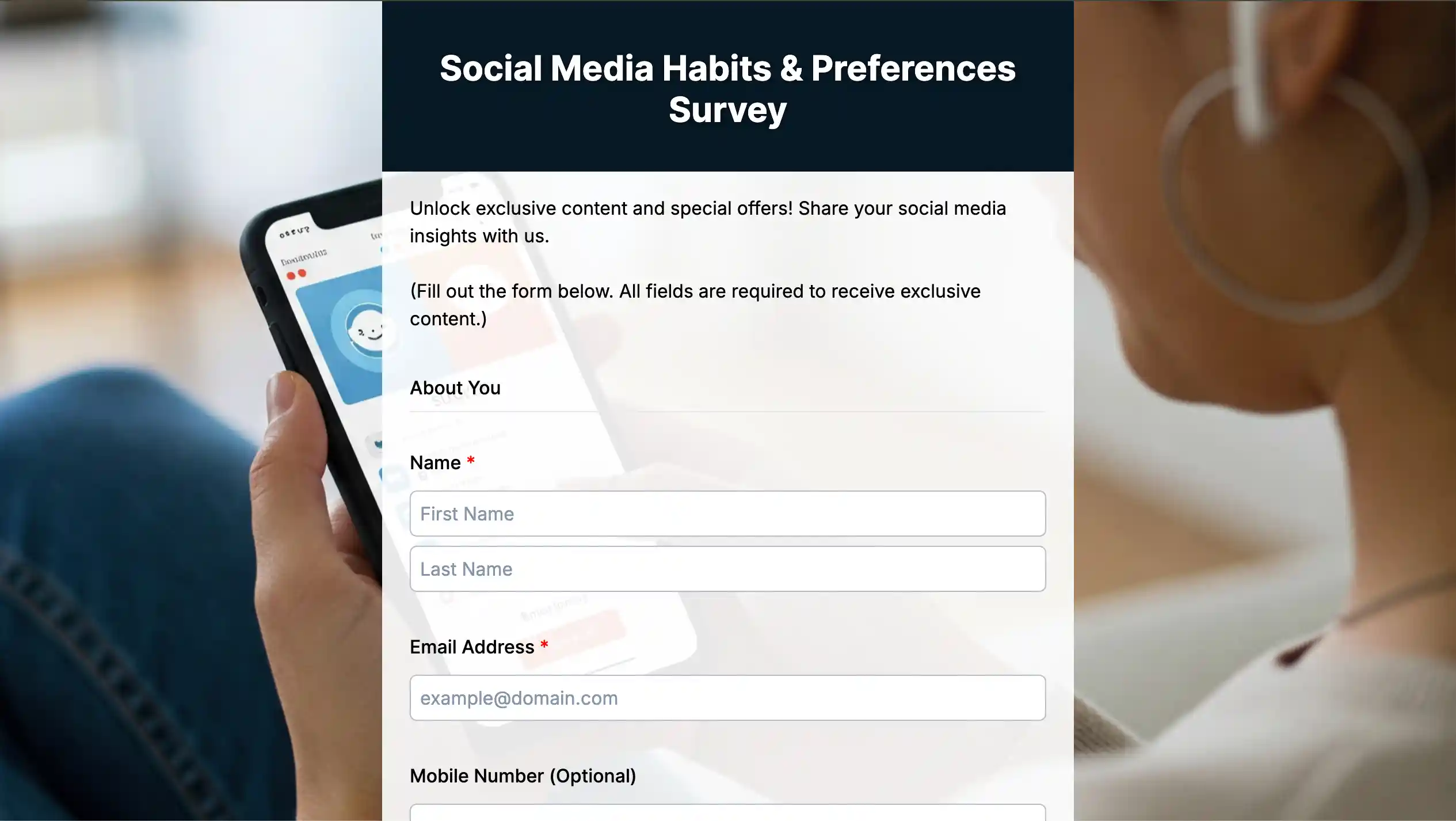
8. Lead generation questionnaire
A lead generation questionnaire is used by businesses to understand potential customers and qualify whether they are a good fit for a product or service. It helps collect key details like needs, budget, and buying intent so sales teams can follow up in a more relevant and timely way instead of guessing.
- What are you currently looking for help with?
- Which best describes your main goal right now?
- What challenge are you trying to solve?
- How soon are you planning to make a decision?
- Are you exploring options or ready to move forward?
- What type of solution are you interested in?
- What is your approximate budget for this requirement?
- Which features are most important to you?
- How many people will be using this product/service?
- Have you tried any similar solutions before?
- If yes, what didn’t work well for you?
- What would your ideal solution look like?
- Who is involved in making the final decision?
- How did you hear about us?
- What is the best way for us to contact you?
How to create an effective questionnaire
Once you understand different types of questionnaires, the next step is creating one that actually works. A good questionnaire feels easy for people to answer and gives you useful feedback at the end. Here’s how to build one step by step.
1. Define your goal
Before you write anything, be clear about what you want to learn. Are you trying to understand customer satisfaction, employee feedback, or event experience? A clear goal helps you avoid unnecessary questions and keeps your questionnaire focused.
If your goal is unclear, the responses will be scattered and hard to use later.
2. Choose the right question type
Not all questions serve the same purpose. You’ll usually need a mix of open-ended questions for detailed feedback and closed-ended questions, like ratings or multiple choice, for quick answers.
When using an online form builder, this becomes even easier. Form creators provide ready-made form templates, you can simply pick a template and customize it based on your needs.
3. Keep questions clear and simple
Each question should be easy to understand at first glance. Avoid long or confusing wording, and don’t ask two things in one question.
Also, try to stay neutral. Leading questions can affect answers and reduce the quality of your data.
4. Use a logical flow
Arrange your questions in a smooth order. Start with simple or general questions, then move into more specific ones.
Most form builders also allow you to group questions into sections, which helps guide the user step by step, so that the questionnaire feels more organized.

Collecting better feedback starts with the right questions
A questionnaire is only as good as the questions you ask. When it’s designed with clear intent, the right mix of question types, and a simple structure, it becomes a powerful tool for understanding people instead of just collecting random answers.
Instead of guessing what customers want, you’re directly hearing it from them. Instead of assuming how employees feel, you’re getting their real experience. And instead of relying on incomplete opinions, you’re working with actual responses that can guide better decisions.
In the end, better questions lead to better understanding, and better understanding leads to better decisions.
FAQs
What are the 4 types of research questions?
The four main types are descriptive, comparative, relationship-based, and causal research questions. Each one is used to explore data in different ways, from simply describing a situation to understanding cause and effect.
What are the 5 basic types of questions?
The five basic types are open-ended, closed-ended, multiple choice, rating scale, and yes/no questions. They are used to collect both detailed opinions and quick, structured responses.
What is the main purpose of a questionnaire?
The main purpose of a questionnaire is to collect information, opinions, or feedback in a structured way. It helps turn individual responses into useful insights for research, decisions, or improvements.