

Asian-American Heritage Month is celebrated every May in the United States.It’s rooted in stories that were pushed aside for years. Stories of early immigrants building lives under tough conditions, communities facing exclusion, and generations who had to fight to be seen, heard, and remembered. The recognition we see today came much later, and only after persistent effort. What most people see is the surface. What often gets missed is the history that led to it.
But very few people actually know why this month exists in the first place. This article will unpack that history, where Asian-American Heritage Month began, what it truly represents, and ideas to meaningfully celebrate.
What is Asian-American Heritage Month?
Asian-American Heritage Month is a dedicated time to recognize, celebrate, and learn about the diverse cultures, histories, and contributions of Asian-American and Pacific Islander (AAPI) communities.
It marks two important moments in history, the arrival of the first Japanese immigrants in May 1843 and the completion of the transcontinental railroad in May 1869. Later, it eventually grew into a nationwide observance dedicated to honoring Asian-American and Pacific Islander communities.
At a basic level, it brings attention to people whose roots trace back to regions like East Asia, South Asia, Southeast Asia, and the Pacific Islands. But it’s not just about geography. It’s about the millions of individuals and communities who have shaped the country in meaningful ways, often without getting the recognition they deserve.
The month focuses on celebrating culture in a broad sense. That includes traditions, languages, food, art, and festivals, but it also goes deeper. It highlights contributions in areas like science, technology, business, politics, education, and entertainment. From building critical infrastructure in the 1800s to leading innovations today, AAPI communities have played a key role in modern society.
At the same time, Asian-American Heritage Month is also about understanding history more honestly. It creates space to acknowledge the challenges these communities have faced, including exclusion, discrimination, and underrepresentation. These experiences are just as important as the achievements because they help explain why this recognition matters today.
The history and origins of Asian-American Heritage Month
Why was the month of May chosen
Asian-American Heritage Month is celebrated in May for a reason rooted in history. The month carries two important milestones. The first is the arrival of the first Japanese immigrants to the United States in May 1843, one of the earliest recorded moments of Asian migration. The second is the completion of the transcontinental railroad in May 1869, a project built largely by Chinese laborers. Despite their essential role, these workers faced low wages, dangerous conditions, and little recognition. Choosing May was a way to acknowledge both the presence and the contributions of Asian communities from the very beginning.
Early immigration and struggles
Long before there was any official recognition, Asian-American communities were already helping shape the country. Immigrants from China, Japan, the Philippines, India, and other regions worked in agriculture, railroads, and small businesses, often taking on physically demanding jobs. At the same time, they faced strong discrimination. Laws like the Chinese Exclusion Act restricted immigration and denied basic rights. These challenges meant that even though their contributions were significant, their stories were often left out of mainstream history.
Erased contributions and cultural barriers
As time went on, Asian-Americans continued to contribute across different fields, but their impact was rarely highlighted. Many achievements in areas like science, arts, and business did not receive the same recognition as others. On top of that, stereotypes and limited representation in the media created a narrow understanding of Asian identities. This led to a gap where contributions existed, but awareness did not. The lack of visibility made it even more important to create space for these stories to be shared.
The push for recognition in the 1970s
By the 1970s, there was a growing effort across the United States to recognize diverse histories. Asian-American activists, students, and community leaders began organizing and advocating for proper acknowledgment. This movement was not just about celebration. It was about correcting years of omission and ensuring that future generations would learn a more complete version of history.
The first official step was in 1978
The push for recognition led to real change when leaders like Norman Mineta and Frank Horton introduced a resolution in Congress. In 1978, this resulted in the creation of Asian Pacific American Heritage Week. It was the first time Asian-American history was officially recognized at a national level. Even though it lasted only a week, it marked an important shift toward visibility and acknowledgment.
Expansion to a full month in 1992
As awareness continued to grow, so did the need for more time to fully recognize the depth of Asian-American history and contributions. Communities, educators, and leaders advocated for a broader observance. In 1992, the recognition was expanded from a week to a full month, with May retained for its historical significance. This allowed for more meaningful celebrations, educational programs, and public engagement.
What it represents today
Today, Asian-American Heritage Month is widely observed across the United States. It goes beyond cultural celebration and serves as a time for reflection and learning. It highlights contributions across fields like science, business, arts, and politics, while also acknowledging the struggles that shaped these communities. The journey from being overlooked to being recognized is what gives this month its real meaning, making it both a celebration of progress and a reminder of the work that led to it.
Key figures behind the Asian-American Heritage Month movement
Political leaders who made it official
- Norman Mineta
One of the primary figures behind the movement, Mineta co-led the effort to establish official recognition. His personal experiences with Japanese-American internment shaped his commitment to ensuring Asian-American history was acknowledged at a national level. - Frank Horton
Horton worked alongside Mineta and co-sponsored the resolution that led to the creation of Asian Pacific American Heritage Week in 1978, helping turn advocacy into legislation. - Daniel Inouye
A strong supporter of the movement in the Senate, Inouye played a key role in advancing the resolution and ensuring it gained broader political backing. - Spark Matsunaga
Matsunaga was instrumental in pushing the initiative forward in Congress, advocating for recognition and representation of Asian American contributions.
Activists and organizations that sparked the movement
- Jeanie Jew
Jeanie Jew is often credited as one of the earliest voices behind the movement. She approached lawmakers after her father, a World War II veteran, was denied recognition, which sparked her push for national acknowledgment of Asian-American contributions. - Organization of Chinese-American Women
This organization played a key role in supporting early advocacy efforts, including efforts to secure recognition of Asian-American history at the national level. - Japanese-American Citizens League
One of the oldest Asian-American civil rights organizations, it actively supported awareness, education, and policy changes that contributed to the movement. - Asian Pacific American Heritage Council
This group helped organize and promote celebrations, especially in the early years, ensuring that the observance gained visibility and community participation.
Broader movement influencers (Civil Rights Era)
- Yuri Kochiyama
Her activism during the civil rights movement helped build the foundation for Asian-American identity and solidarity, which later fueled recognition efforts. - Grace Lee Boggs
A key thinker and activist, Boggs contributed to broader social justice movements that influenced Asian-American political awareness and advocacy. - Larry Itliong
A labor rights activist who co-led major farmworker strikes, helping bring attention to Filipino and broader Asian-American contributions. - Philip Vera Cruz
A close collaborator of Itliong, he played a major role in labor movements that strengthened Asian-American visibility.
How to celebrate Asian-American and Pacific Islander Heritage Month 2026
Support AAPI-owned businesses
One of the simplest ways to show support is by choosing where you spend your money. Look for local restaurants, small businesses, creators, or brands owned by Asian-American and Pacific Islander communities. It could be as simple as trying a new place to eat, buying from an independent brand, or recommending a business to others. Many AAPI-led organizations run campaigns during this month, and using a fundraising form for non profit efforts makes it easier for people to donate and get involved.
Learn and share real stories
Take time to go beyond surface-level knowledge and explore real stories from Asian-American communities. This could mean reading about historical experiences, following creators who share personal perspectives, or listening to interviews and podcasts. When you learn something meaningful, share it with others. It helps shift the conversation from general awareness to deeper understanding.
Attend cultural events and festivals
Many cities host cultural events, exhibitions, and festivals during this month. These spaces offer a chance to experience traditions, food, art, and performances in an authentic way.
Educate through books, films, and conversations
Books, movies, and conversations can open up perspectives that you may not come across in everyday life. Watch films by Asian-American creators, read books that explore identity and history, or simply start a conversation with friends or colleagues about what you’re learning. These moments of reflection and discussion help turn awareness into something more lasting and meaningful.
Asian-American Heritage Month activities for different groups

For families
Families can use this month as a chance to learn together in a simple, natural way. You don’t need anything formal to get started. Watching a movie by an Asian-American filmmaker, trying a new cuisine at home, or reading a children’s book that reflects different cultures can open up meaningful conversations. Visiting local cultural events or museums can also make the experience more real, especially for kids. The goal here isn’t to cover everything; it’s to create curiosity and awareness in a way that feels engaging and age-appropriate.
For schools
Schools have a great opportunity to turn this month into a learning experience that goes beyond textbooks. Teachers can introduce storytelling sessions that highlight real-life figures and historical events, helping students connect with the material on a personal level. Classroom projects like presentations, art activities, or cultural showcases can encourage participation and creativity. Even small additions, like dedicating time to discuss Asian-American history or inviting guest speakers, can make a lasting impact on how students understand diversity and inclusion.
For workplaces
In workplaces, Asian-American Heritage Month can be used to build awareness and create more inclusive conversations. This could include hosting diversity talks, panel discussions, or informal sessions where employees can share experiences and perspectives. Internal campaigns, like spotlighting Asian-American employees or leaders, help recognize contributions within the organization. Companies can also support the month by collaborating with AAPI-owned businesses or sharing educational resources.

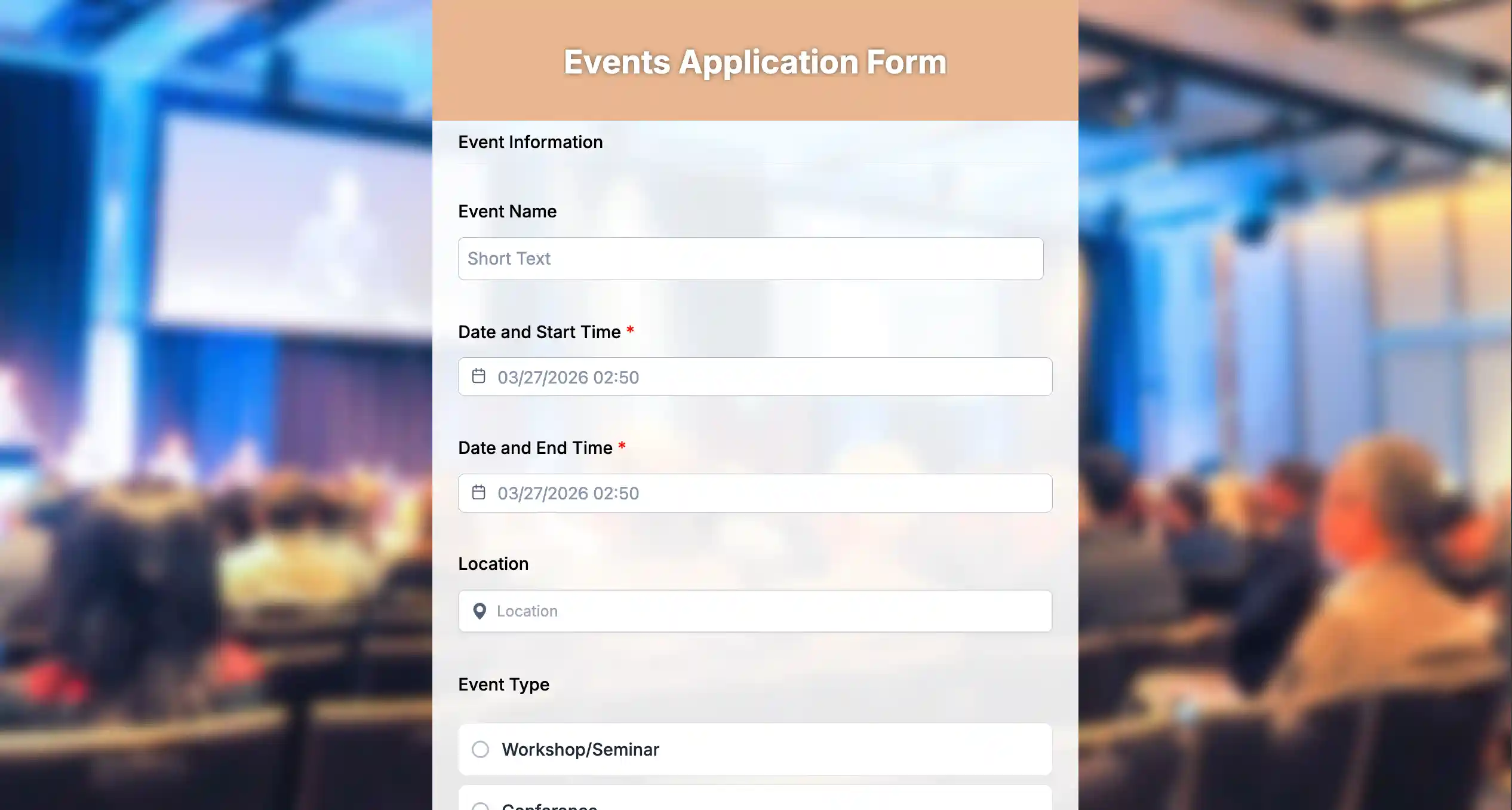
Make these celebrations more organized and impactful with an event form
Planning an event for Asian-American and Pacific Islander Heritage Month is one thing. Managing registrations, tracking attendees, and keeping everything organized is another. This is where using an online form builder like TIGER FORM makes things much easier.
Instead of handling RSVPs through messages, you can create a simple event form that does the work for you.
Here’s how to do it step by step:
Start with AI Form Generation
Begin by using the TIGER FORM AI form generator. Instead of building everything from scratch, you can simply type what you need, like “AAPI Heritage Month event registration form.”
The AI will instantly create a structured form with relevant fields such as name, email, event preferences, and attendance details. This saves time and gives you a strong starting point.
Choose a ready-made form template
If you prefer more control, you can browse through pre-built event form templates. These are designed for different use cases like workshops, cultural programs, or workplace events.
Templates help you skip the setup phase and jump straight into customization, which is especially useful when you’re planning multiple activities.
Customize your form
Once your form is generated, you can tailor it to your event. Add or edit fields based on your needs, such as:
– Session selection
– Dietary preferences
– Guest count
– Feedback or expectations
You can also adjust the layout and design to match your event style.
Share your event form easily
After setting up the form, share it through a link, email, or embed it on your website. This makes it easy for people to register from anywhere.
Generate a QR code for quick access
The form creator lets you generate a QR code for your event registration. This is especially useful for in-person events where attendees can scan and register instantly.
You can place the QR code on posters, invitations, banners, or even presentation slides. It makes the process faster and removes unnecessary steps.
Track responses in one place
All responses are collected in a single dashboard, making it easy to track attendees, manage data, and stay organized without switching between tools.

The stories we celebrate, the change we continue
The stories we celebrate, of resilience, contribution, and cultural richness, are not just moments from the past. They are part of an ongoing journey that continues to shape the present.
When we take the time to understand these stories, we begin to see the bigger picture. The progress that exists today came from years of effort, advocacy, and persistence. What this really comes down to is responsibility. Celebrating culture is important, but so is making space for deeper understanding. Whether it’s supporting communities, amplifying voices, or simply choosing to stay informed, small actions add up over time.
Because in the end, Asian American Heritage Month is not just about looking back. It’s about carrying those stories forward and making sure they continue to be seen, heard, and valued in the years to come.
FAQs
Why is Asian American Heritage Month important?
It highlights the contributions and history of AAPI communities while raising awareness about the challenges they have faced, helping promote understanding and inclusion.
When did Asian American Heritage Month start?
It began as Asian Pacific American Heritage Week in 1978 and was later expanded to a full month in 1992.
What does AAPI stand for?
AAPI stands for Asian American and Pacific Islander, a term used to represent diverse communities with roots in Asia and the Pacific Islands.