
Aside from celebrating, Earth Day is also a sad, uncomfortable reminder that we need to face: the planet is hurting.
Air is polluted, and plastics are everywhere, even in our food. And most of us just treat Earth Care Day like a social media moment, post a green quote, feel good, and move on.
But awareness without action doesn’t save anything.
For 2026, EarthDay.org officially announced the theme: Our Power, Our Planet. This is to remind that environmental protections are made by ordinary people who choose to act. That the same power still belongs to you, but if you don’t act, you lose that power.
To use that power, know what Earth Day is, why it started, and what the 2026 theme means. And, most importantly, we will give you 10 simple ways of helping our planet, including switching to QR code forms instead of paper.
What is Earth Day?
Earth Day is the world’s largest civic environmental event. It’s a single day dedicated to raising awareness about environmental challenges and motivating people to take real, tangible action.
It’s not a holiday in the traditional sense. There are no gifts, no days off work. It’s more like a global check-in. A moment for communities, schools, businesses, and individuals to ask: How are we treating the only planet we have?
Today, 193 countries celebrate the Global Environment Day. It’s coordinated by Earthday.Org, the nonprofit that grew directly out of the original 1970 movement. Over one billion people participate every year, making it one of the most widely observed civic events on the planet.
Why do we celebrate a day for Mother Earth?
Because without it, most people simply don’t stop to think about it.
Daily life is busy. You commute, work, shop, eat, and sleep. Environmental issues feel distant, until they’re not. Until the wildfires reach your city. Until your local beach closes due to pollution. Until your tap water gets a warning notice.
Environment Day exists to close that gap between awareness and urgency. It reminds people that the environment isn’t a background issue. It’s the foundation of everything: your food supply, your drinking water, your air, your health.
It also works. The original Earth Care Day in 1970 directly led to the formation of the U.S. Environmental Protection Agency, the Clean Air Act, the Clean Water Act, and the Endangered Species Act, all within four years of that first march.
That’s the power of organized collective action. And that’s exactly why we still need it.
When is Earth Day?
What day is Earth Day 2026? It falls on Wednesday, April 22.
It’s the same date every year, April 22, regardless of the day of the week. The date was chosen intentionally. Senator Gaylord Nelson and organizer Denis Hayes chose it to fall between Spring Break and Final Exams, maximizing student participation.
For 2026, major activities begin on Saturday, April 18, kicking off Earth Week. Events run through April 25 and beyond. If April 22 falls on a workday and you can’t fully participate, the weekend around it gives you options.
Mark your calendar. But more importantly, plan what you’ll actually do.
Earth Care Day 2026: The Theme
The official 2026 theme is “Our Power, Our Planet.”
It’s a direct response to a troubling trend. In 2025 alone, more than 400 regulatory actions rolled back environmental protections worldwide, from clean air standards to water safety rules. Environmental safeguards that took decades to build are being dismantled.
The 2026 theme is a reminder that people-powered action is what created those protections in the first place. And it’s the only thing that can defend and rebuild them. As Denis Hayes, the organizer of the very first Earth Care Day, put it: the public can be an unstoppable force when it chooses to be.
How did Earth Care Day begin?
In 1969, U.S. Senator Gaylord Nelson witnessed the devastating Santa Barbara oil spill, 3 million gallons of crude oil spilling into the Pacific Ocean, killing birds, fish, and marine life across 35 miles of coastline. He was furious. And instead of just being angry, he organized.
April 22, 1970, became the first celebration of Earth Care Day all over the United States. The result was staggering: 20 million Americans, roughly 10% of the U.S. population at the time, took to the streets, parks, and campuses in the largest civic demonstration in American history.
It wasn’t a fringe movement. It was a mainstream one.
The decades that followed
| 1970 | The mentioned day ushered in major environmental laws: The U.S. Environmental Protection Agency (EPA)The Clean Air Act The Clean Water ActThe Endangered Species Act |
| 1990 | Earth Care Day went global, 200 million people across 141 countries joined in, and recycling became a household habit. |
| 2000 | The internet helped Earth Care Day reach more people and made it easier to organize worldwide. |
| 2016 | 175 countries signed the Paris Climate Agreement on Earth Care Day. |
| 2020 | Despite COVID lockdowns, over 100 million people marked the 50th anniversary online. |
| 2025 | The focus shifted to clean energy and moving away from fossil fuels. |
| 2026 | The theme shifts to collective power, Our Power, Our Planet. |
12 simple living tips to contribute to Earth Care Day
University Corporation for Atmospheric Research (UCAR) reveals that the average American’s carbon footprint is about 16 tons per year. That’s like three adult African bush elephants combined.
Now multiply that by every person on the planet. Imagine the carbon emissions we all send into the environment? Alarming. To lessen that, here are some simple tips to help our Mother Earth.
1. Lessen paper use with digitality
Paper, from creation to usage, has a heavier environmental footprint than you realize. According to Kunak, a kilogram of paper emits about 3.3 kg of CO₂ into the atmosphere.
And SoweSoft’s data reveals that manufacturing a single A4 sheet also consumes between 5 and 10 liters of water, making it one of the most water-intensive products we use daily.
Digital technology, as an alternative, has its own share of carbon emissions, such as data centers’ energy consumption. But when it comes to everyday document workflows, going digital is still more sustainable than producing more paper.
Switching from paper forms to digital forms can reduce CO₂ emissions by 30 to 60%, depending on how your business operates. (SoweSoft)A digital product like form QR codes makes a real difference. Instead of distributing stacks of paper forms, you can collect information with just a scan; that, with no clutter. Form builders like TIGER FORM make it easy to get started, no technical skills needed. Every form you move online is one less drain on trees, water, and energy.
2. Join or organize a local cleanup
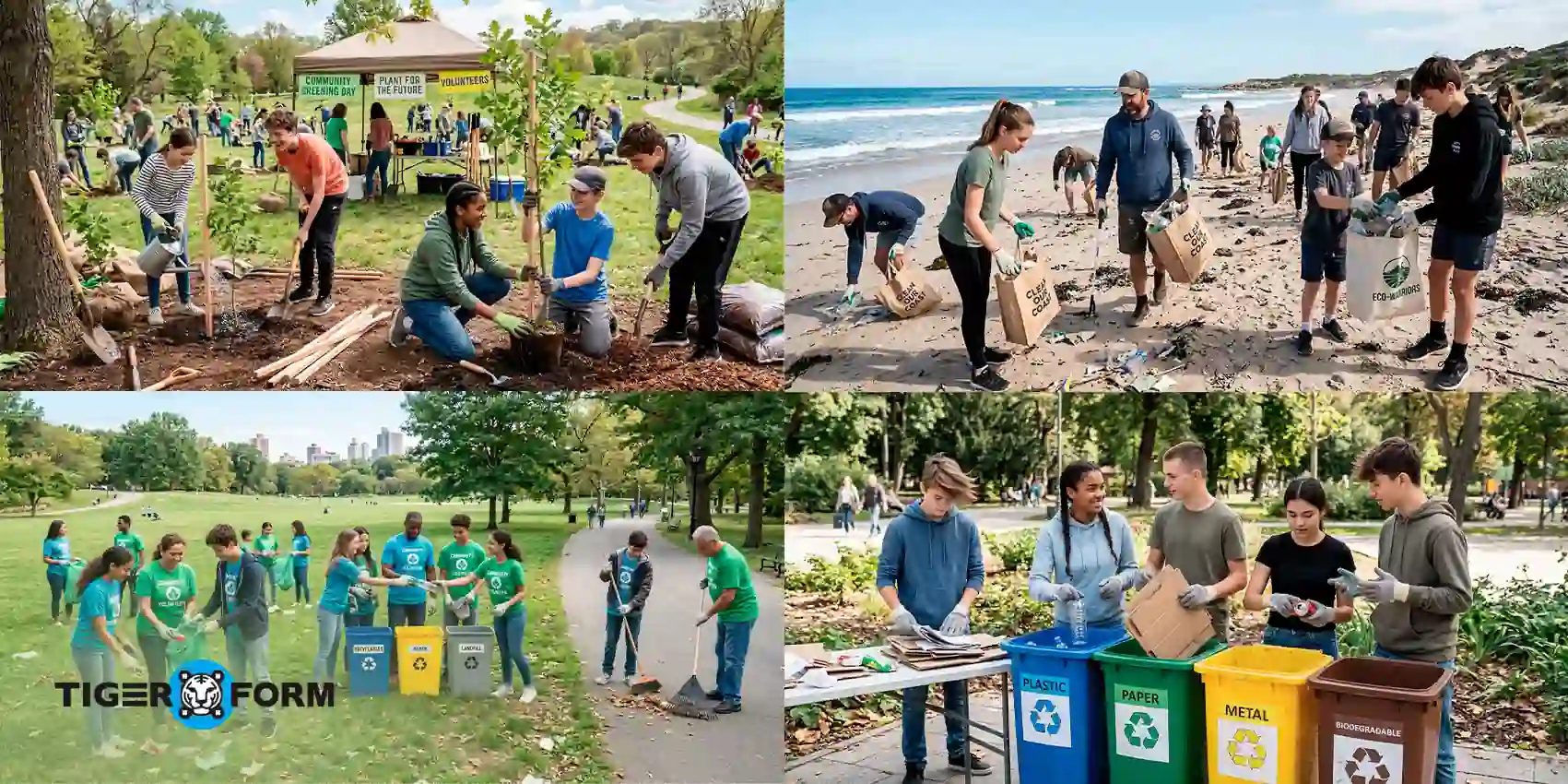
This is the most direct but thoughtful way to participate in the event. Earthday.org has a global cleanup map to help you find cleanup drives in your location.
Find, register, and spend some time cleaning up litter; it could be a park, beach, or just your street block. And it’s a win-win, you help Earth and meet new friends.

3. The “wait 48” rule
You promised you would only browse online shops, but seconds later, you’d already placed an order. But please, wait 48 hours before buying a product, because most impulse buys lose their luster after two days.
By fighting your urge, you reduce the demand for mass-produced goods and lessen your “clutter-to-be.”
4. Eat vegetables
You don’t have to go completely vegan; you can just make slight changes to your menu. Try cutting down on beef and go for beans or grains instead, just a few times a week.
Cutting down your meat consumption (maybe a day or two?) will help significantly reduce water use and methane emissions. One global movement that’s easy to start with is “Meatless Mondays.”
5. Optimize your thermostat
Your heating electricity may still be powered by coal or gas-fired power plants, though, depending on where you live.
But if so, that contributes significantly to carbon emissions. And during a heatwave or a peak winter, everyone cranks their units at once; imagine the strain that puts on the electric supply.
- In Winter: Aim for 68°F while awake and lower at night.
- In Summer: Aim for 78°F when you’re home.
Now, aside from helping Earth, you also extend the life of your ACs—still a win-win instance.
Another simple tip: a cozy sweater is the original carbon-neutral heater.
6. Opt for reusables
Start with the “Big Three,” the items that create the most daily waste:
- Water bottles: Swap plastic for stainless steel.
- Grocery bags: Keep canvas bags in your trunk so you never forget them.
- Coffee cups: Bring your own tumbler to the café.
And more thoughtfully, swap paper napkins for cloth ones, or cut up old T-shirts into rags instead of reaching for paper towels. It feels a little fancier, and you’ll quietly eliminate a constant stream of trash.
7. Wash cold and hang dry
A quick stat from Cleaning Institute: about 90% of the washing machine energy is spent on heating the water, not cleaning your clothes.
Switching to cold is gentler on your fabrics and easier on the grid. And if you have the space, a simple drying rack handles most loads just fine. No tumble dryer needed.
8. Reduce food waste
The average American family (Members of four) throws away roughly $1,500 worth of food every year, according to the USDA. That’s not just money, it’s methane in a landfill.
Two easy fixes: first, shop your pantry before you shop the store. Use what you already have. Second, if you have a yard, a basic compost bin turns scraps into “black gold” for your garden instead of gas for the atmosphere.
9. Walk or bike for quick trips
For quick trips, maybe under a mile, you need to rethink how you travel in a more eco-friendly way. Walking or biking instead cuts emissions, saves gas money, and, bonus, gives you a rare moment of quiet in your day.
10. Quality over quantity
When you do need to buy something, look for “Buy It For Life” (BIFL) items. One pair of quality boots you can resole beats five fast-fashion pairs that fall apart in six months, better for the planet, and honestly, better for your wallet too.
Buy less, buy better—still a win-win.
11. Plant something, anything
Trees absorb CO2, reduce urban heat, and support biodiversity. But you don’t need a yard to get in on this.
Start small, like growing herbs on a windowsill or on your balcony. You can also plant wildflowers in a small patch of soil—it all counts.
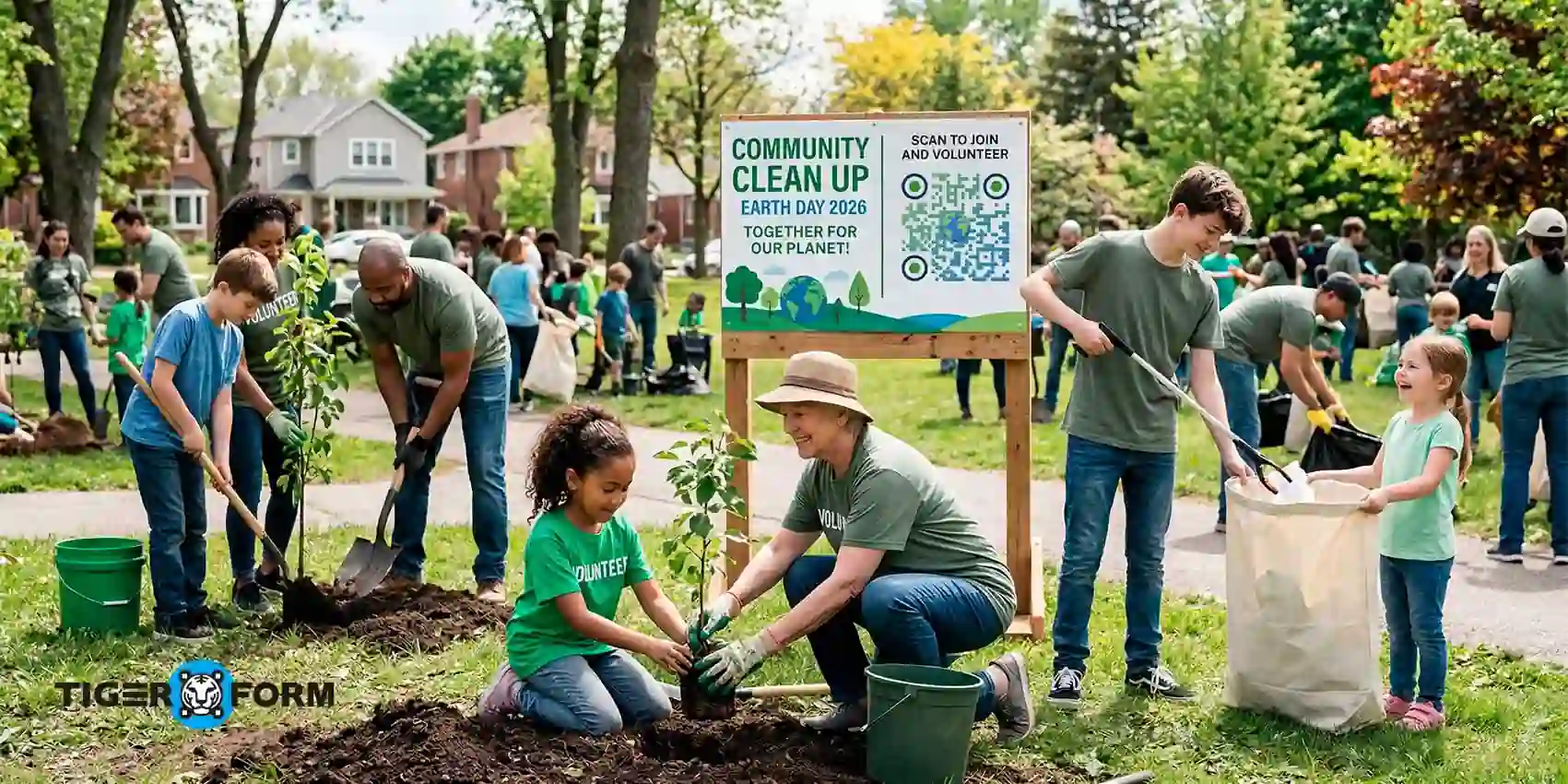
If you want to do more, check local tree-planting groups. Many organize Earth Week activities and ask volunteers to sign up via a QR code form for volunteer registration to coordinate participants, tools, and planting locations.
12. Build these habits beyond Earth Care Day
One day of action changes nothing; a habit maintained for a year changes everything. Pick one thing from this list and do it every week, not just on Earth Care Day. As the myth says, an initiative repeated 55 days in a row becomes a habit.
Make Earth Care Day a habit, not just a calendar mark
The planet is getting worse, and do you just become a bystander?
You will never be, if you adopt the tips and advice above. Avoid the stack of paper forms with QR code forms, save those trees. Reduce carbon emissions by adjusting your AC settings.
The original Earth Care Day proved that 20 million ordinary people, students, farmers, workers, and families can force change on a massive scale. That power didn’t disappear. It’s still yours.
The theme for 2026 says it plainly: Our Power. Our Planet. You already have everything you need to participate. A reusable bag, a conversation, an hour on a Saturday morning, and a vote.
But the choices that matter? You can start making them today.

FAQs
When is Earth Day 2026?
For 2026, it falls on Wednesday, April 22. Earth Week activities begin Saturday, April 18, and continue through April 25.
What’s the easiest way to participate in Earth Care Day?
Join a local cleanup, cut single-use plastic for a week, or simply commit to one sustainable habit you’ll keep past April 22. You don’t need to do everything; you just need to start somewhere and keep going. You can also take part in the day with an Earth Day quiz or trivia questions about climate facts, wildlife, recycling, or environmental history, which is a simple way to learn while having fun.
Sources and references:
https://scied.ucar.edu/learning-zone/climate-solutions/carbon-footprint
https://www.usda.gov/foodlossandwaste/consumers
https://evannex.com/blogs/news/study-finds-over-half-of-us-daily-car-trips-cover-less-than-three-miles
https://www.cleaninginstitute.org/industry-priorities/outreach/cold-water-saves
https://www.sciencedirect.com/science/article/pii/S1364032122005950
https://kunakair.com/environmental-impact-paper-industry/
https://www.sowesoft.com/en/blog/carbon-footprint-of-paper-vs-digital-what-is-the-real-environmental-impact