
The National Women’s History Alliance (NWHA) opens Women’s History Month 2026 with the theme: “Leading the Change: Women Shaping a Sustainable Future.”
That is to say, looking back on HERstory doesn’t mean we let women’s legacy remain in the past, but it is a reminder that womanhood will continue to influence the future for the better.
In every generation, women have cared, fought, built, and reshaped norms. Some did so loudly, through movements and revolutions. Others discreetly, in their own ways—say in classrooms, laboratories, kitchens, or courtrooms.
Not all of their herstories were recorded or told fully. So to celebrate each, Herstory Month exists.
Now, we will explain the meaning of the event, retell the stories of iconic women, and invite you to participate in meaningful ways to celebrate the month.
What and when is women’s history month?
Women’s History Month is celebrated every March.
March has always been the month for celebrating women’s roles, way back in 1978, especially since International Women’s Day is also observed on March 8.
Countries like the United States, the United Kingdom, and Australia celebrate women’s history in March, though similar observances vary by country.
But it’s not just a calendar mark; celebrating Women’s Heritage Month is also an opportunity for women to be heard in their advocacies and gain benefits like networking or even funding.
The month also opens the chance to reweigh the imbalance. For decades, society and public narratives have weighed men’s contributions heavily than those of women. In contrast, some of the women’s achievements go untold.
Second, it’s also a call to participate. When we acknowledge what women have accomplished, we pass it on and inspire the next generation to do the same, supporting women’s equality.
Why do we celebrate Women’s History Month?
The month’s celebration began in 1978 as a local “Women’s History Week” in Sonoma County, California. Educators and historians created a group discussion for women’s stories, especially those missing from textbooks.
March was then chosen as International Women’s Day (March 08) is also celebrated in this month. Another reason is that it also aligned with the Seneca Falls Convention 1848 anniversary, where the first public demand for women’s voting rights was made.
Communities adopted the idea. The National Women’s History Alliance also actively showed its support nationwide in 1980. And in 1987, March was officially declared as National Month for Women’s Heritage by the US Congress.
The law was passed with broad bipartisan support, recognizing that women’s contributions to American history are often overlooked and that they deserve annual celebration.
Today, the month became a common ground to pause, see, and ask what still needs to be done for better equality.

Iconic women who made history
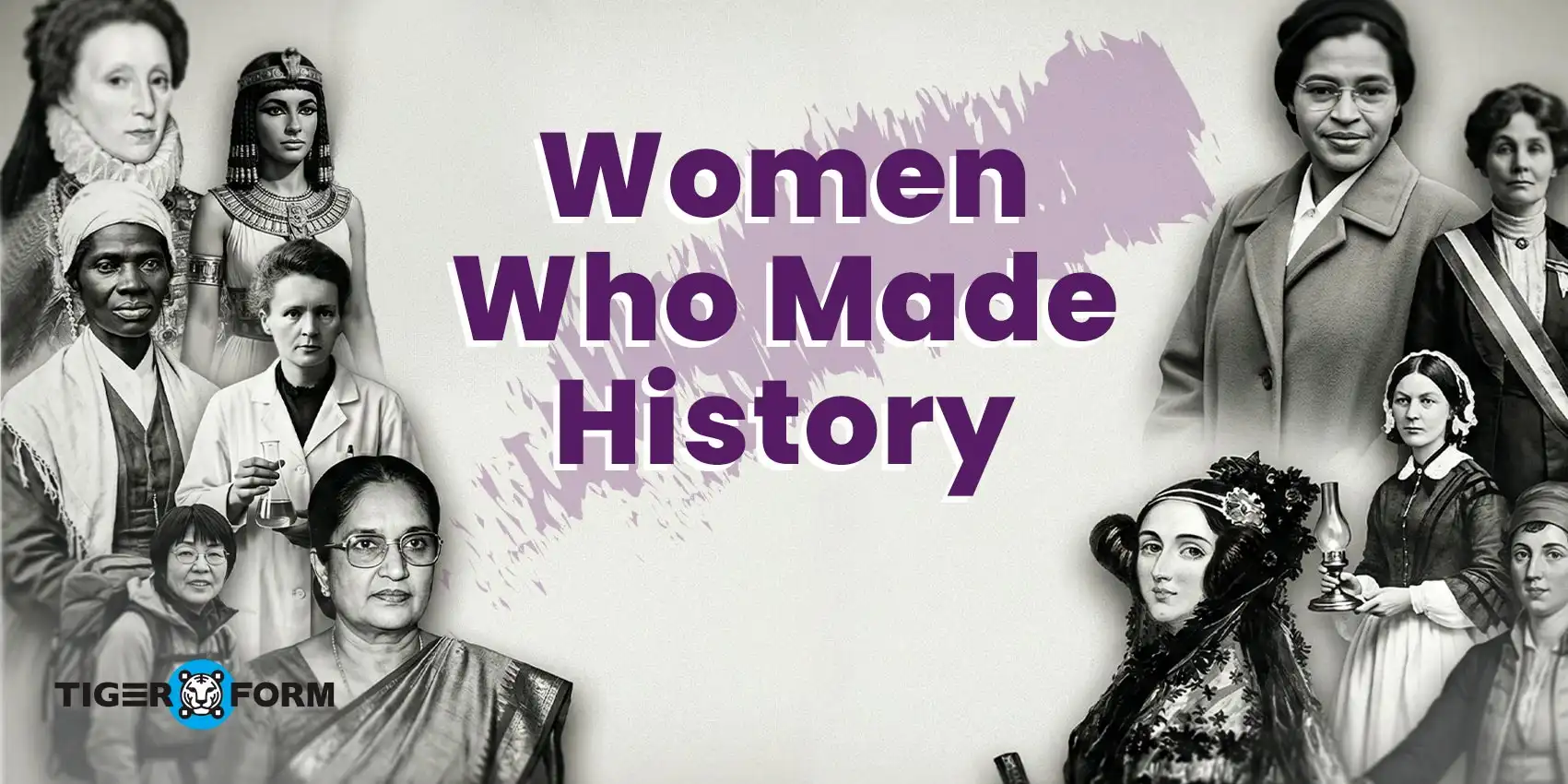
History is made because change never ceases. And the women listed below are only a few of those who make great contributions to their societies. These notable persons don’t just change systems but also bend expectations higher.
The leaders
- Cleopatra VII Philopator (69–30 BC)
The last leader of the Ptolemaic Kingdom of Egypt wasn’t just all beauty and allure, as the Romans tagged her as a seductress. According to Ripley’s Believe It or Not! article, most scholars praise her intelligence instead.
El Daly, a scholar, claims that Cleopatra heavily influenced fields such as toxicology, chemistry, and medicine, as the late ruler loved experimenting with toxins and elements.
Her allure lies in the wise side of her multifaceted nature: she is a master diplomat, strategist, and linguist. - Queen Elizabeth I (1533 – 24 March 1603)
She led England during a period full of religious conflict and unstable politics. Elizabeth I unified and stabilized the nation with her wise leadership. In the Elizabethan Era, English influence, arts, and exploration flourished. She proved that strategic political leadership was not limited by gender.
The civil rights activists
- Rosa Parks (1913 – 2005)
Rosa Parks’ refusal to give up her seat on a segregated bus in Montgomery, Alabama, on December 1, 1955, became a turning point in the Civil Rights Movement. Her calm strength and firm stand for justice inspired millions and changed the course of American civil rights. - Sojourner Truth (1797 – 1883)
Born into slavery, Sojourner Truth escaped to freedom and became a strong voice for abolition and women’s rights. Her 1851 speech, “Ain’t I a Woman?” remains one of history’s most powerful statements about Black women’s dignity and rights.
The pioneers
- Marie Curie (1867 – 1934)
A physicist and chemist, Marie Curie led groundbreaking studies on radioactivity. She became the first woman to win a Nobel Prize—and the only person to win Nobel Prizes in two different scientific fields. Her discoveries helped shape modern physics and medical treatments today. - Sirimavo Bandaranaike (1916 – 2000)
Bandaranaike became the world’s first female prime minister in 1960. Her election marked a complete 360° turn of impressions in global politics and opened doors for women to lead in high government. - Junko Tabei (1939 – 2016)
In 1975, Junko Tabei became the first woman to reach the summit of Mount Everest. She later completed the Seven Summits challenge. Her achievements proved that women can also thrive in extreme mountaineering.
The innovators
- Ada Lovelace (1815 – 1852)
Often called the first computer programmer, Ada Lovelace wrote notes on Charles Babbage’s Analytical Engine that described early computer algorithms. Her ideas foresaw modern computing long before computers existed. - Florence Nightingale (1820 – 1910)
Florence Nightingale changed the nursing system during the Crimean War. She used data and careful record-keeping to improve hospital sanitation, showing how research and evidence can save lives that influenced modern nursing.
Women’s History Month quotes, statistics, and facts
Quotes
- “The future belongs to those who believe in the beauty of their dreams,” by Eleanor Roosevelt, Former U.S. First Lady and activist.
- “There is no limit to what we, as women, can accomplish.” by Michelle Obama, Former U.S. First Lady and author.
- “I raise up my voice—not so that I can shout, but so that those without a voice can be heard.” by Malala Yousafzai, Pakistani education activist.
- “The most courageous act is still to think for yourself. Aloud.” by Coco Chanel, French fashion designer
- “Do not wait for leaders; do it alone, person to person,” by Mother Teresa, Albanian-Indian Saint.
- “Above all, be the heroine of your life, not the victim.” by Nora Ephron, American author, screenwriter, and filmmaker
- “A woman is the full circle. Within her is the power to create, nurture, transform, and heal.” by Diane Mariechild, Author of Mother Wit and other feminist books
- “Well-behaved women seldom make history,” by Laurel Thatcher Ulrich, American historian.
- “I am not free while any woman is unfree, even when her shackles are very different from my own,” by Audre Lorde, American writer and professor.
- “You may not control all the events that happen to you, but you can decide not to be reduced by them,” by Maya Angelou, American memoirist, essayist, poet, and activist.
- “A feminist is a person who believes in the power of women just as much as they believe in the power of anyone else. It’s equality, it’s fairness, and I think it’s a great thing to be a part of.” by Zendaya, American actress and singer.
- “Feminism isn’t about making women strong. Women are already strong. It’s about changing the way the world perceives that strength.” by Geena Dunne Anderson, The Cova Project founder, author, activist.
Statistics and facts
- About 70% of healthcare workers are women. This means women in the sector face a higher risk of infection compared to men. (United Nations, 2020)
- 1 in 3 women experience physical or sexual violence from a partner or someone else in their lifetime. (World Health Organization, 2021)
- In the 2024 Fortune 500 list, women make up 9% of CEOs and hold 33% of board seats. (Catalyst, 2025)
- Studies show that women have about 11% more neurons in the parts of the brain linked to language and hearing than men. (Journal of Lifestyle Medicine, PubMed Central)
- Research suggests that women tend to score higher than men on traits such as orderliness, responsibility, and self-discipline. (Frontiers in Psychology, PubMed Central, 2011)
- On average, women earn 77 cents for every dollar men earn. (World Economic Forum, 2023)
- Of the 38.1 million people living in poverty, 56% were women. (Census Bureau, 2020)
- About 23% of women aged 18 and older have a bachelor’s degree as their highest level of education. (Education Data Initiative, 2025)
- In 2021, nearly a million (961,000) women returned to work, compared with 666,000 men. (Bureau of Labor Statistics, 2022)
- In the world’s least developed countries, only about 60% of girls finish primary school, and just 30% continue to secondary school. (UN Women)
How to celebrate Herstory Month in meaningful ways
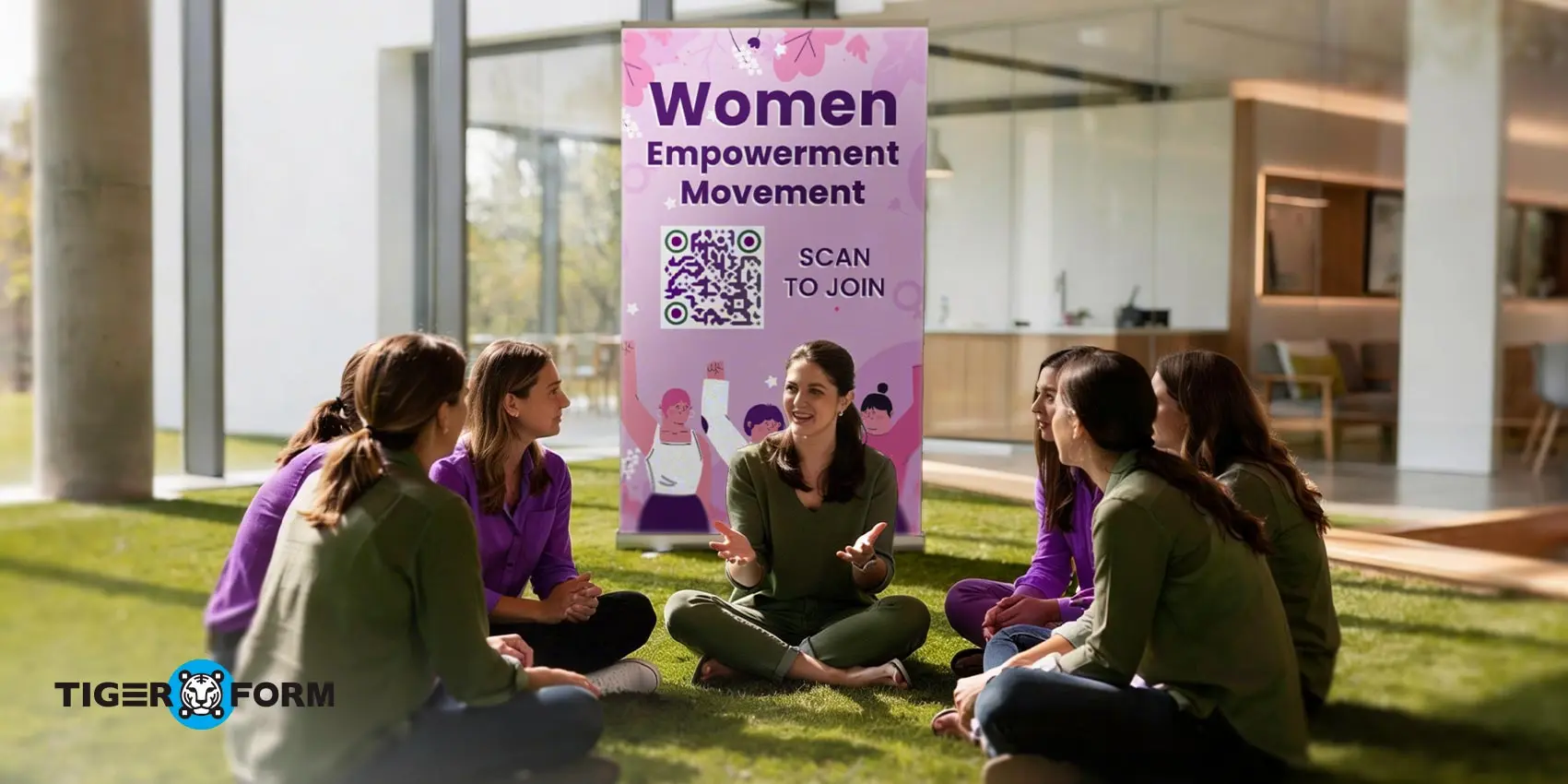
1. Wear the color theme of the celebration
The standard color and theme of Herstory Month is violet and green. Just a slight effort to wear these colors, especially on March 08 (International Women’s Day), will show great support for women’s empowerment.
2. Teach yourself and others
The celebration was originally rooted in the eagerness of historians to patch the missing herstory parts. Mirroring this, you can:
- Read biographies of women whose stories inspire you.
- Talk with your mother or grandmother about their experiences and achievements.
- Share documentaries, podcasts, and blogs about women’s experiences with your friends or loved ones.
Filling the gaps in your own knowledge on women’s achievements is more than enough support for the event’s cause.
3. Gamified learning with trivia QR code forms
Add thrill to the event and challenge yourself or friends with Women’s History trivia questions and games. The excitement of these quick game forms isn’t just for kids; it’s for all ages and genders.
One form builder you can use to create smarter trivia game forms is TIGER FORM. Not only does it offer a clean UI for your forms, but it also has deeper, built-in QR code integration. So even when you are huddled together for the event, you can still connect digitally with just a scan.
Aside from its QR codes, it also offers a wide variety of form templates and an AI form generator to make quiz setup easier. And more to come, because they’ve recently been rolling out a more interactive trivia and quiz game interface for a better user experience. Don’t miss out on this new event idea for your celebration.

4. Support women-owned businesses
Buy from women-owned businesses or support women artists, authors, filmmakers, and entrepreneurs. By helping women’s economic power, you can show your participation in the event.
5. Attend events and exhibitions
Many museums, libraries, and community spaces host special events, exhibits, and performances during the celebrated month. Take some time to join in, to refresh your learning, or even learn new ones.
6. Support gender equality
Supporting Women’s Month isn’t about choosing sides; it’s about making sure women are seen, heard, and treated fairly. Gender equality means making sure everyone, no matter who they are, has the same respect and support.
You can help organizations and policies that promote gender equality by signing petitions, volunteering, or simply speaking up for what’s right.
The roundup
Women’s Heritage Month invites us to look back, but not to remain there.
It started as a local, weekly forum to address missing book references. But now, the event grew into a national and global observance because people recognized that history felt incomplete.
The NWHA 2026 theme reminds us that sustainability can also be social. It is economic; it is cultural. It requires leadership that considers future generations.
We hope the iconic Women’s History Month quotes, facts, personalities, and event suggestions we have above gave you enough knowledge to appreciate women’s history. Happy Women’s Heritage Month!

FAQs
When is Women’s History Month worldwide?
Herstory Month is widely observed in March. While not all countries officially recognize the entire month, many mark International Women’s Day on March 8 and hold related events and activities throughout March.
How is the Women’s Heritage Month different from International Women’s Day?
International Women’s Day is a single-day global observance on March 8. The celebration spans the entire month, enabling broader educational programming and reflection.
Can organizations of any size participate?
Yes. Schools, small businesses, nonprofits, and large corporations can all host discussions, workshops, or awareness campaigns suited to their scale.
How can digital tools improve the month’s activities?
Digital forms, online quizzes, and form QR codes make it easier to engage audiences, collect feedback, and measure involvement without heavy logistics.
Is the celebration only about historical figures?
No. While it honors past achievements, it also highlights present leaders and encourages future participation across industries and communities.
Sources and references:
https://blog.soroptimist.org/blog/inspiring-quotes-by-women
https://www.ebsco.com/research-starters/history/cleopatra-vii-last-ptolemies-reigns
https://www.ripleys.com/stories/three-ways-cleopatra-contributed-to-science-and-medicine
https://www.who.int/news/item/09-03-2021-devastatingly-pervasive-1-in-3-women-globally-experience-violence
https://www.un.org/en/desa/world%E2%80%99s-women-2020
https://www.catalyst.org/insights/2025/champions-for-change
https://www3.weforum.org/docs/WEF_GGGR_2023.pdf
https://educationdata.org/education-attainment-statistics
https://www.unwomen.org/en/what-we-do/youth/facts-and-figures#notes
https://www.bls.gov/opub/reports/womens-databook/2022/
Mehta, S., Chahal, A., Malik, S., Rai, R. H., Malhotra, N., Vajrala, K. R., Sidiq, M., Sharma, A., Sharma, N., & Kashoo, F. Z. (2024). Understanding Female and Male Insights in Psychology: Who Thinks What?. Journal of lifestyle medicine, 14(1), 1–5. https://doi.org/10.15280/jlm.2024.14.1.1
Weisberg, Y. J., Deyoung, C. G., & Hirsh, J. B. (2011). Gender Differences in Personality across the Ten Aspects of the Big Five. Frontiers in psychology, 2, 178. https://doi.org/10.3389/fpsyg.2011.00178
Ruggles et al., Integrated Public Use Microdata Series, 2019 Current Population Survey, Annual Social and Economic Supplement (Minneapolis: Minnesota Population Center, 2020), available at https://doi.org/10.18128/D010.V10.0.