

Are you unsure about medical surveys? It’s time to reconsider—they offer more than just an advantage in the healthcare and market landscape.
Healthcare and market research constantly evolve, but meaningful progress depends on actual, experience-based data. Without it, breakthroughs may slow, and critical decisions risk being less effective.
Clinical surveys bridge this gap by allowing medical professionals and patients to share valuable insights. These surveys help researchers collect the data needed to refine treatments, advance medical technology, and enhance patient care. Additionally, compensation encourages detailed and reliable responses, making the data even more valuable.
In this guide, we’ll cover the basics of medical research surveys, introduce trusted platforms for participation, and walk you through creating your own using a QR form builder. We’ll also outline best practices to ensure you gather accurate and actionable results.
What is a medical or clinical survey?
A medical or clinical survey is a structured questionnaire to gather insights from patients, healthcare professionals, or the general public about health-related topics.
These surveys help researchers, hospitals, and healthcare organizations collect valuable data to improve patient care, evaluate treatments, and identify health trends.
The purpose of a medical or healthcare survey is to collect reliable data for research, patient feedback, or public health monitoring. These surveys can help assess patient satisfaction, track disease outbreaks, evaluate the effectiveness of treatments, or even shape healthcare policies.
The usual data collected in medical or healthcare surveys are these:
1. Professional demographics
Information includes age, gender, years of experience, specialty, and practice setting (e.g., hospital, private clinic).
2. Clinical practices and guidelines adherence
Insights into the adoption of clinical guidelines, decision-making processes, variations in treatment approaches, and the influence of supervisory roles, such as a medical directorship, on protocol compliance.
3. Perceptions of healthcare policies
Opinions on current healthcare policies, administrative procedures, and suggestions for system improvements.
4. Continuing Medical Education (CME) preferences
Preferences for CME topics, formats, and perceived barriers to ongoing professional development.
5. Patient care challenges
Identify common obstacles in patient management, resource limitations, and areas needing support.
6. Technological adoption
Usage patterns of electronic health records (EHRs), telemedicine platforms, and other digital tools in clinical practice.
7. Mental health and well-being
Assessments of stress levels, burnout prevalence, job satisfaction, and work-life balance among medical professionals.
8 Best medical survey sites for healthcare professionals
| Platforms | Best for | Mode of payment |
| ZoomRx | • Ease of use | • Zelle• PayPal • ACH |
| Sermo | • Networking and quantity | • Direct deposit • PayPal • Gift cards |
| M3 Global Research | • Global and extensive research | • Bank transfer • Amazon gift card • Cheques • Prepaid card |
| InCrowd | • Quick and short surveys | • Paypal • Gift Cards |
| MDForLives | • Researchers of medical device or drug development | • Amazon gift cards • Visa gift cards |
| Curizon | • Professionals who want transparency | • Gift cards |
| MDLinx | • Curated medical literature and newsletters | • No public mentions |
| All Global Circle | • Verified and multi-format paid studies | • Bank transfer • Amazon gift card • Cheque • Prepaid card |
1. ZoomRx
ZoomRx is a healthcare research firm that conducts a wide range of studies to help clients understand the healthcare industry and make informed decisions. Their studies include clinical trial research, market sizing, and patient segmentation.
ZoomRx emphasizes ease of participation. It allows healthcare professionals to complete paid online medical surveys from any mobile device, with options like voice responses to enhance user experience.
Participants are compensated promptly for their time and effort, with payments made via PayPal or by check.
2. Sermo
Sermo is a unique physician-first online community that allows clinicians to communicate and engage with more than 1.3 million healthcare professionals across 150 countries.
Initially offering physician-paid survey opportunities, Sermo Surveys has evolved to provide a platform for connecting with peers, accessing the world’s largest drug ratings database, attending exclusive virtual events, and discussing news, challenging clinical cases, and medical topics.
3. M3 Global Research
M3 Global Research has built one of the world’s most extensive panels of verified healthcare professionals, numbering over 2 million members worldwide. They are dedicated to first-rate medical market research surveys that drive outstanding healthcare advancements.
M3 Global Research is part of M3, Inc., which provides services to the healthcare and life sciences industries, including medical education, ethical drug promotion, clinical development, job recruitment, and clinic appointment services.
4. InCrowd
InCrowd is a pioneer in real-time healthcare insights, specifically designed to fit into the demanding schedules of busy clinicians. They specialize in “MicroSurveys,” which usually consist of only a few questions that would take about 2 to 5 minutes.
The platform is made for mobile devices. Healthcare professionals can use it on their smartphones. They can answer high-priority research questions during short breaks or between patient visits.
If you seek online paid surveys for healthcare professionals without committing to lengthy questionnaires, consider InCrowd in your choice.
5. MDForLives
MDForLives is a global community of healthcare professionals and patients dedicated to advancing healthcare through online market research.
The platform specializes in medical research surveys and conducts focus groups on critical topics, including drug development, medical device innovations, and the safety of diverse healthcare services.
By participating in these activities, members help shape the future of the healthcare industry.
6. Curizon
Curizon is an online panel community comprising esteemed healthcare professionals participating in market research studies. Most research is conducted via online surveys, accommodating the dynamic schedules of its members.
Members receive survey invitations based on their profession or specialty, detailing compensation, time commitment, and other pertinent information.
Participation is voluntary. Upon qualifying for and completing a study, compensation is added to the member’s online account for easy redemption.
7. MDLinx
MDLinx is an internet-based service that helps physicians and healthcare professionals stay current with academic literature by scanning, sorting, summarizing, and disseminating new medical literature in a digestible form.
Subscribers receive daily or weekly newsletters with summaries and links to new journal articles in their specialties.
MDLinx also offers information about pharmaceuticals, Continuing Medical Education (CME) programs, and invitations to participate in market research studies, such as a medical decision makers survey.
8. All Global Circle
All Global Circle is an international research panel targeting medical professionals in the U.S., UK, and EU.
The platform has several partnerships with pharmaceutical companies, healthcare organizations, and research firms that need expert insights from licensed practitioners via paid surveys. Their paid surveys typically include online survey forms, telephone interviews, and sometimes, in-depth studies.
For the best and authentic research quality, All Global Circle has a stringent verification process to qualify the professional’s credibility through YOTI (Your Digital Identity) verification.
Skipping this step means no access to paid medical surveys and failure to authenticate your credentials.

Why medical surveys matter?
Clinical surveys are more than just data collection—they are essential tools for advancing research, improving patient care, and maintaining high healthcare standards.
Researchers and healthcare facilities rely on these surveys to gather high-quality insights, assess treatment effectiveness, and refine strategies for better healthcare delivery.
Regular surveys help healthcare establishments measure patient responses against industry benchmarks, ensuring they stay competitive and continually enhance their services.
They also play a key role in accreditation processes, as many certification bodies require patient satisfaction surveys to evaluate healthcare performance. High survey scores can strengthen a facility’s reputation and accreditation status.
Who can participate in a medical survey?
• Licensed healthcare professionals
These are healthcare experts who are validly registered or authorized to practice their clinical role. Their knowledge and experience are what research sponsors seek. With their knowledge in treatments and patient care, their opinions are highly valued by researchers–typically, for developing new drugs or medical devices.
• Healthcare administrators
These are the people who run the business side of hospitals and clinics. They may not treat patients, but they’re knowledgeable about how healthcare systems function, making their input valuable in a medical survey or broader healthcare research study. Researchers want their insights on management, budgets, and the purchase of new technology. Think of practice managers, hospital executives, and department heads.
• Patient and caregivers
These are the real-life experts on what it’s like to live with an illness or care for someone who is sick. You don’t need a license—you just need personal experience. Researchers rely on them to understand the real-world impact of a disease, from symptoms and daily challenges to how a treatment affects their quality of life.
How do medical surveys work?

Types of Medical Surveys
Healthcare surveys employ a variety of methods to collect comprehensive data, including:
1. Questionnaires and interviews
- Self-administered questionnaires: Participants independently complete structured forms, either on paper or digitally, providing standardized responses.
- Interviewer-administered surveys: Trained personnel conduct face-to-face or telephone interviews, ensuring clarity and completeness in responses.
2. Internet-mediated research
Researchers utilize online platforms to distribute surveys via email or web links, allowing participants to respond conveniently. This approach facilitates access to diverse populations and efficient data collection.
3. Focus groups
Small groups engage in guided discussions on specific health topics, providing qualitative insights into patient experiences and perceptions.
4. Patient-Reported Experience Measures (PREMs)
Standardized tools gather patients’ perspectives on healthcare services received, aiding in quality improvement efforts.
5. Biomarker collection
Surveys incorporate clinical tests, such as blood pressure measurements or blood samples, to obtain objective health data, enriching self-reported information. The choice of data collection method depends on the survey’s objectives, target population, and available resources, ensuring the acquisition of reliable and relevant health information.
How to conduct a medical survey
Clinical surveys are valuable for healthcare institutions and companies to gather insights from verified healthcare professionals. Follow these steps to ensure a well-structured and effective survey process:
1. Complete the initial study process and define your survey goals
Before launching a clinical survey, clearly outline the purpose of your study. Identify what insights you aim to gather—feedback on a new medical device, opinions on emerging healthcare trends, or patient treatment approaches.
Consider using a patient feedback form to collect direct responses from individuals about their experiences. Setting clear objectives will help guide your questions and ensure relevant, actionable responses.
2. Use medical assessment platforms and join communities
Using a trusted platform helps ensure that your survey reaches verified healthcare professionals.
Below are reliable platforms and communities for your clinical surveys and studies. These networks connect researchers with qualified respondents, making your data collection method more efficient and credible.
3. Verify participants’ medical credentials
To maintain survey integrity, confirm that respondents are licensed healthcare professionals. Most reputable survey platforms have built-in verification processes requiring proof of medical licenses, institutional email verification, or other credentials.
If surveys are conducted independently, request documentation or collaborate with medical institutions to vet participants.
4. Agree on compensation terms
Clinical professionals are often compensated for their time when participating in research studies. Decide on fair payment based on the survey’s complexity, length, and industry standards.
Standard compensation methods include PayPal transfers, gift cards, or direct bank payments. Clear payment terms help encourage participation and maintain professional engagement.
5. Distribute the survey to respondents
Once you have verified participants, distribute the survey through secure online platforms. If using a survey platform, they may handle the distribution for you.
If conducting the survey independently, email invitations or QR code-based survey links can simplify access for respondents.
6. Collect and analyze responses
After responses are gathered, analyze the data for trends and insights. Look for patterns that align with your research goals, and compare findings against industry benchmarks if applicable.
Use statistical analysis tools or work with data experts to extract meaningful conclusions that can inform medical advancements or business strategies. To ensure transparency, include an information sheet summarizing key findings and how the data will be used.
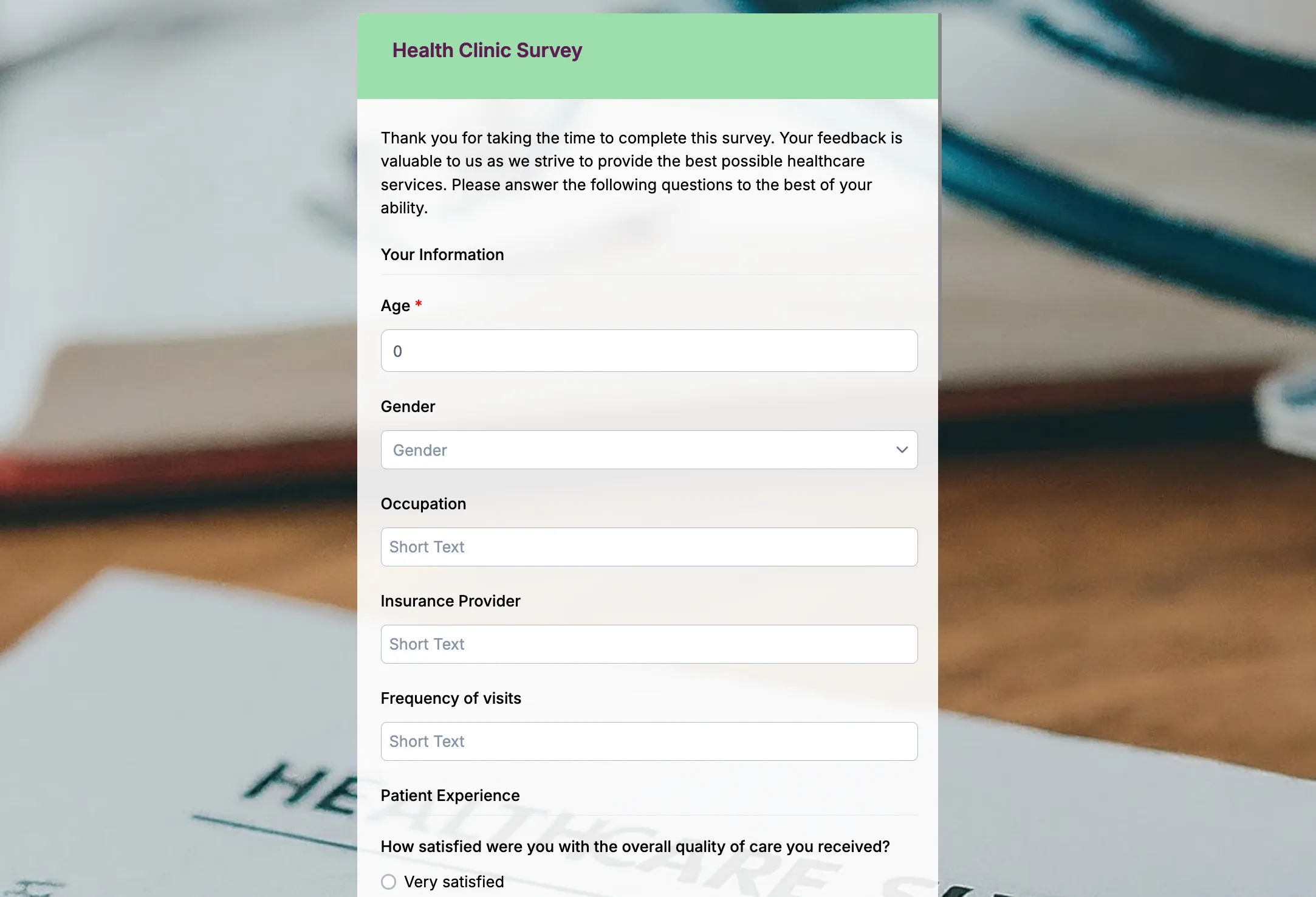
How to create your own easy-access medical survey form
Here is a step-by-step guide to creating a customized one:
Step 1
Visit a reliable survey form builder to create your survey form.
Step 2
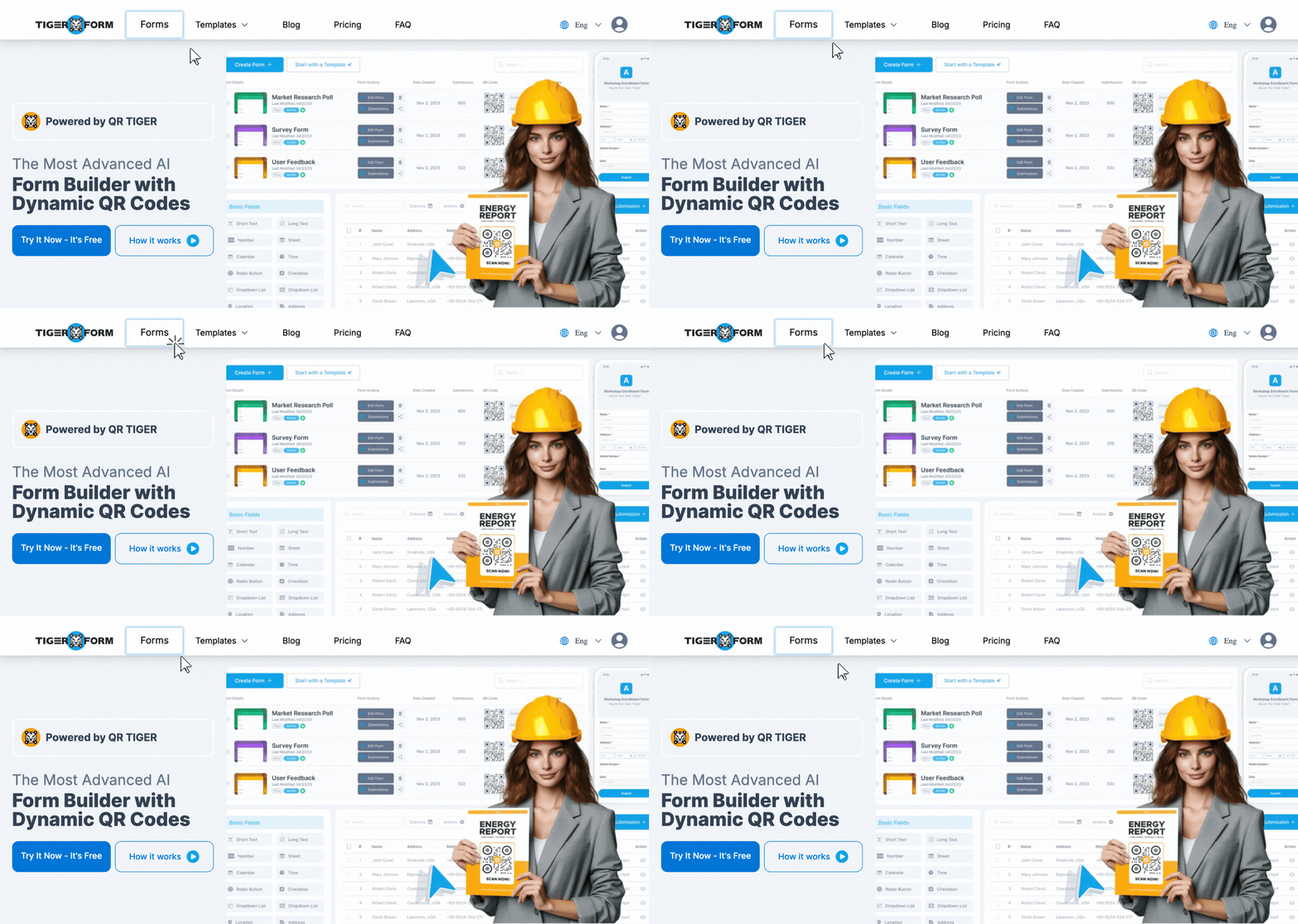
Choose a form template or create a survey from scratch based on your needs.
Step 3
Open a blank form, add the necessary fields, and customize the survey. Preview it to check for errors before finalizing.
Step 4
Once completed, you can save the form for later or generate a QR code instantly. You can customize the QR code to match your preferences.
Step 5
Share the QR code form via messages or emails with healthcare professionals to collect responses efficiently.
Step 6
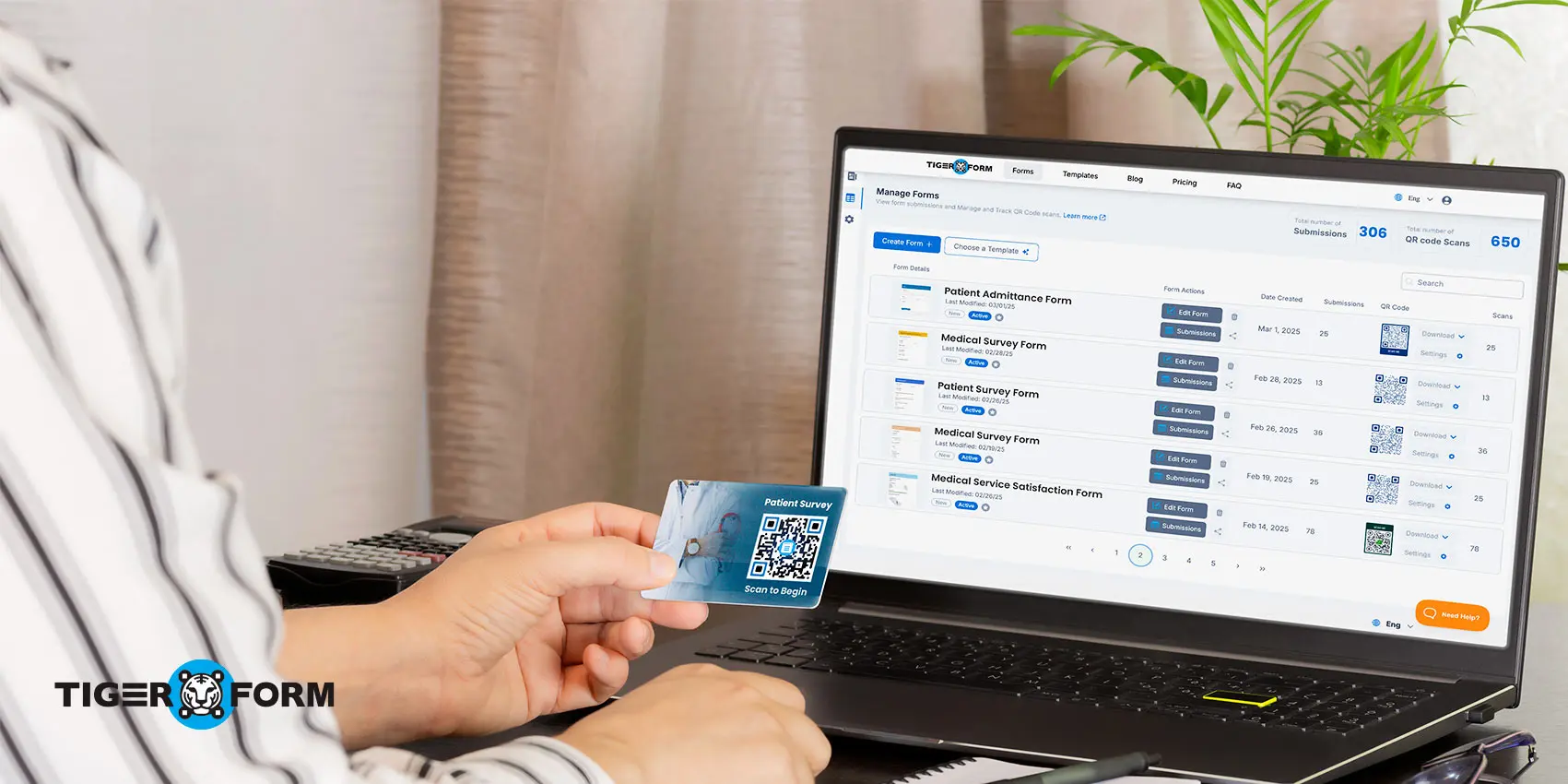
Monitor scan and submission activities using the form builder’s analytics dashboard—a feature to assess engagement and gather insights.
Tips for designing effective online medical surveys
Here are the best tips for designing health surveys that provide high-quality information:
1. Keep the audience in mind
When creating a form for a medical survey, always consider the audience. Survey respondents are usually divided into two types: optimizers and satisfied customers.
Optimizers are respondents who complete their surveys diligently and follow all five steps described above. On the contrary, satisfied Respondents are more likely to be lazy and to provide low-quality responses.
They either don’t read questions carefully or fill out the survey without putting in any real effort.
When designing a survey with a form creator, you must assume that everyone is a satisfied customer. Therefore, you should make your surveys interesting by using simple words and creating a consistent narrative.
2. Make agreement and disagreement easier
Many surveyors think adding Agree/Disagree options to a survey would make it easier for respondents. The truth is the opposite; it places a high cognitive burden on them.
Your survey rating scale should have distinct points. Five to seven choices are usually considered ideal for generating quality data.
How to deal with the ever-present “neutral” option on the scale? If you expect many Satisficers to complete the survey, it is better not to include the neutral option. On the contrary, if you think many optimizers will attempt your survey, include a neutral option on the rating scale.
4. Ask one question at a time
Keeping surveys for doctors is undoubtedly a goal worth pursuing, but do not sacrifice clarity by packing too much into your questions. Doing so can lead to confusion and push people to provide inaccurate answers.
If your survey questions frequently contain the word “and,” they likely have two parts. The respondent might be unable to align the first part with the second and give an inaccurate answer that neither reflects their true thinking nor provides you with quality data.
5. Pre-test the survey
Before distributing medical online surveys to your patients or the general public, conduct a pilot survey with a small sample to understand their effectiveness.
This will help you assess your survey’s quality and tell whether your QR-powdered healthcare form performs as intended.
Pre-testing lets you make the necessary changes to your survey to make it more impactful. In healthcare, accuracy is everything, so assessing it beforehand leads to more accurate responses.

Create high-quality forms with an online form builder
Healthcare surveys are crucial in gathering insights from physicians and healthcare professionals. They help medical institutions and research organizations make informed decisions about patient care, drug development, and healthcare innovations.
To maximize the effectiveness of these surveys, healthcare companies can use dedicated medical survey platforms and communities.
These platforms connect researchers with verified professionals, ensuring high-quality responses that contribute to meaningful advancements in the field.
Additionally, QR-powered form generators have transformed how healthcare surveys are conducted. By integrating online forms with QR Code technology, healthcare providers can streamline data collection, minimize errors, and enhance survey accessibility.
This approach improves efficiency while maintaining the integrity of responses. By leveraging the right platforms and tools, medical institutions and market researchers can ensure they gather reliable data to drive progress in healthcare.
Create survey forms for your medical research now!
FAQs
Are paid surveys worth doing?
Yes, they can be worth doing for healthcare professionals. They let you share your knowledge, help improve medical research, and get compensation for your time. These surveys shape new treatments, medical devices, and healthcare policies.
The value depends on the survey length, payment, and the platform’s reliability. Choosing trusted survey platforms ensures that your input matters and you get fair compensation.
What are some fundamental principles of a clinical survey?
- It should start with an understandable statement of purpose to tell everyone why you are conducting it in the first place.
- The survey questions should serve the objective of understanding a problem and resolving it with the help of the responses.
- The researcher should minimize bias while creating questions and record the answers as a neutral observer.
How can I protect respondent privacy?
Your blog mentions verification and compensation but does not clearly explain privacy safeguards (HIPAA/GDPR, de-identification, secure storage). This is essential in healthcare. Readers will expect it.
How do I address ethics and consent?
You mention verification, but not informed consent or IRB/ethics approval. For a healthcare-focused article, this is a credibility booster and shows responsibility.
What sampling method should I use?
You talk about verified platforms but don’t clearly explain the sampling logic (random, stratified, or convenience). This helps elevate your blog from “how to” to “how to do it properly.”
How do I analyze survey data?
You briefly mention analyzing responses, but you don’t explain reliability, descriptive stats, or limitations. A short, simplified version would strengthen authority.
How many questions are appropriate?
You discuss clarity and burden, but not explicitly length optimization. This is practical and highly relevant.
Sources:
https://www.whitecoatinvestor.com/surveys-for-money-best-companies-for-physician-online-surveys/
https://www.sermo.com/resources/a-complete-guide-to-paid-physician-surveys/
https://prudentplasticsurgeon.com/recommended-paid-medical-surveys/
https://mdlinx-survey.soft112.com/